
Imagine trying to solve a math problem while someone screams your overdue bills into your ear. That is basically what poverty does to your brain every single day.
Not because poor people are less intelligent. But because financial stress literally hijacks the mental resources you need to think clearly, plan ahead, and make good decisions. And the science backing this up is staggering.
Your Brain on Broke, the Cognitive Tax of Poverty
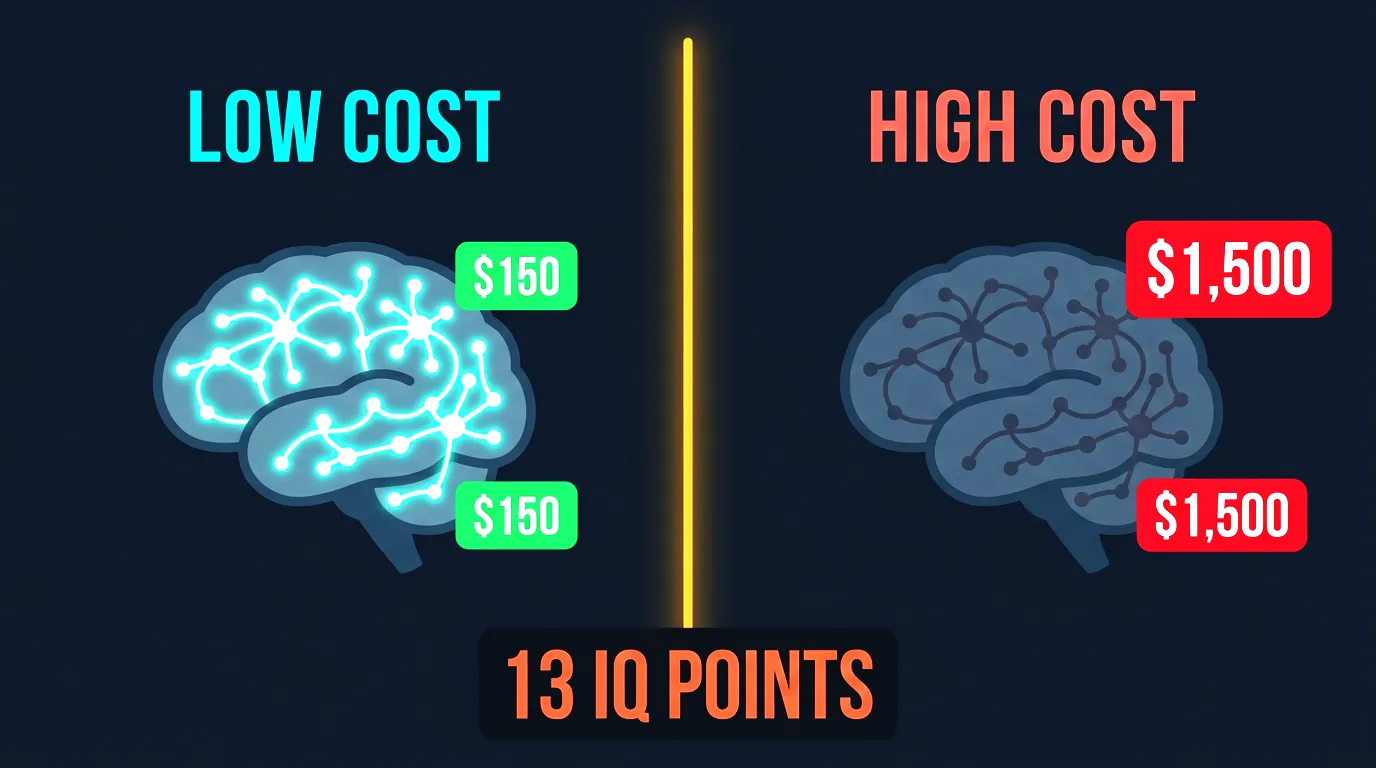
In 2013, a team of researchers from Harvard, Princeton, and the University of British Columbia published a study in Science that changed how we think about poverty. Sendhil Mullainathan, Eldar Shafir, Anandi Mani, and Jiaying Zhao discovered something shocking. Just thinking about a serious financial problem reduced cognitive performance by the equivalent of 13 IQ points.[1]
That is roughly the same cognitive hit as losing an entire night of sleep.
Here is how they proved it. Shoppers at a New Jersey mall were asked to think about a hypothetical car repair. When the repair cost $150, low-income and high-income shoppers performed equally on cognitive tests. But when the repair cost $1,500, low-income shoppers scored dramatically worse.[1] The wealthy shoppers? No difference at all.
The key finding was brutal in its simplicity:
- Low-income + cheap repair: Normal cognitive performance
- Low-income + expensive repair: Performance dropped by 13 IQ points
- High-income + expensive repair: No change in performance
- The cause: Financial worry consumed mental bandwidth, not lack of ability
“Being poor reduces a person’s cognitive capacity more than going one full night without sleep. It is not that the poor have less bandwidth as individuals. Rather, it is that the experience of poverty reduces anyone’s bandwidth.” — Sendhil Mullainathan, Harvard economist[2]
The researchers confirmed this in the real world too. They tested 464 sugarcane farmers in Tamil Nadu, India. These farmers earn most of their yearly income at harvest time. Before harvest, when they were broke, their cognitive performance was significantly worse than after harvest, when they were flush with cash.[1] Same people. Same brains. The only difference was money.
Tunneling, How Scarcity Hijacks Your Attention
Mullainathan and Shafir, authors of Scarcity: Why Having Too Little Means So Much, coined a term for what poverty does to your focus. They called it tunneling.
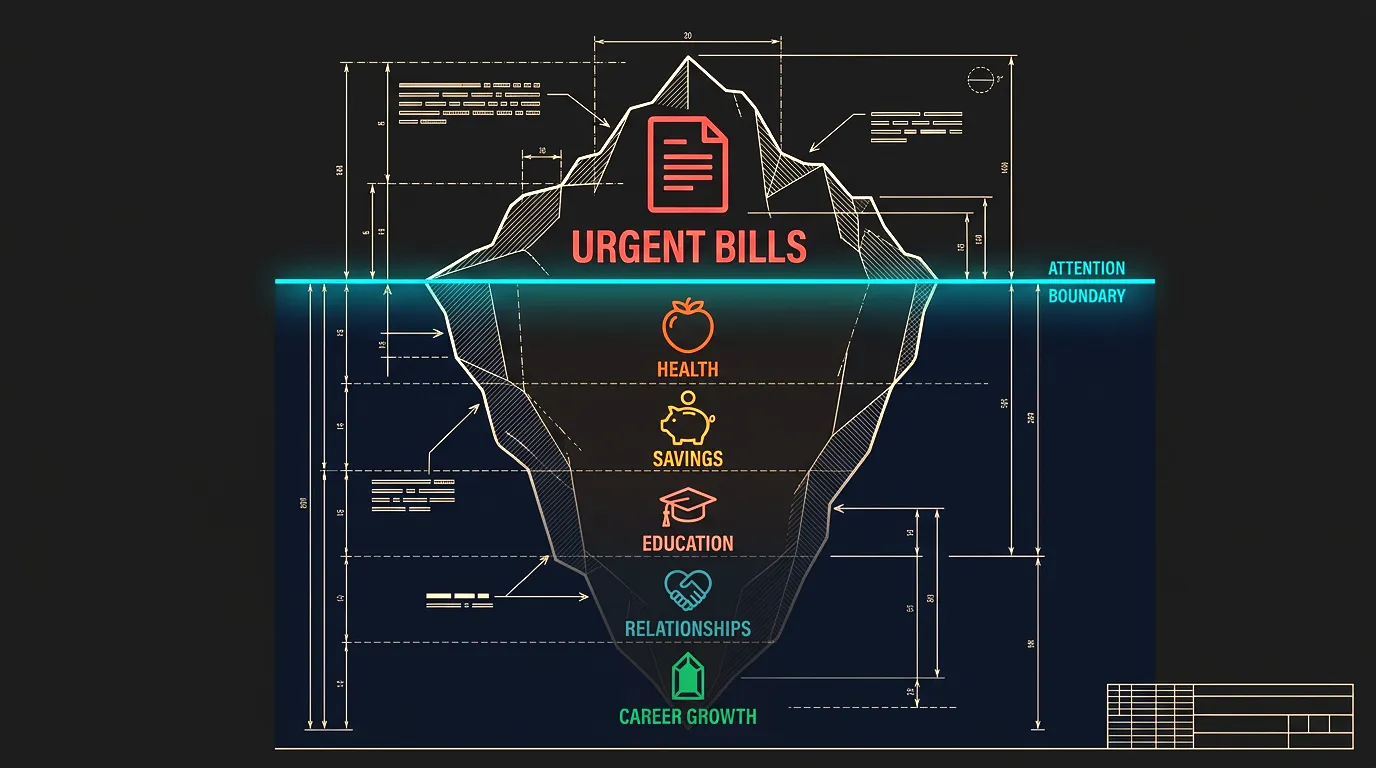
When you do not have enough money, your brain zooms in on the immediate shortage. It is like looking through a tunnel. You can see the urgent bill in front of you with perfect clarity. But everything outside that tunnel disappears. Long-term planning, health decisions, your kids’ homework, saving for the future. All of it falls off your mental radar.[3]
A 2024 meta-analysis published in the Journal of Economic Psychology reviewed dozens of studies on financial scarcity and cognitive performance. The findings confirmed that financial scarcity has a detrimental impact on reasoning and decision-making. The scarcity mindset leads to increased focus on money-related problems, more intense trade-off thinking, and reduced mental bandwidth for everything else.[4]
What Tunneling Actually Looks Like
This is not abstract. Tunneling shows up in real behaviors:
- Overborrowing. When you can only see the urgent bill, a payday loan at 400% interest seems like a reasonable fix.[3]
- Missed appointments. Not because you do not care, but because your brain literally cannot hold the reminder while it is fixated on rent.
- Poor nutrition choices. Planning and cooking healthy meals requires bandwidth that scarcity has already consumed.
- Neglecting preventive care. You skip the dentist or the doctor because your mental tunnel only shows this month’s bills.
A 2024 scoping review found that tunneling and cognitive load from financial scarcity directly affect dietary behavior. People experiencing financial hardship eat worse not because they do not know better, but because their cognitive resources are depleted.[5]
| Cognitive Resource | What It Does | How Scarcity Depletes It |
|---|---|---|
| Working memory | Holds information for immediate use | Filled with financial calculations and worry |
| Executive function | Plans, prioritizes, controls impulses | Hijacked by urgent scarcity concerns |
| Attention | Focuses on relevant information | Tunneled onto money problems exclusively |
| Fluid intelligence | Solves novel problems | Reduced by up to 13 IQ points under financial stress |
Recommended read: Predictably Irrational by Dan Ariely. Reveals the hidden forces behind irrational financial decisions and why scarcity makes those forces even more powerful.
A 2025 study in Psychophysiology by Zhang and colleagues found something important about the mechanism. The scarcity mindset selectively weakened proactive cognitive control. The ability to plan ahead and prepare for challenges. But it left reactive control intact. Your ability to respond in the moment.[6] In other words, poverty does not make you stupid. It makes you unable to plan. And the researchers found this happened because of lowered motivation, not reduced cognitive ability.
The Debt Trap Inside Your Head
The cognitive damage is not limited to extreme poverty. Student loan debt affects 42.5 million Americans, with an average balance of over $41,000.[7] And research shows this debt creates the same kind of bandwidth tax.
A 2025 study in Current Psychology found that perceived financial scarcity redirects attentional resources toward urgent financial concerns. This impairs both direct learning, remembering facts you are told, and inferential learning, connecting ideas to form new understanding.[8] The researchers found that financial worry works through two pathways. It increases fatigue and it fragments attention.
The Feedback Loop Nobody Talks About
Here is where it gets really dark. Poverty impairs your cognitive abilities, and impaired cognition makes it harder to escape poverty. A 2025 framework published in Current Directions in Psychological Science by Park, Ho, Hallez, Kaur, Srinivasan, and Zhao identified four psychological mechanisms through which poverty perpetuates itself.[9]
- Cognitive function. The bandwidth tax reduces your ability to make good financial decisions.
- Mental health. Financial stress triggers anxiety and depression, which further impair thinking.
- Beliefs. Poverty lowers aspirations and self-efficacy. You stop believing you can change things.
- Preferences. Scarcity shifts your time orientation toward the present. Future planning feels pointless.
Recommended read: Misbehaving by Richard Thaler. The Nobel Prize winner’s entertaining account of how real humans make financial decisions, and why traditional economics gets it completely wrong.
A 2025 Nature Communications Psychology perspective by Beuchot, Nettle, and Chevallier reinforced this finding. People in poverty tend to be more present-oriented, and they discount future rewards more steeply than wealthier individuals.[10] This is not a character flaw. It is a rational adaptation to an environment where the future is genuinely uncertain. But it creates a trap.
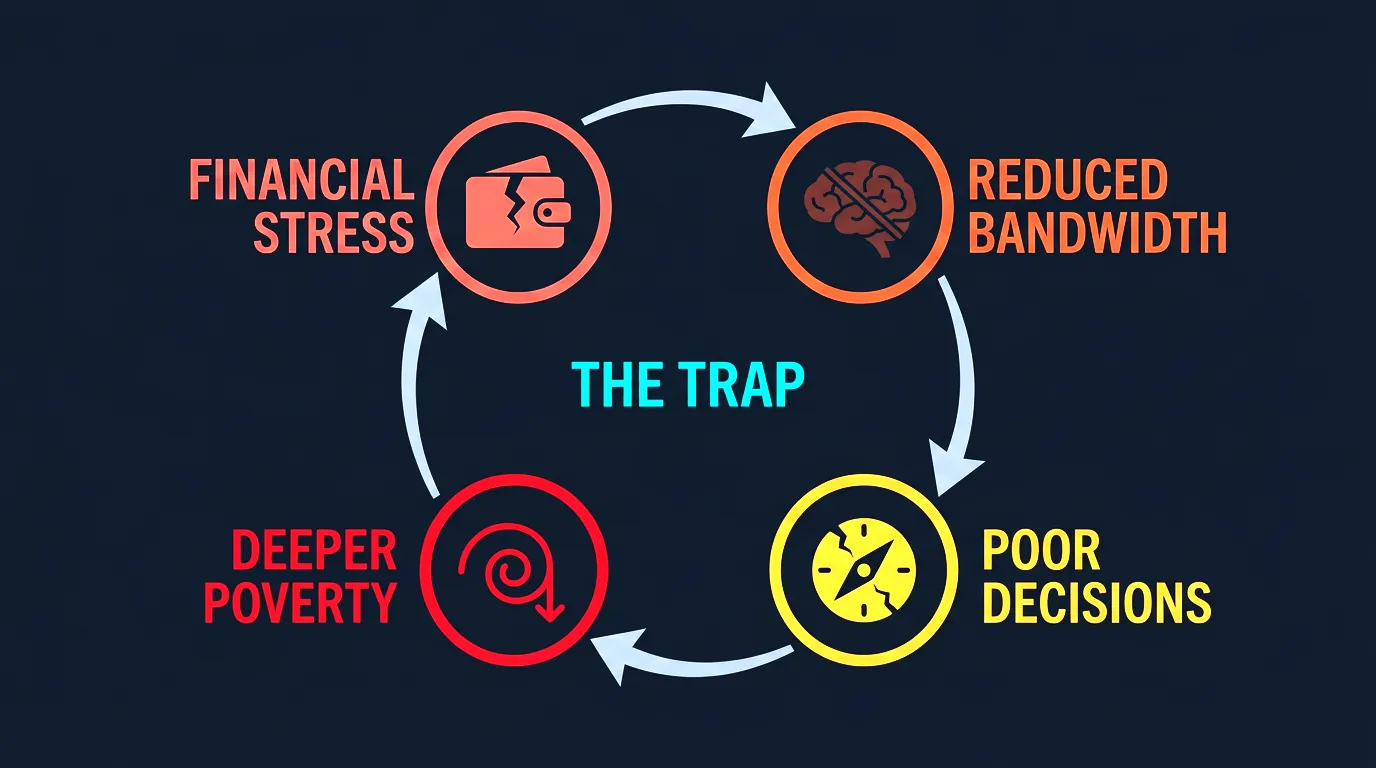
The cycle looks like this:
- Financial stress consumes mental bandwidth
- Reduced bandwidth leads to worse decisions (missed payments, costly borrowing)
- Worse decisions deepen financial stress
- Deeper stress consumes even more bandwidth
- Repeat
A 2019 study published in PNAS proved this works in reverse too. When researchers eliminated debt for low-income individuals in Singapore, their cognitive function, decision-making quality, and psychological well-being all improved significantly.[11] Remove the financial pressure, and the brain bounces back.
What Poverty Does to a Developing Brain
The bandwidth tax is temporary for adults. Remove the financial stress, and cognition recovers. But for children growing up in poverty, the effects run deeper.
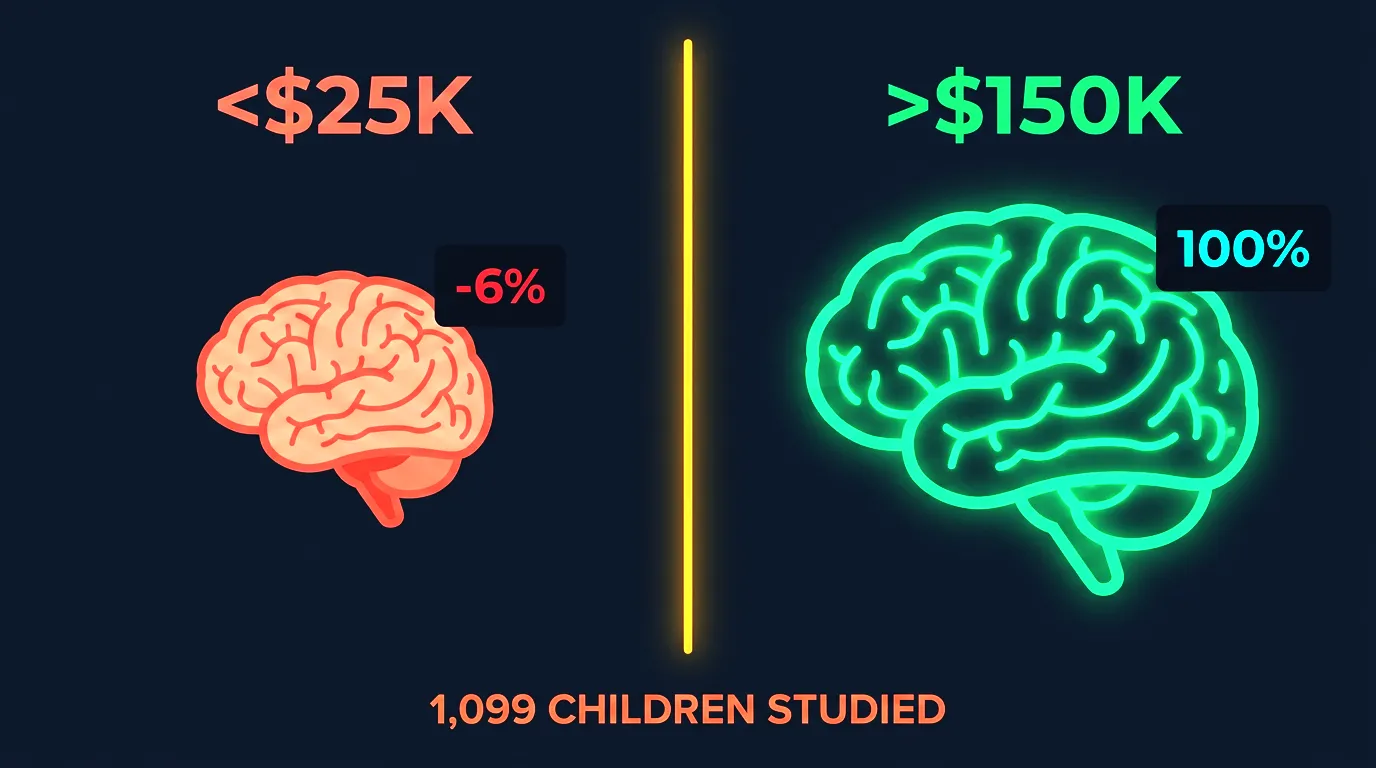
A landmark 2015 study in Nature Neuroscience led by Kimberly Noble of Columbia University scanned the brains of 1,099 children across the United States. The findings were clear. Children from families earning less than $25,000 a year had 6% less cortical surface area than those from families earning over $150,000.[12]
The differences were most pronounced in brain regions responsible for:
- Language processing. Which affects reading, communication, and academic success.
- Executive function. Which governs impulse control, planning, and self-regulation.
- Memory formation. Through the hippocampus, critical for learning.
The prefrontal cortex, which develops most rapidly between ages 1.5 and 4, was especially affected. Children from low-income families showed significantly less activation in this region during cognitive tasks compared to middle-income and high-income peers.[13]
How Does Poverty Physically Change the Brain?
The mechanisms are multiple and overlapping:
- Chronic stress. Elevated cortisol levels literally shrink the hippocampus and prefrontal cortex over time.
- Reduced cognitive stimulation. Parents under bandwidth strain have fewer mental resources for reading, playing, and teaching.
- Nutritional deficits. Developing brains need specific nutrients that poverty-level diets often lack.
- Environmental toxins. Low-income neighborhoods have higher exposure to lead and air pollution.
A 2025 study on homeless and at-risk populations found that it is not homelessness itself that impairs cognition, but rather the accumulated scarcity and stress that comes with it. Social support services that reduce the burden of scarcity can help buffer these cognitive effects.[14]
Recommended read: Nudge: The Final Edition by Richard Thaler and Cass Sunstein. Shows how choice architecture can be designed to help people in poverty make better decisions without restricting their freedom.
Breaking the Bandwidth Tax, What Actually Works
If poverty is a cognitive tax, then the solution is not teaching poor people to make better decisions. It is reducing the tax itself. And research backs this up.
Policy Changes That Free Up Bandwidth
The original authors of the 2013 Science study specifically warned policymakers about cognitive load. Long government forms, complex eligibility rules, and confusing benefit structures all consume bandwidth that low-income families cannot afford to spare.[1]
Evidence-based interventions that work:
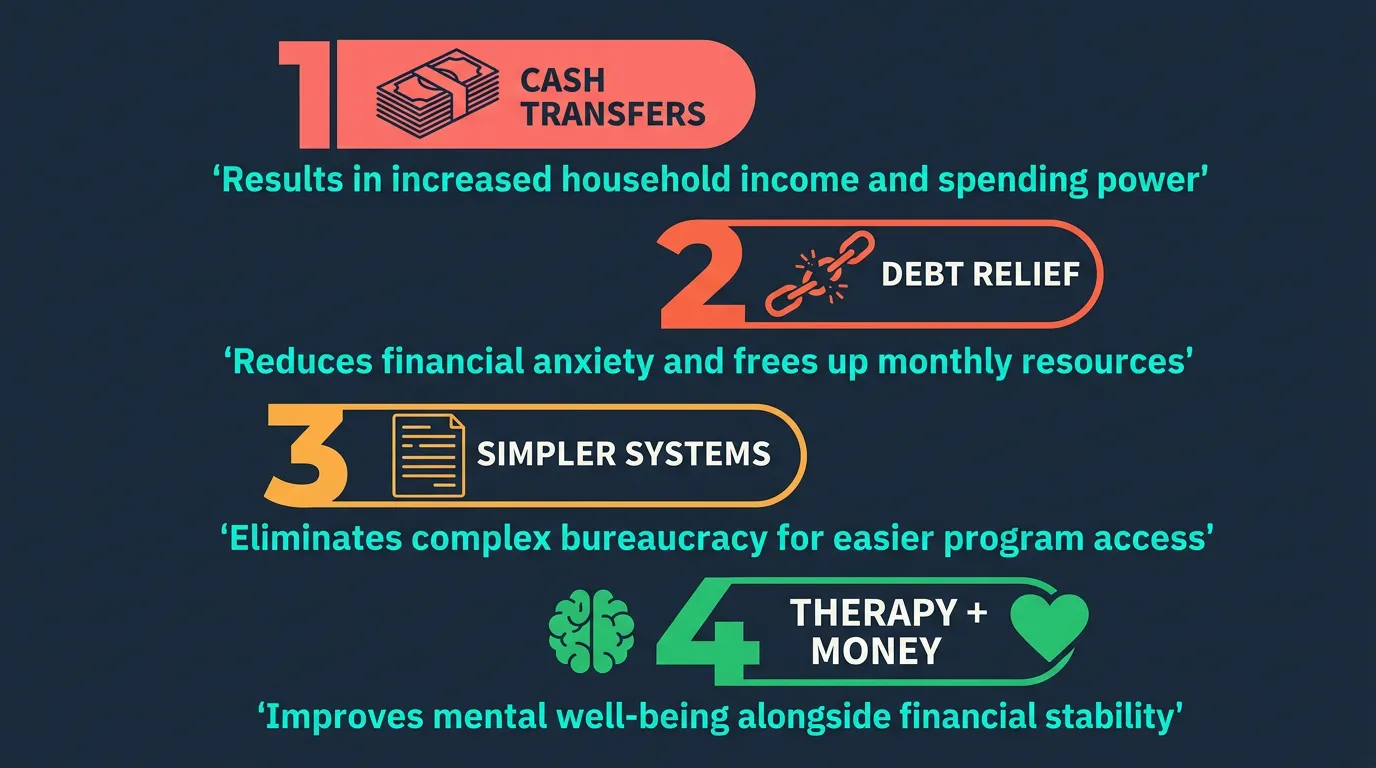
- Cash transfers. Direct money reduces scarcity and improves cognitive outcomes. The Baby’s First Years study found that monthly cash payments to low-income mothers changed infant brain activity patterns within the first year.[15]
- Debt relief. The Singapore study showed cognitive function improved immediately when debt was eliminated.[11]
- Simplified systems. Automatic enrollment in benefits, shorter forms, and fewer hoops reduce the cognitive load on those who can least afford it.
- Psychotherapy combined with financial support. A 2025 systematic review found that poverty-reduction programs paired with psychological interventions produced better outcomes than either approach alone.[16]
What You Can Do Right Now
If you are dealing with financial stress, understanding the bandwidth tax is the first step to fighting it:
- Automate everything you can. Bill payments, savings transfers, appointment reminders. Free your working memory from routine tasks.
- Batch your financial thinking. Instead of worrying about money all day, set one specific time each week to handle finances.
- Simplify decisions. Reduce the number of choices you face daily. Meal planning, capsule wardrobes, and routine schedules all protect bandwidth.
- Seek support without shame. The science is clear. Struggling to think clearly under financial stress is a universal human response, not a personal failing.
Mullainathan put it best. “If I made you poor tomorrow, you’d probably start behaving in many of the same ways we associate with poor people.”[2] The problem was never the people. It was always the poverty.
Sources
Your Brain on Broke, the Cognitive Tax of Poverty
1. Poverty Impedes Cognitive Function (Science, 2013)
2. The Science of Scarcity (Harvard Magazine, 2015)
Tunneling, How Scarcity Hijacks Your Attention
3. Poverty and Economic Decision Making. A Review of Scarcity Theory (Theory and Decision, 2021)
4. Financial Scarcity and Cognitive Performance. A Meta-Analysis (Journal of Economic Psychology, 2024)
6. Impact of a Scarcity Mindset on Proactive and Reactive Cognitive Control (Psychophysiology, 2025)
The Debt Trap Inside Your Head
7. Student Loan Debt Takes a Toll on Mental Health (Scientific American, 2023)
What Poverty Does to a Developing Brain
13. State of the Art Review. Poverty and the Developing Brain (Pediatrics, 2016)
Breaking the Bandwidth Tax, What Actually Works
15. The Impact of a Poverty Reduction Intervention on Infant Brain Activity (PNAS, 2022)