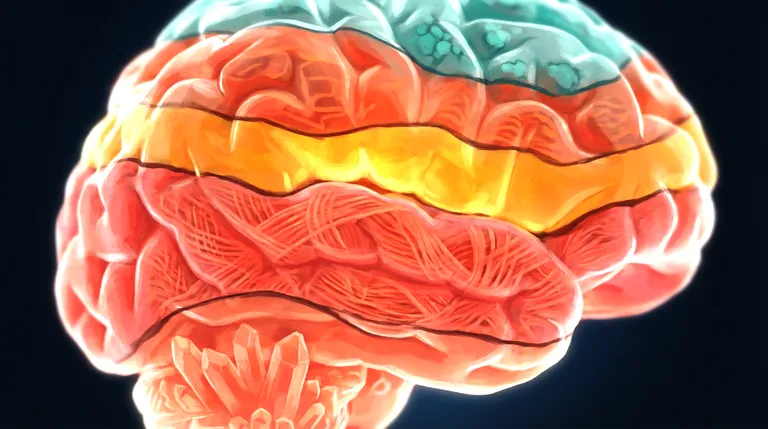

You’ve studied for weeks. You know the material cold. Then the exam lands on your desk, and your mind goes blank.
Or you’ve sunk that free throw a thousand times in practice. But with the game on the line, the ball clangs off the rim.
This isn’t bad luck. It’s your brain actively working against you. And it happens to almost everyone. A 2024 study found that 77% of athletes experienced choking in the past year. On average, they choked 18 times during that period.[1] You’re not weak. You’re human.
What Happens in Your Brain When You Choke
Choking under pressure isn’t a character flaw. It’s a neurological event.
When the stakes rise, your brain’s threat detection system kicks in. Your amygdala fires up and floods your body with adrenaline. Heart rate spikes. Palms sweat. So far, that’s just normal stress.
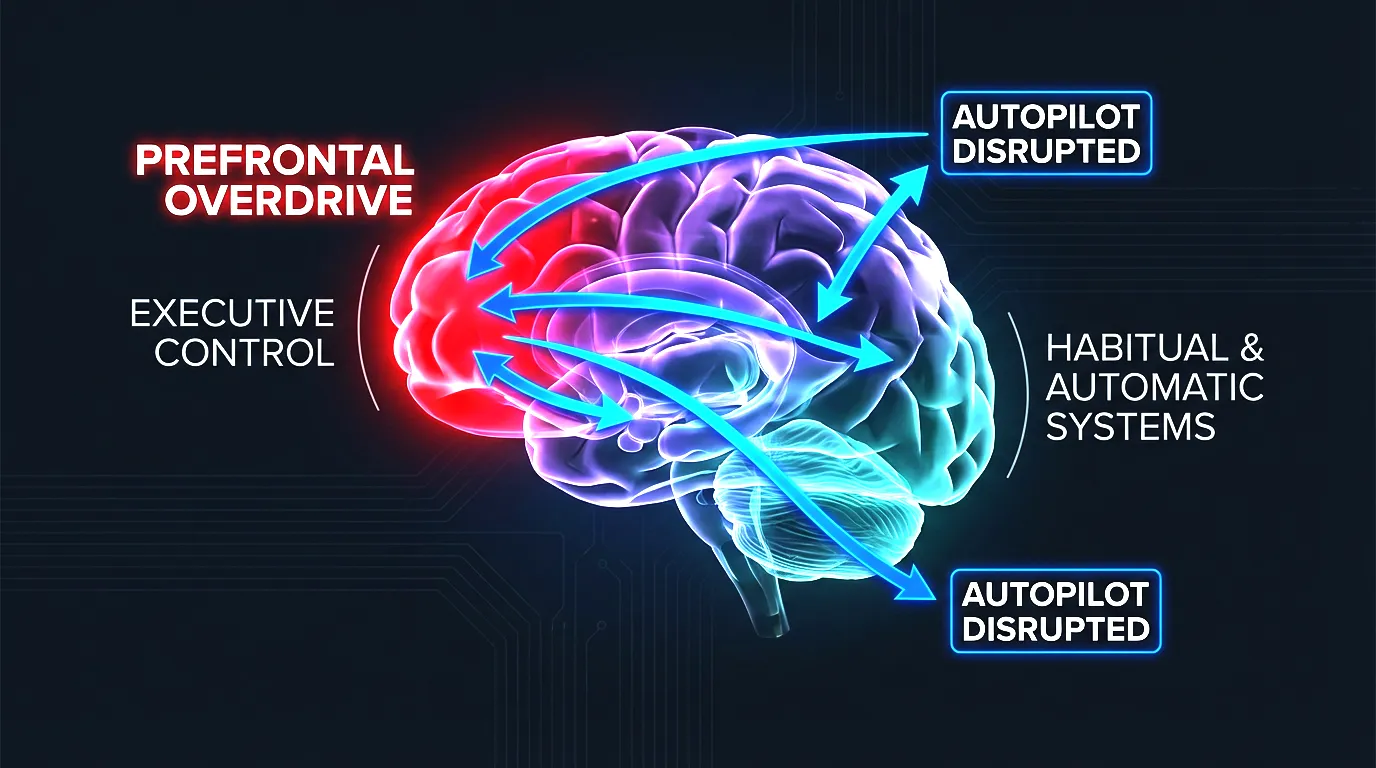
The problem starts in your prefrontal cortex. That’s the part of your brain right behind your forehead. It handles focus, planning, and complex thinking. Under normal conditions, it’s your greatest asset.
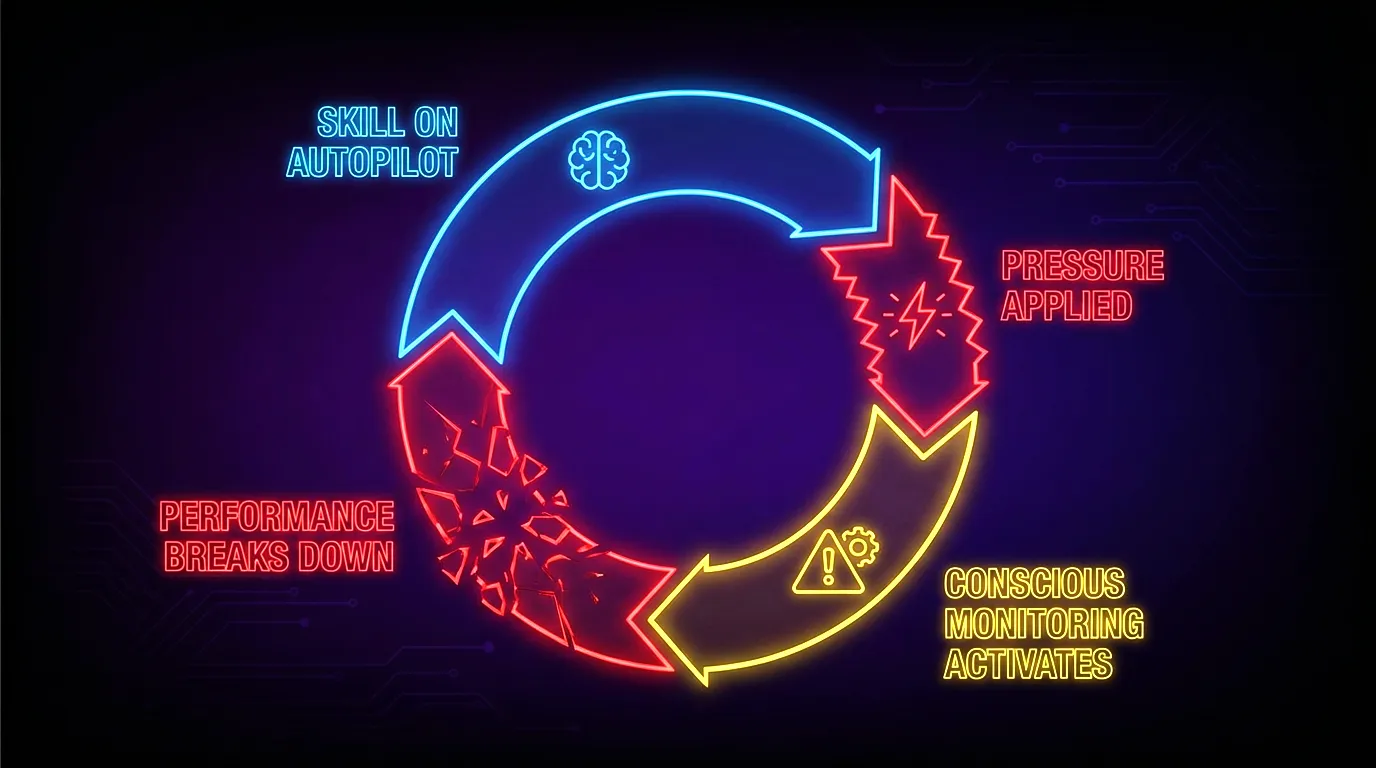
But here’s the twist. Under pressure, your prefrontal cortex goes into overdrive. It starts micromanaging actions that should run on autopilot. Cognitive scientist Sian Beilock calls this “paralysis by analysis.” Your brain essentially overthinks itself into failure.[2]
- Your prefrontal cortex hijacks automated motor skills
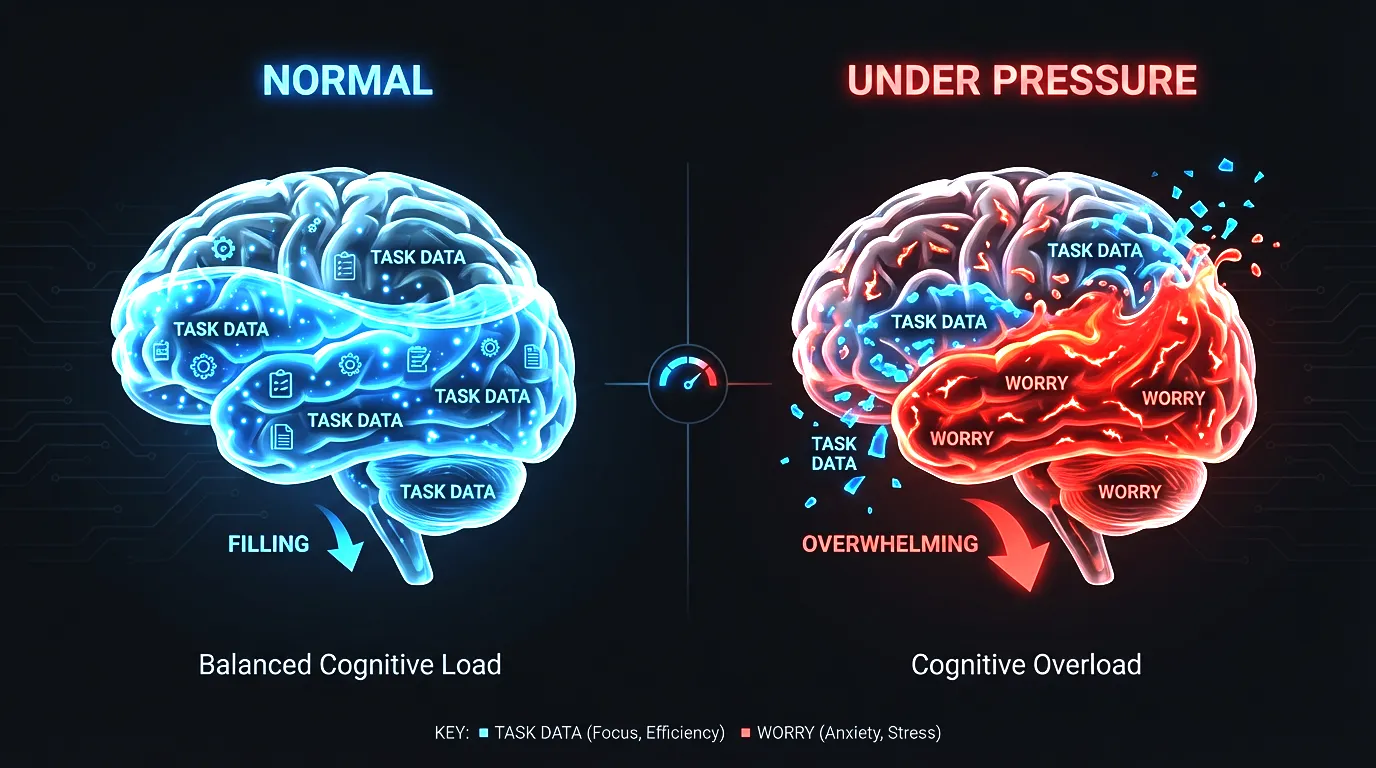
- Working memory fills up with worry instead of task-relevant information
- Attention shifts from “doing” to “monitoring,” which disrupts flow
- The more you care about the outcome, the worse the interference gets
“Choking is performing worse than you expected because of the situation and its consequences.” — Sian Beilock, cognitive scientist
A 2024 study using high-resolution 7T fMRI scans found something even more specific. Choking involves the cerebellum’s internal model getting disrupted by self-focused attention. Your brain literally changes how it processes sensory information when you’re watching yourself too closely.[3]
Why the Smartest People Choke the Hardest
Here’s the cruelest part. The people most likely to choke are the ones most qualified to succeed.
Research from Michigan State University found that only individuals with high working memory capacity choke on demanding tasks under pressure. People with lower working memory? They performed about the same regardless of pressure.[4]
Think about that for a second. The extra brainpower that usually makes you excel becomes the exact thing that fails you.
Here’s why. People with high working memory rely on that mental horsepower to solve problems. They can hold more information in their heads, run more complex calculations, and juggle more variables. But pressure fills that working memory space with anxious thoughts you can’t control.
| Working Memory Level | Normal Performance | Under Pressure | Why |
|---|---|---|---|
| High | Excellent | Drops significantly | Anxiety fills the working memory they depend on |
| Average | Good | Stays roughly the same | Less reliance on working memory to begin with |
| Low | Below average | Stays roughly the same | No working memory advantage to lose |
This is why a brilliant student can bomb an exam they knew backward and forward. It’s why a star athlete misses the shot they’ve made ten thousand times. Their biggest cognitive strength becomes their biggest vulnerability.
Recommended read: Shift by Ethan Kross — a powerful guide to managing the internal voice that spirals under pressure.
The research gets even more unsettling. This pattern extends beyond skills into fluid intelligence itself. Pressure doesn’t just make you fumble. It temporarily makes you less smart.[5] And if you’ve already been burning through your decision budget all day, that working memory is even more depleted before pressure ever enters the picture.
The Paralysis by Analysis Trap
Sian Beilock’s lab ran an experiment that perfectly illustrates the problem. They asked college soccer players to dribble a ball while focusing on which side of their foot was touching it.
The result? The players got slower and made more errors. Forcing conscious attention onto a skill that should be automatic made them worse.[6]
She found the same pattern in golf. The best putters couldn’t actually recall the details of what they did during a successful shot. They were operating on autopilot. The moment you try to consciously control a well-practiced skill, you break it.
This is the paralysis by analysis trap, and it shows up everywhere.
- A pianist who thinks about individual finger movements during a concert
- A public speaker who starts monitoring every word choice mid-sentence
- A surgeon who second-guesses muscle memory during a routine procedure
- A test-taker who rereads the same question five times because nothing “feels right”
The pattern is always the same. You shift from unconscious execution to conscious monitoring. And conscious monitoring is too slow and clumsy for skills that need to flow.
Why Practice Doesn’t Always Protect You
You’d think more practice would prevent choking. And sometimes it does. But Beilock’s research shows that standard practice isn’t enough. If you always practice in low-pressure conditions, you’re training your brain for a completely different situation than the one it’ll face on game day.
Your cognitive biases make this worse. You assume that because you performed well in practice, you’ll perform well under pressure. But your brain in practice and your brain under pressure are running fundamentally different programs.
Recommended read: Rewire by Nicole Vignola — explains how your brain builds and breaks neural patterns, and how to retrain them.
Up to 60% of people experience performance anxiety at some point in their lives. Among professional musicians, 58% of symphony orchestra players deal with it regularly. This isn’t a rare problem. It’s the norm.
5 Science-Backed Ways to Stop Choking Under Pressure
The good news? Choking is fixable. Researchers have identified specific techniques that work. Not vague advice like ” just relax.” Real interventions backed by controlled studies.[10]
1. Write Down Your Worries Before the Event
This is one of the most replicated findings in the field. Spending 10 minutes writing about your anxieties before a high-stakes test literally frees up working memory. In Beilock’s studies, students who did this expressive writing exercise improved their scores by nearly a full letter grade.[6]
Why it works: writing downloads the worries from your working memory onto paper. Once externalized, they stop competing with the task at hand.
2. Practice Under Simulated Pressure
Standard practice builds skill. But only pressure practice builds pressure tolerance. Beilock recommends practicing in front of a mirror, which increases self-consciousness and mimics the monitoring that happens during real performance.
Other ways to simulate pressure:
- Practice with a timer running
- Perform in front of friends or family
- Add real consequences to practice sessions
- Record yourself and watch it back
3. Use a Pre-Performance Distraction
Five minutes before the big moment, stop reviewing. Counterintuitive? Yes. But research shows that a brief mental distraction. like doing a puzzle, listening to music, or chatting about something unrelated. prevents your prefrontal cortex from spiraling into overthinking mode.
4. Meditate for 10 Minutes
Lab studies found that people with zero meditation experience who meditated for just 10 minutes before a high-stakes test scored 87 (B+) compared to 82 (B-) for those who didn’t. Same ability level. Different mental state.
Deep breathing activates your parasympathetic nervous system, which directly counteracts the fight-or-flight response that causes choking.
5. Reframe the Stakes
A Caltech study found that how you think about the stakes changes your performance. When participants imagined they already had the prize money and were performing to keep it (instead of performing to win it), choking dropped dramatically.[7]
This works because loss framing is less threatening than gain framing. “Don’t lose what you have” feels different to your brain than “win something new.” It reduces the perceived threat, which keeps your prefrontal cortex from hijacking your performance.[9]
Recommended read: Atomic Habits by James Clear — the definitive guide to building practice systems that make skills automatic and pressure-proof.

The Counterintuitive Secret to Peak Performance
Everything about choking under pressure points to one uncomfortable truth. Trying harder makes it worse.
Peak performance doesn’t come from gritting your teeth and focusing more intensely. It comes from trusting your training and letting go. The golfers who couldn’t remember their best putts weren’t being careless. They were in a state of unconscious competence, where the skill runs without interference from the thinking mind.
This is what athletes call “the zone” and psychologists call flow state. It’s the opposite of choking. Instead of your conscious mind taking over, it steps back. Instead of monitoring every micro-movement, you let the practiced skill unfold naturally.
The irony is brutal. The things that make you choke. caring deeply, trying hard, wanting to succeed. are the same things that make you a high performer in the first place. The solution isn’t to care less. It’s to train your brain to handle caring without self-destructing.
Here’s what the research tells us about building that capacity:
- Practice under pressure regularly so your brain normalizes high-stakes conditions
- Develop pre-performance routines that shift attention away from outcomes
- Build intrinsic motivation rather than relying on external rewards
- Accept that some anxiety is normal and even helpful in small doses
- Focus on process, not outcome. Think “execute the technique” not “win the game”
Your brain isn’t broken when you choke. It’s doing exactly what it evolved to do. Protect you from threat. The problem is that an exam, a free throw, or a job interview isn’t actually a threat. But your brain can’t tell the difference.
The fix isn’t willpower. It’s science. And now you know the science.

Sources
What Happens in Your Brain When You Choke
2. What Governs Choking Under Pressure? (Journal of Experimental Psychology: General, 2004)
3. Neural Substrates of Choking Under Pressure: A 7T-fMRI Study (Neuroscience Research, 2024)
Why the Smartest People Choke the Hardest
4. Working Memory and Choking Under Pressure in Math (Psychological Science, 2005)
The Paralysis by Analysis Trap
6. Psychologist Shows Why We Choke Under Pressure and How to Avoid It (University of Chicago News)
5 Science-Backed Ways to Stop Choking Under Pressure
8. Why Do People Choke When the Stakes Are High? (Caltech, 2012)