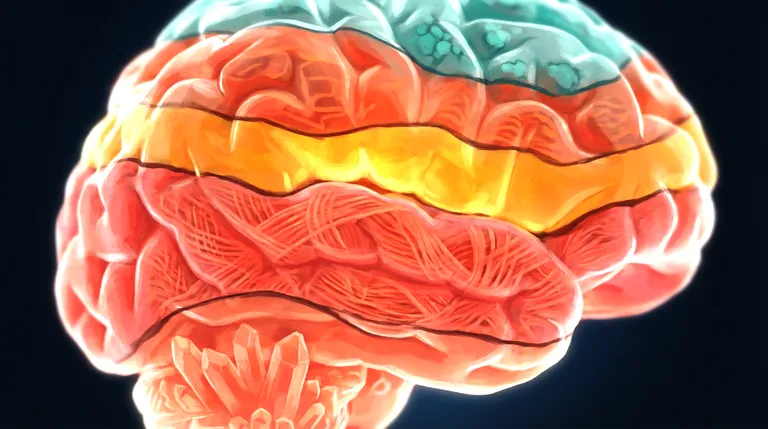
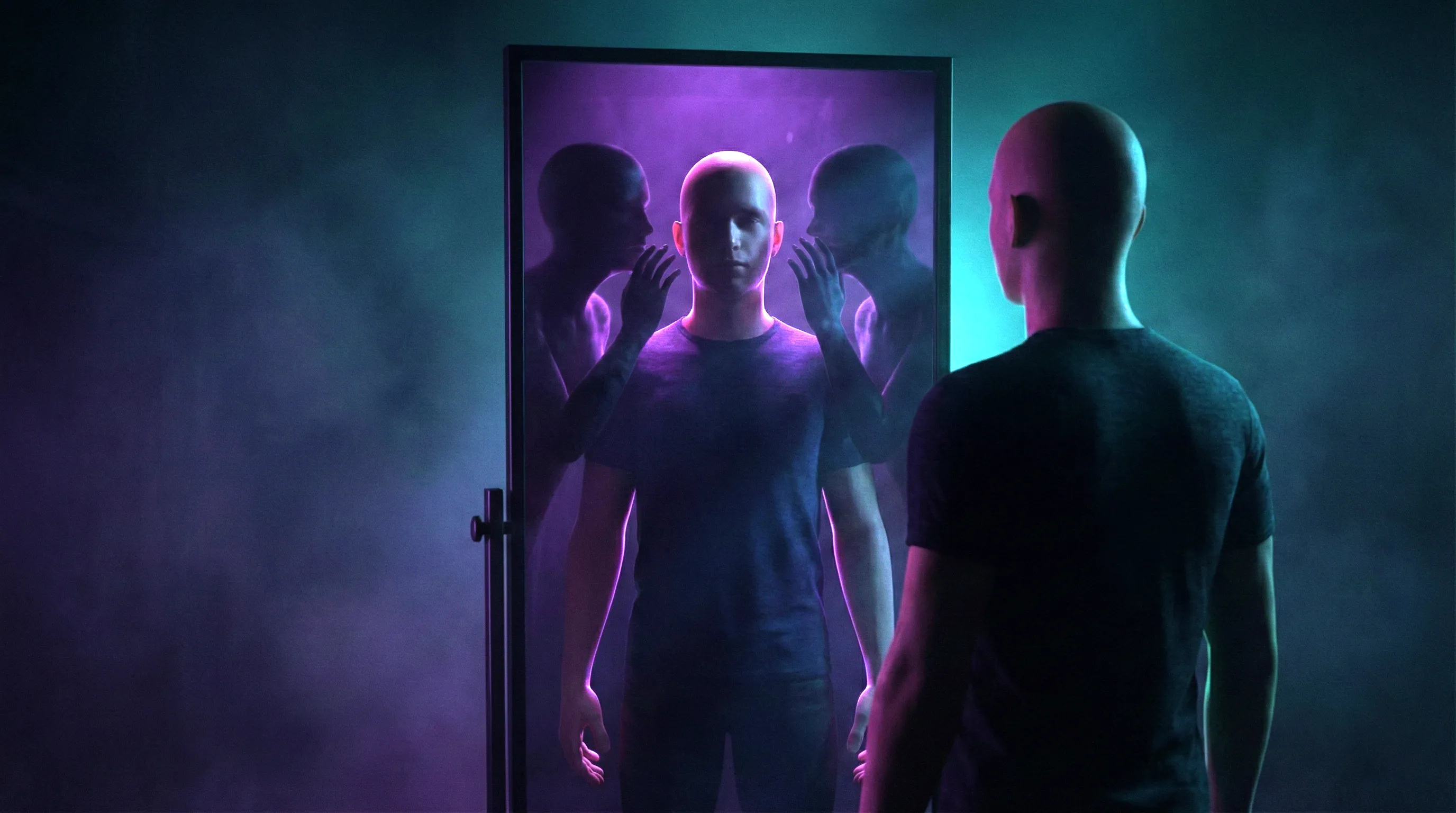
Richard Feynman won the Nobel Prize in Physics. He was one of the most brilliant minds of the twentieth century. He could solve equations that stumped entire departments.
But he couldn’t open his eyes.
During a hypnosis demonstration at Princeton, a psychology professor suggested that Feynman’s eyes were sealed shut. Feynman was sure he could open them. He was sure he was just playing along. But when the professor later suggested he’d walk the long way around the room instead of taking the direct path to his seat, Feynman tried to resist. He started walking straight. Then an overwhelming discomfort hit him. He couldn’t keep going. He walked all the way around the hall, exactly as suggested.
If one of history’s sharpest scientific minds couldn’t override a simple suggestion, what chance do the rest of us have?
You’re More Suggestible Than You Think
Suggestibility is the degree to which you accept a suggestion and act on it. It’s not about being weak or gullible. It’s a fundamental feature of how your brain processes information from other people.
Neuroscientist Amir Raz spent decades studying this at McGill University. He draws a clean line between the two sides. Suggestion is a type of influential communication. Suggestibility is how much that communication lands.
Here’s what surprised researchers. You don’t need a hypnotist or a stage show to trigger it.
- A woman visited Raz’s office at a hospital, sat down across from him, and spontaneously slipped into a hypnotic state. He didn’t say or do anything special. Just being near someone she perceived as an authority figure was enough.
- A photographer covering Raz for a New York Times story stopped snapping photos mid-shoot. He’d accidentally hypnotized himself just by watching a demonstration meant for someone else.
- In one experiment, Raz gave participants a suggestion that English words on a screen were meaningless foreign symbols. Highly suggestible people actually stopped being able to read them. Their brains processed the words as gibberish.[1] [2]
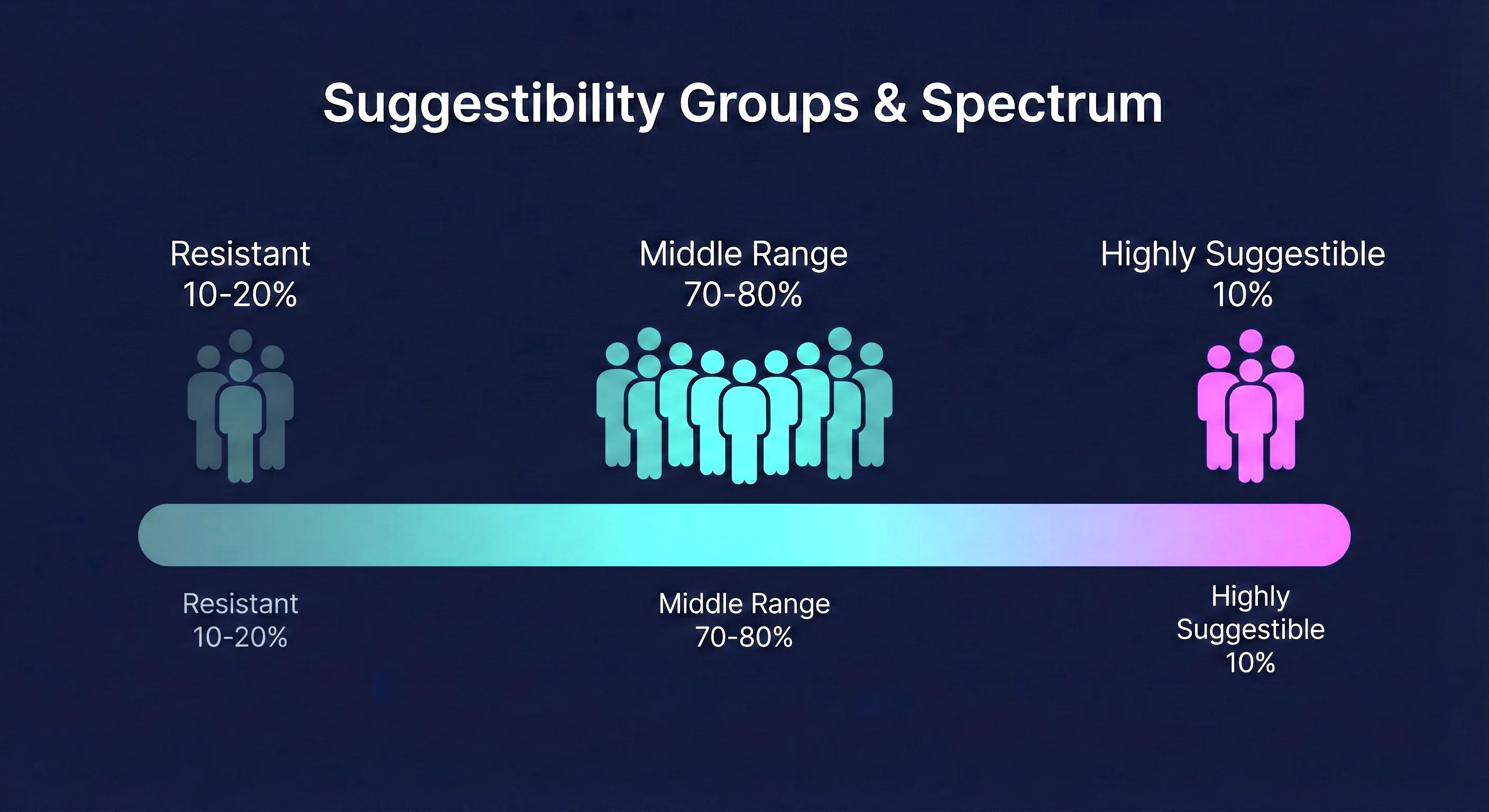
We all sit somewhere on the suggestibility spectrum. About 10% of people are highly suggestible. Another 10-20% barely respond at all. The rest of us land in the middle, responsive to the right suggestion at the right time.
“It’s not about what you know or even what you say. It’s about what they think you know and what they think you say.” - Amir Raz
That last point is critical. Your suggestibility isn’t fixed. It shifts based on context, stress, who’s talking, and how much you need what they’re offering.
What Makes Some People More Suggestible Than Others
If suggestibility isn’t about intelligence, what drives it? Researchers have identified a cluster of personality traits, brain differences, and life stages that separate the highly suggestible from the resistant.
The Personality Profile
Psychologist Dan Ariely and his colleagues studied people who believed they’d been abducted by aliens. These weren’t unintelligent people. But three personality traits stood out:
- Magical ideation. A tendency to believe in unconventional forms of causation. Thinking that numbers have special powers, or that you can sense someone thinking about you.
- Absorption. The ability to become deeply immersed in mental imagery, fantasy, or experience. Getting completely lost in a movie or a daydream.
- Perceptual aberration. A tendency to experience unusual sensory perceptions. Feeling that objects have moved when nobody has been around.
These traits make people more open to suggestion. They also make people more creative, more empathetic, and more emotionally rich. It’s a double-edged sword. The same pattern-seeking tendencies also fuel belief in grand narratives like simulation theory, where your brain makes the idea feel irresistible.
Research also links susceptibility to openness to experience and social desirability. People who naturally want to please others or who score high on openness are more easily influenced. Conscientiousness, on the other hand, tends to buffer against suggestibility.
The Brain Differences
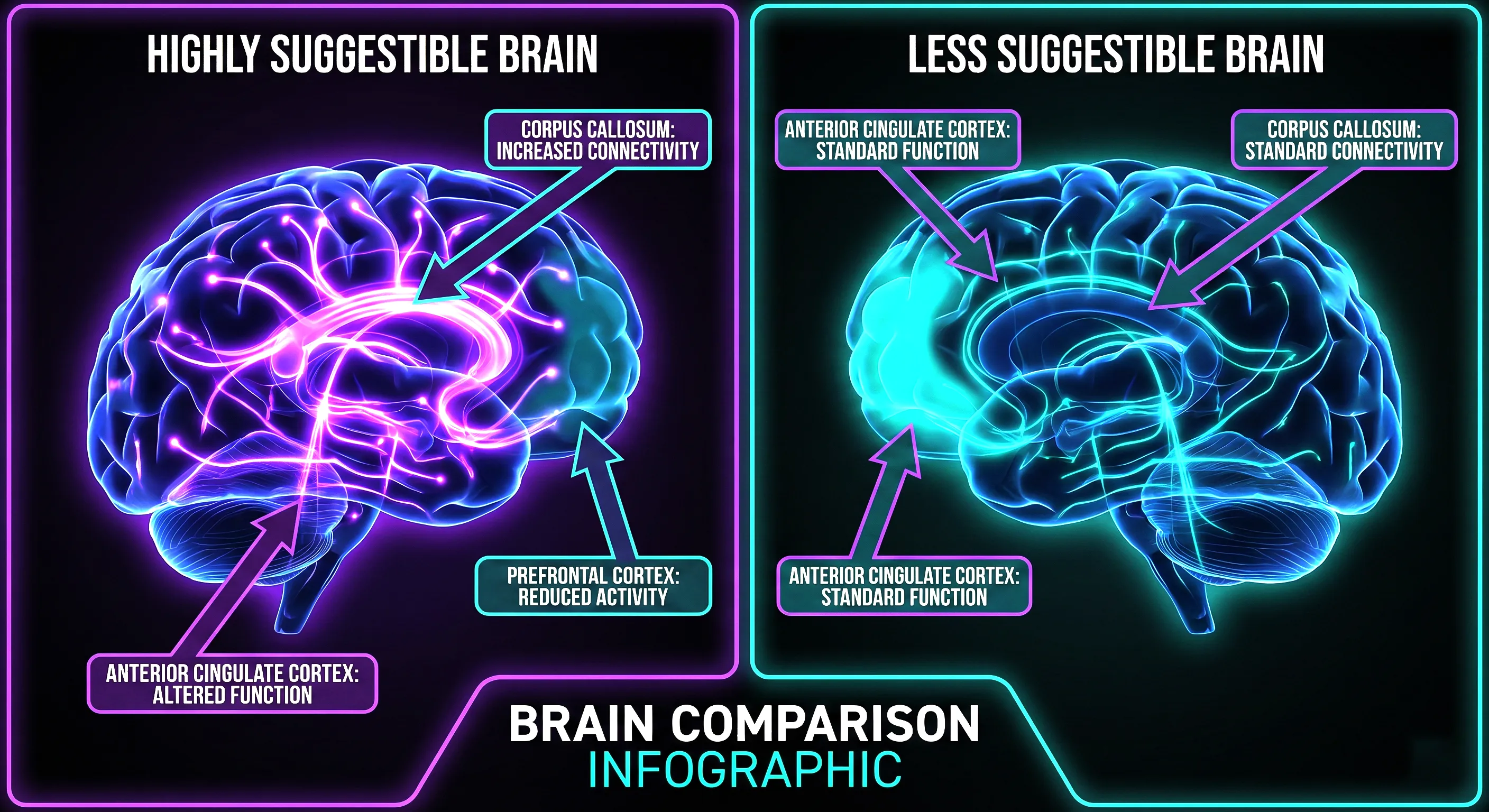
Neuroscience adds another layer. People who respond strongly to suggestion tend to have different brain wiring.[8]
| Brain Feature | Highly Suggestible | Less Suggestible |
|---|---|---|
| Corpus callosum connectivity | Greater connectivity between brain hemispheres | Standard connectivity |
| Prefrontal cortex activity | Reduced activity during suggestion | Normal baseline activity |
| Anterior cingulate cortex | More active, monitors conflict between suggestion and reality | Less responsive to suggestion |
| Imaginative processing | Vivid, immersive imagery that feels real | Imagery stays clearly “imagined” |
The key finding is that highly suggestible people can actually process information differently when given a suggestion. Raz proved this by using a post-hypnotic suggestion to disable the Stroop effect, a psychological phenomenon so robust that thousands of studies had failed to crack it. His suggestion made proficient readers temporarily unable to read.[1] [2]
That’s not compliance. That’s a genuine change in brain processing. People who follow the crowd despite knowing better aren’t always doing it consciously. Sometimes their brains are literally constructing a different reality.
Age Changes the Equation
Research on social conformity across adulthood revealed something surprising. Susceptibility to social conformity pressures generally diminishes with age.[3] Older adults showed greater ability to resist external influence when regulating everyday desires, thanks to age-related improvements in emotion regulation.
This doesn’t mean older adults are immune. It means life experience builds emotional buffers that make snap compliance less automatic. Adolescents, by contrast, showed the greatest conformity to perceived high-status peers. If you’re young and wondering why you keep going along with what everyone else thinks, your brain is literally wired to prioritize social belonging over independent judgment right now. That changes with time.
Recommended read: The Suggestible Brain by Amir Raz. A neuroscientist’s exploration of why suggestion is one of the most powerful forces shaping human behavior.
How Your Suggestibility Gets Exploited
Knowing that suggestibility is real and measurable opens a darker question. Who uses it against you?
Authority Figures
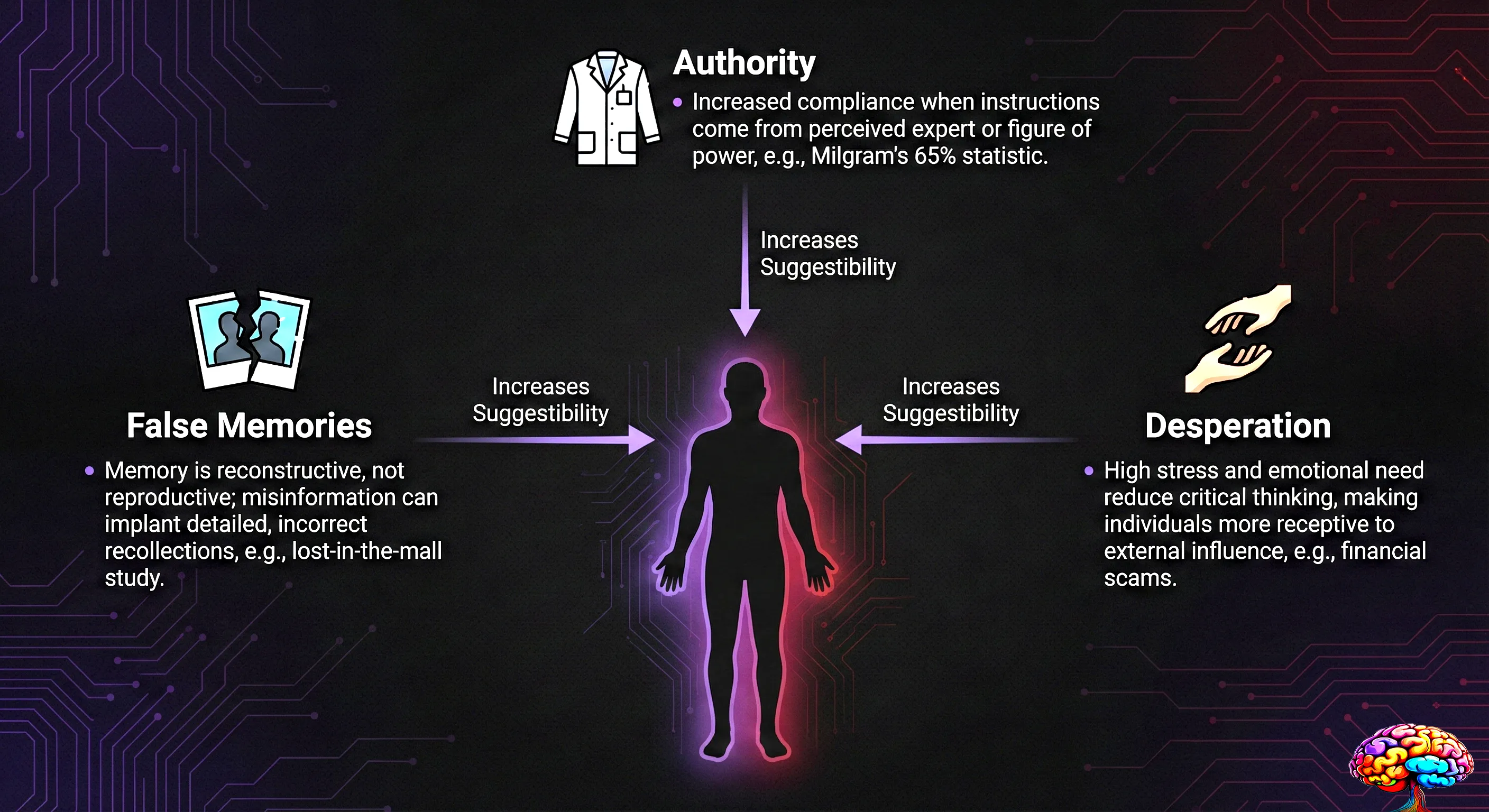
Stanley Milgram’s famous obedience experiments from the 1960s reported that 65% of participants delivered what they believed were maximum-voltage shocks when pressured by a researcher.[4] Those numbers made headlines. But later analysis revealed serious problems. The experimenter frequently went off-script, badgering and coercing reluctant participants far beyond the standardized prompts. Audio recordings show many participants expressed disbelief that the shocks were real. And replication attempts have produced widely varying compliance rates depending on the setting and procedures used.
The study’s core insight still holds. People are more obedient to perceived authority than they expect. But the clean 65% statistic is misleading. Real compliance is messier, more context-dependent, and more influenced by social pressure from the experimenter than Milgram originally admitted.
This doesn’t require a lab coat. A confident voice, a title, a uniform, or even just the perception of expertise can trigger compliance. Raz documented cases where people entered trance-like states just from sitting in a doctor’s office.
False Memory Implantation
Memory researcher Elizabeth Loftus lost her mother in a drowning accident when she was fourteen. A relative later told her she’d been the one to find the body. Loftus began “remembering” details of the discovery. The firemen giving her oxygen. The scene by the water. Years later, the relative called to apologize. It wasn’t true. Loftus had never found the body.[5]
That single false suggestion created an entire constructed memory, complete with sensory details. Our memories aren’t video recordings. They’re more like Wikipedia pages. You can edit them. But so can other people.
- Police officers can accidentally lead witnesses toward false identifications through subtle cues
- Repeated suggestions make events seem more plausible, then believable, then “remembered”
- Suggestible people are especially vulnerable to this. Their rich imagination fills in details that make false memories feel vivid and real
This is the same machinery that makes some people believe misinformation even when the facts are right in front of them.
Desperate Seekers
Robert Cialdini observed something striking at a Transcendental Meditation recruiting event. A colleague had systematically destroyed every logical argument the recruiters made. The presentation was an embarrassing failure. Yet immediately afterward, a rush of audience members handed over their money.
Why? Because these were people with real problems. Insomnia. Academic failure. Career anxiety. They needed a solution so badly that the logical destruction of TM’s claims actually made them sign up faster. One attendee explained it directly: “I knew I’d better give them my money now, or I’d go home and start thinking about what he said and never sign up.”
When you’re desperate, your suggestibility spikes. You’ll grab the first life raft you see, even if it has holes. Online, these vulnerable moments make you an easy mark for propaganda techniques baked into social media algorithms.[9]
| Exploitation Method | How It Works | Who’s Most Vulnerable |
|---|---|---|
| Authority pressure | Lab coat, title, or confidence triggers compliance | People who defer to expertise |
| False memory implantation | Repeated suggestion creates vivid “memories” | High-absorption personalities |
| Desperation targeting | Solutions offered when you’re stressed or afraid | Anyone in crisis |
| Social proof flooding | Making a fringe idea look mainstream | People who track group opinion |
| Urgency pressure | ”Act now” language bypasses critical thinking | Emotionally reactive individuals |
“Quick, a hiding place from thought! The decision has been made, and from now on the consistency tape can be played whenever necessary.” - Robert Cialdini
Recommended read: Influence by Robert Cialdini. The foundational guide to the six principles of persuasion and why we comply without thinking.
How to Protect Yourself From Unwanted Influence
The good news is that suggestibility isn’t destiny. Once you understand how it works, you can build real defenses.
-
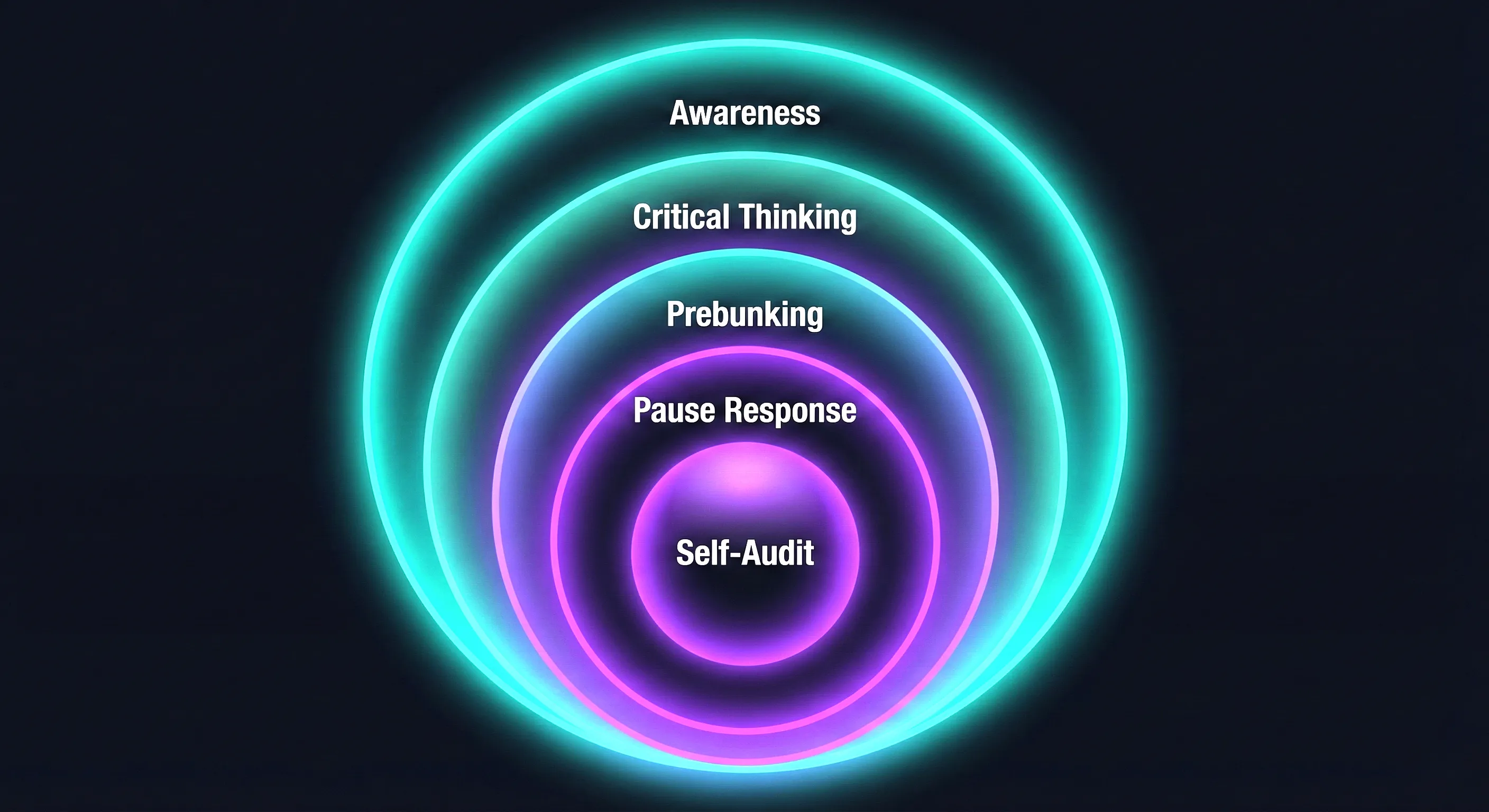
Name it out loud. Raz offers a simple but powerful rule. When someone suggests something inaccurate or manipulative, call it out immediately. Don’t go along to be polite. Don’t wait to address it later. Acquiescing, even once, can start a gaslighting dynamic that’s hard to undo.
-
Practice the “transparent thoughts” exercise. Imagine that every thought in your head is instantly visible to everyone around you. This trains you to catch undesirable thoughts as they form, challenge why you’re thinking them, and change the thought before it becomes action. These three Cs (catch, challenge, change) are the backbone of effective cognitive behavioral therapy.
-
Build your inoculation. Psychologist Sander van der Linden’s research on prebunking shows that exposure to weakened forms of manipulation builds psychological immunity.[6] Just like a vaccine, seeing how persuasion tactics work before you encounter them makes you significantly harder to influence.
-
Slow down. The most dangerous moment for suggestibility is when you’re rushed. Artificial urgency, countdown timers, “act now” language. All of it is designed to bypass your critical thinking. Give yourself a 24-hour rule before any major decision made under pressure.
-
Audit your vulnerabilities. Ask yourself honestly:
- Am I stressed, tired, or emotionally vulnerable right now?
- Am I being asked to decide while I feel desperate or afraid?
- Does this person hold authority over me, and am I deferring because of their position?
- Have I been exposed to this idea repeatedly, and am I confusing familiarity with truth?
If the answer to any of those is yes, step back. Your suggestibility is temporarily elevated. Enhancing cognitive abilities like attention, memory, and analytical thinking helps you process and evaluate external information more effectively over time.[7]
Recommended read: Foolproof by Sander van der Linden. A practical guide to psychological inoculation against manipulation and misinformation.
Your Suggestibility Is Also a Gift
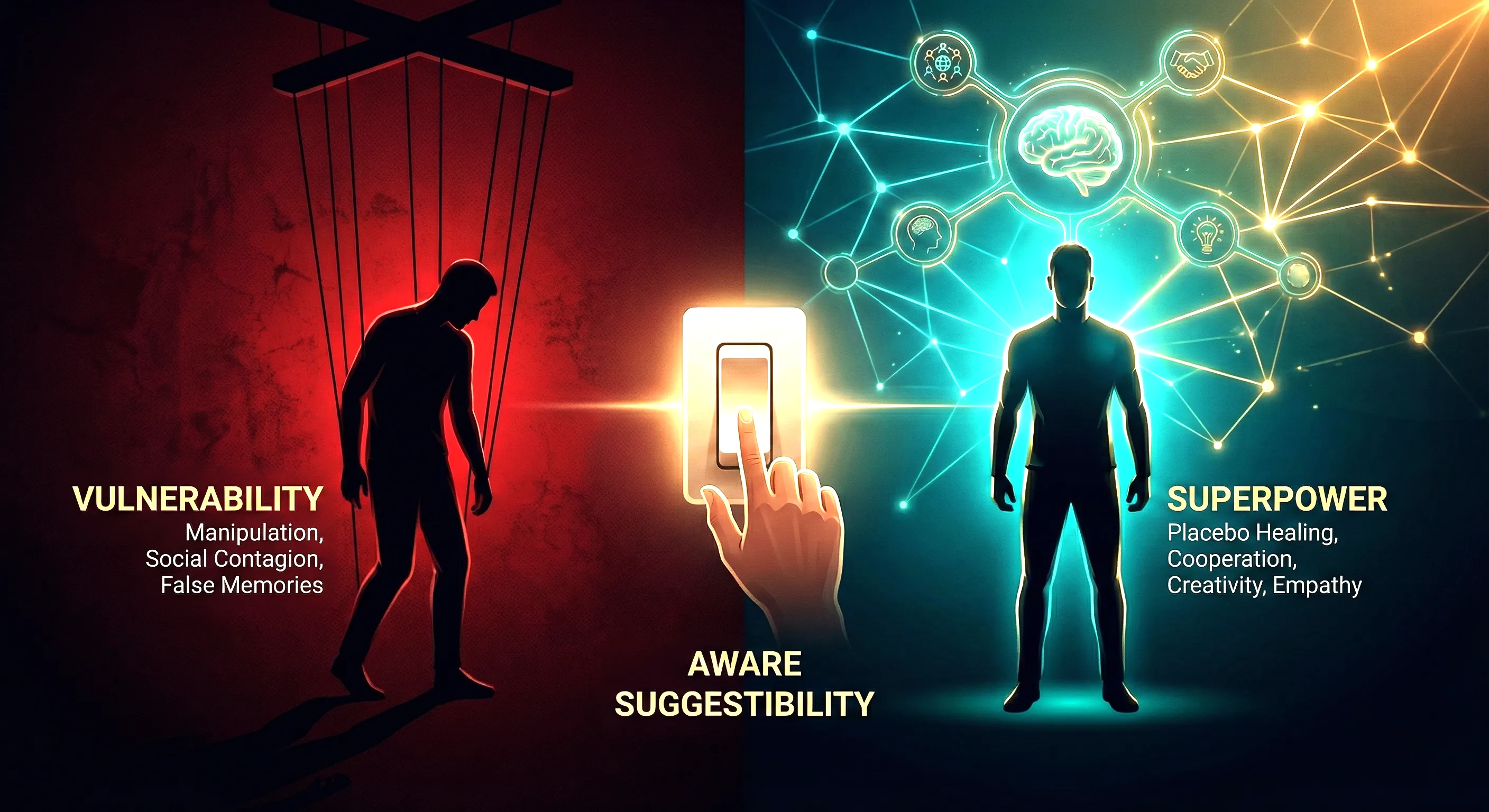
Here’s the twist most people miss. Suggestibility isn’t just a vulnerability. It’s one of the most powerful features of the human brain.
The placebo effect is suggestion at work. Sugar pills reduce real pain. Fake surgeries produce real improvement. Raz even demonstrated that giving people placebos while telling them the substances were psychedelics still produced meaningful mind-altering experiences. Our expectations literally reshape our physiology.
Suggestibility also powers social cooperation. Our ability to imagine what others are thinking, to absorb their ideas, to align our behavior with a group. All of that depends on being receptive to suggestion. Without it, human civilization wouldn’t exist. We’d have no collective imagination, no shared culture, no ability to coordinate.
- Suggestion helps therapists guide patients through trauma recovery
- It powers the placebo component in every medical treatment
- It enables teaching, mentoring, and the transmission of knowledge across generations
- It allows communities to form shared identities and work toward common goals
- It even shapes who we find attractive through mate-choice copying
The problem isn’t being suggestible. The problem is being suggestible without knowing it.
“Understanding how the suggestible mind operates reveals a great deal about human nature, what makes us tick, and the relationship between what we expect and what actually happens.” - Amir Raz
When you understand your own suggestibility, you gain something valuable. You can embrace the suggestions that help you and reject the ones that exploit you. You can use your imaginative capacity for creativity instead of letting it fuel false memories. You can join groups intentionally instead of being swept along by social contagion.
Your suggestible brain isn’t a flaw to fix. It’s a tool to master.
Recommended read: Misbelief by Dan Ariely. Explores the personality traits and psychological traps that lead rational people into irrational beliefs.
Sources
You’re More Suggestible Than You Think
1. Hypnotic Suggestion and the Modulation of Stroop Interference (Psychological Science, 2002)
2. Hypnotic Suggestion Reduces Conflict in the Human Brain (PNAS, 2005)
What Makes Some People More Suggestible Than Others
How Your Suggestibility Gets Exploited
4. Behavioral Study of Obedience (Journal of Abnormal and Social Psychology, 1963)
5. The Formation of False Memories (Psychiatric Annals, 1995)
9. The Power and Pitfalls of Social Norms (Annual Review of Psychology, 2025)
How to Protect Yourself From Unwanted Influence
7. Understanding Psychological Reactance: New Developments and Findings (Frontiers in Psychology, 2015)