Imagine slowing Alzheimer’s disease. Not with an expensive drug that costs tens of thousands of dollars a year. But with a simple device that flickers light and plays sound at exactly 40 beats per second.
That’s not science fiction. Researchers at MIT just published results showing this approach worked for over two years in patients with late-onset Alzheimer’s.[1]
More than 7 million Americans live with Alzheimer’s right now. The disease costs $384 billion per year in care alone.[10] And until recently, the best treatments barely moved the needle. But a therapy that uses nothing more than pulsing light and rhythmic sound is changing the conversation about what’s possible.
What the MIT Study Actually Found
In 2020, a team led by MIT neuroscientist Li-Huei Tsai enrolled 15 volunteers in a clinical trial for something called GENUS, which stands for gamma entrainment using sensory stimuli.[9] The approach is deceptively simple. Patients sit in front of an LED panel and speaker that both pulse at exactly 40 hertz. One hour a day.
COVID cut the original trial short. But five participants stuck with the treatment for roughly two years in an open-label extension study published in Alzheimer’s & Dementia in November 2025.[1]
The Results Split Along an Unexpected Line
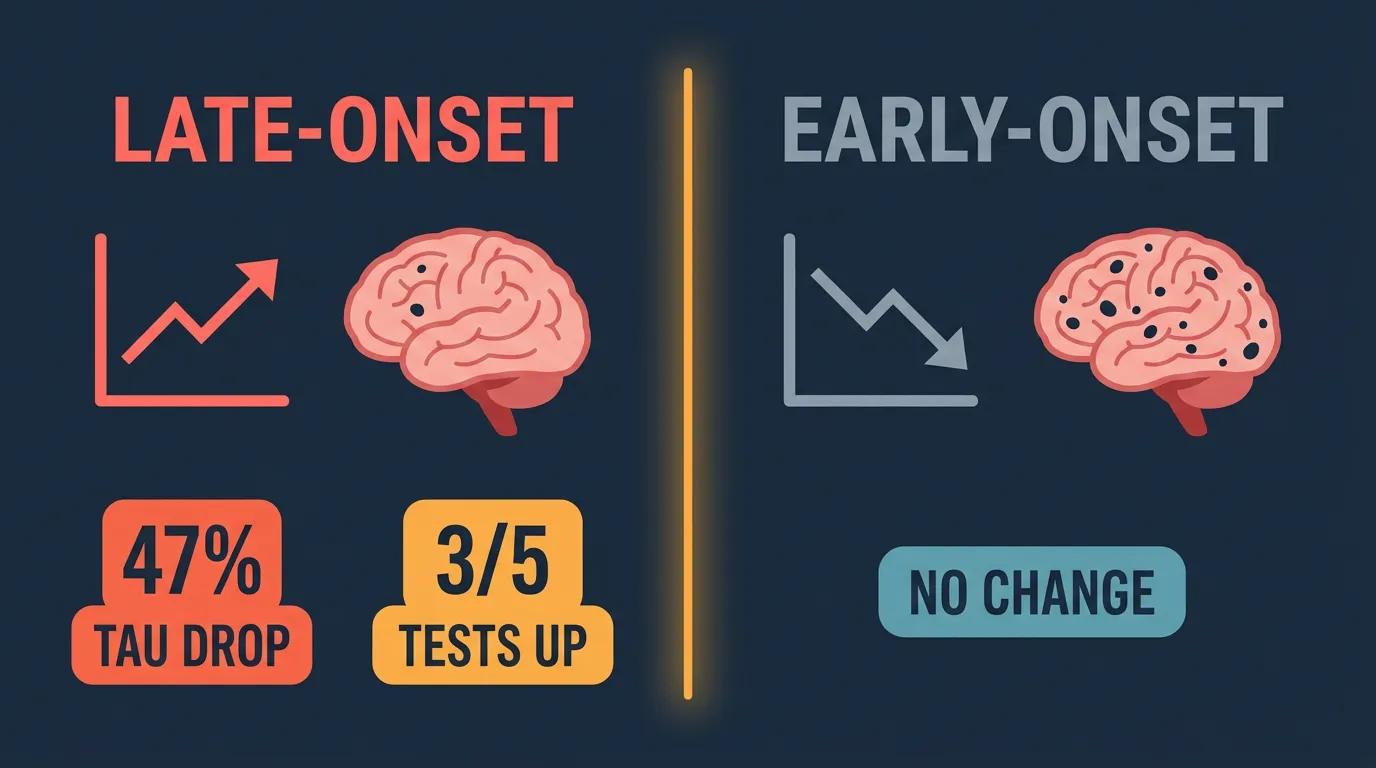
The three participants with late-onset Alzheimer’s (all female) showed real improvement:
- Scored significantly higher on 3 out of 5 cognitive tests compared to matched patients in national databases
- Showed increased brain-wave responsiveness to the stimulation at 30 months
- Improved their circadian rhythm and sleep quality
- Two who gave blood samples showed plasma phosphorylated tau reductions of 47% and 19.4%
That tau reduction matters. Phosphorylated tau (pTau217) is one of the strongest biomarkers for Alzheimer’s pathology. Seeing it drop that much is a big deal.[2]
But the two participants with early-onset Alzheimer’s (both male) didn’t improve. Their brain-wave responsiveness actually declined over the same period. Researchers think this may reflect fundamental biological differences between late-onset and early-onset forms of the disease.[1]
| Measure | Late-Onset Patients | Early-Onset Patients |
|---|---|---|
| Cognitive test scores | Improved or stabilized | No significant change |
| Brain-wave response (30 months) | Increased | Decreased |
| Sleep and circadian rhythm | Improved | No change reported |
| Plasma tau levels | Reduced 19-47% | Not measured |
| Treatment safety | Safe and well-tolerated | Safe and well-tolerated |
Recommended read: Why We Remember by Charan Ranganath. A neuroscientist’s guide to how memory works and why it breaks down in diseases like Alzheimer’s.
How 40Hz Light Hacks Your Brain’s Cleaning System
Your brain naturally produces electrical oscillations called gamma waves, which pulse at frequencies between 30 and 100 hertz. These waves are critical for memory, perception, and focused attention. But in Alzheimer’s patients, gamma oscillations are disrupted and weakened.[4]
That’s where 40Hz stimulation comes in. When flickering lights and rhythmic sounds hit your eyes and ears at exactly 40 beats per second, they force your brain’s neurons to synchronize at that frequency. This kicks off a chain reaction that goes far beyond just restoring a brainwave pattern.[3]
The Glymphatic Cleanup Crew
In 2024, MIT researcher Mitch Murdock and Tsai published a landmark paper showing exactly how this works. The 40Hz stimulation activates a specific type of brain cell called VIP interneurons. These cells release a peptide called vasoactive intestinal peptide (VIP), which triggers the brain’s waste-removal system.[3]
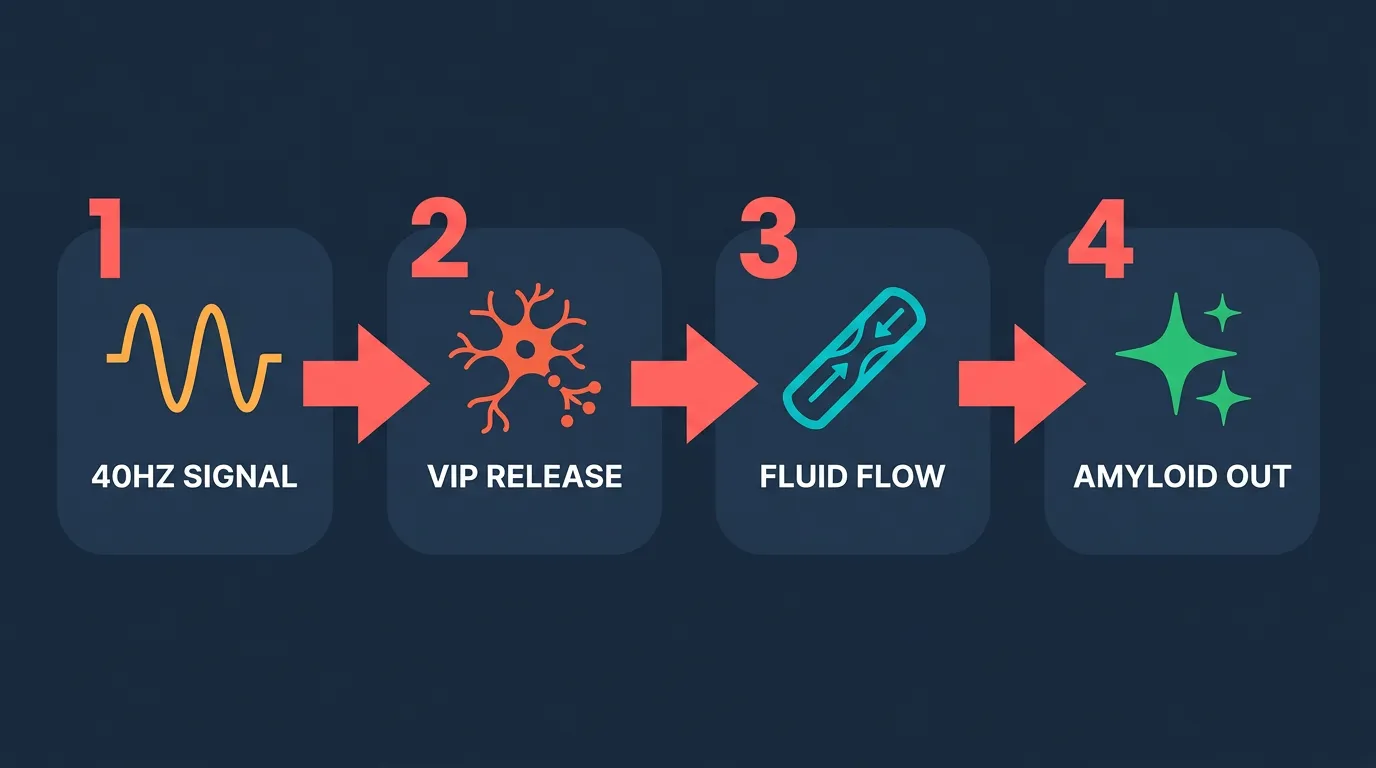
Here’s what happens step by step:
- Gamma stimulation activates VIP interneurons. These specialized neurons respond to the synchronized 40Hz signal.
- VIP increases arterial pulsatility. Blood vessels in the brain start pumping harder, creating stronger fluid flow.
- Cerebrospinal fluid floods brain tissue. The glymphatic system, your brain’s plumbing network, pushes cleaning fluid through your neural tissue.
- Amyloid gets flushed out. The toxic proteins that clump together in Alzheimer’s brains are carried away through lymphatic drainage.
When the researchers chemically disabled VIP neurons in mice, the cleanup process stopped entirely. No VIP meant no increased arterial pulsing and no amyloid clearance. That confirmed VIP is the essential trigger.[3]
The response doesn’t stop at one cell type. Tsai’s lab has documented changes in neurons, microglia (the brain’s immune cells), astrocytes, oligodendrocytes, and blood vessels.[5] Your entire brain responds to this stimulation.
“The more we understand the mechanisms, the more we will have good ideas about how to further optimize the treatment.” — Li-Huei Tsai, MIT
Recommended read: Brainjacking by Brian Clegg. Explores how technology can influence and reshape brain function, including non-invasive stimulation approaches.
From Mouse Brains to Human Hospitals
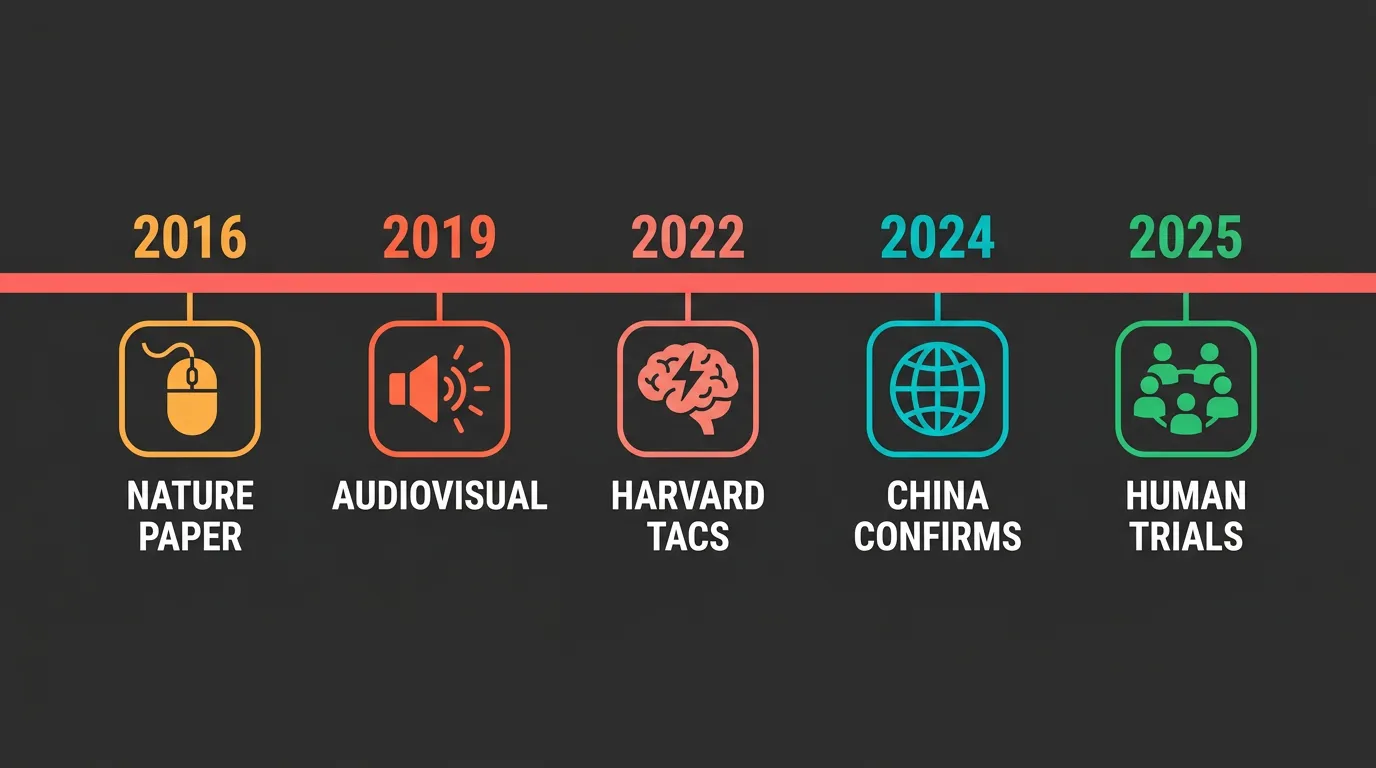
This research didn’t start with humans. It started with mice and a flickering light in 2016.
Tsai’s lab published a groundbreaking paper in Nature showing that exposing Alzheimer’s model mice to 40Hz flickering light reduced amyloid plaques in their visual cortex within just one hour. That single result launched an entire field of research.[5]
The Mouse Evidence Kept Stacking Up
Over the next several years, the collaboration produced study after study showing broader effects:
- Combined light and sound reduced amyloid and tau throughout the brain, not just the visual cortex[6]
- Mice maintained better memory and cognition compared to unstimulated controls
- Neuron death slowed and synapse loss decreased significantly
- The treatment worked through light alone, sound alone, combined audiovisual stimulation, and even tactile vibration[5]
The key breakthrough in 2019 was showing that audiovisual stimulation together produced far stronger effects than either sense alone. Martorell and colleagues demonstrated that combining 40Hz light and sound reduced amyloid pathology across the entire brain, including deeper structures like the hippocampus and prefrontal cortex.[6]
Independent Teams Confirmed the Findings
What makes this research especially compelling is that other labs around the world have replicated the core findings:
- A 2024 team in China independently confirmed that 40Hz sensory stimulation increases glymphatic fluid flow in mice[5]
- Harvard Medical School researchers in 2022 used transcranial alternating current stimulation at 40Hz and reduced tau burden in three of four human volunteers[5]
- A Scottish team in 2023 showed that 37.5Hz audiovisual stimulation improved memory recall in more than 100 healthy participants[5]
The fact that this isn’t just one lab’s finding makes the scientific case much stronger. Multiple independent groups using different stimulation methods all point to the same conclusion. 40Hz gamma entrainment does something real to the brain. Even non-technological approaches like nostalgia-based therapy are showing promise in Alzheimer’s treatment, improving both cognition and emotional well-being.
Your brain’s ability to adapt to stimulation connects to a broader principle. The same neuroplasticity that lets your brain grow new neurons at age 78 may also explain why gamma stimulation can restore disrupted circuits.
The Race to Market, Cognito’s Phase III Trial
The science moved from MIT’s lab to a real company fast. Cognito Therapeutics, an MIT spinoff, developed a wearable device called Spectris that delivers the same 40Hz light and sound treatment patients can use at home.
OVERTURE Trial Results
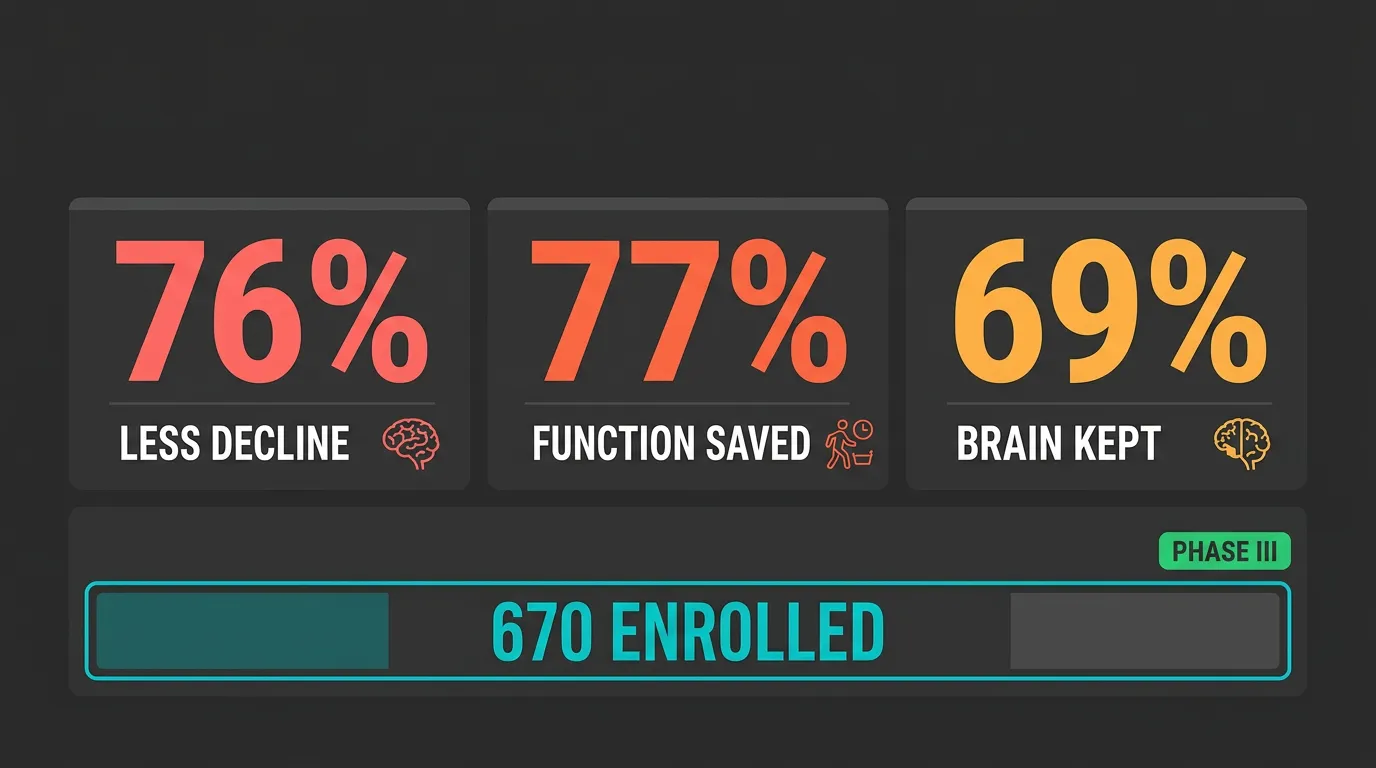
Cognito’s OVERTURE feasibility study produced striking numbers. In the initial six-month controlled phase, daily one-hour Spectris treatment was associated with:[7]
- 76% reduction in the rate of cognitive decline
- 77% reduction in functional decline (ability to handle daily activities)
- 69% reduction in whole brain atrophy
Translated into time, that means roughly 4.5 months of preserved cognitive function and 4.8 months of preserved daily living ability over just six months of treatment. In the open-label extension, those numbers grew even larger, with nearly 10 months of preserved cognitive function.[7]
The device also showed strong safety and adherence. More than 80% of participants stuck with the daily routine, and no cases of ARIA (amyloid-related imaging abnormalities) were observed. That’s significant because ARIA is a serious side effect of some Alzheimer’s antibody drugs like lecanemab.[8]
The HOPE Study, Largest AD Device Trial Ever
Cognito completed enrollment of 670 participants in the HOPE Study, a pivotal Phase III clinical trial. It’s the largest medical device trial ever focused solely on Alzheimer’s disease. The FDA granted Spectris Breakthrough Device Designation, which fast-tracks the review process.[7]
| Treatment | Delivery Method | Estimated Annual Cost | Key Side Effects |
|---|---|---|---|
| 40Hz Stimulation (Spectris) | Wearable device, 1 hr daily | TBD, not yet approved | None significant reported |
| Lecanemab (Leqembi) | IV infusion, every 2 weeks | ~$26,500 | ARIA, brain swelling |
| Aducanumab (Aduhelm) | IV infusion, monthly | ~$28,200 | ARIA, headaches |
| Donanemab (Kisunla) | IV infusion, monthly | ~$32,000 | ARIA, infusion reactions |
The contrast is hard to ignore. Current antibody drugs are expensive, require regular hospital visits, and carry real risks. A device you use at home for an hour a day with no serious side effects could change the treatment landscape entirely.
Recommended read: Rewire by Nicole Vignola. A neuroscientist’s practical guide to brain change and neuroplasticity, the same principle that makes gamma stimulation possible.
What This Means for the Future of Brain Health
The research is promising. But it’s important to be honest about what we know and what we don’t.
The MIT long-term study followed only five people. That’s a tiny sample. The late-onset versus early-onset split is intriguing but needs much larger studies to confirm. And while the Cognito OVERTURE results look impressive, the HOPE Phase III trial hasn’t reported final results yet.[8]
What Researchers Are Studying Next
Tsai’s lab at MIT is now investigating something even more ambitious. Can 40Hz stimulation prevent Alzheimer’s before symptoms ever start? They’re recruiting participants aged 55 and older with normal memory and a family history of the disease.[2]
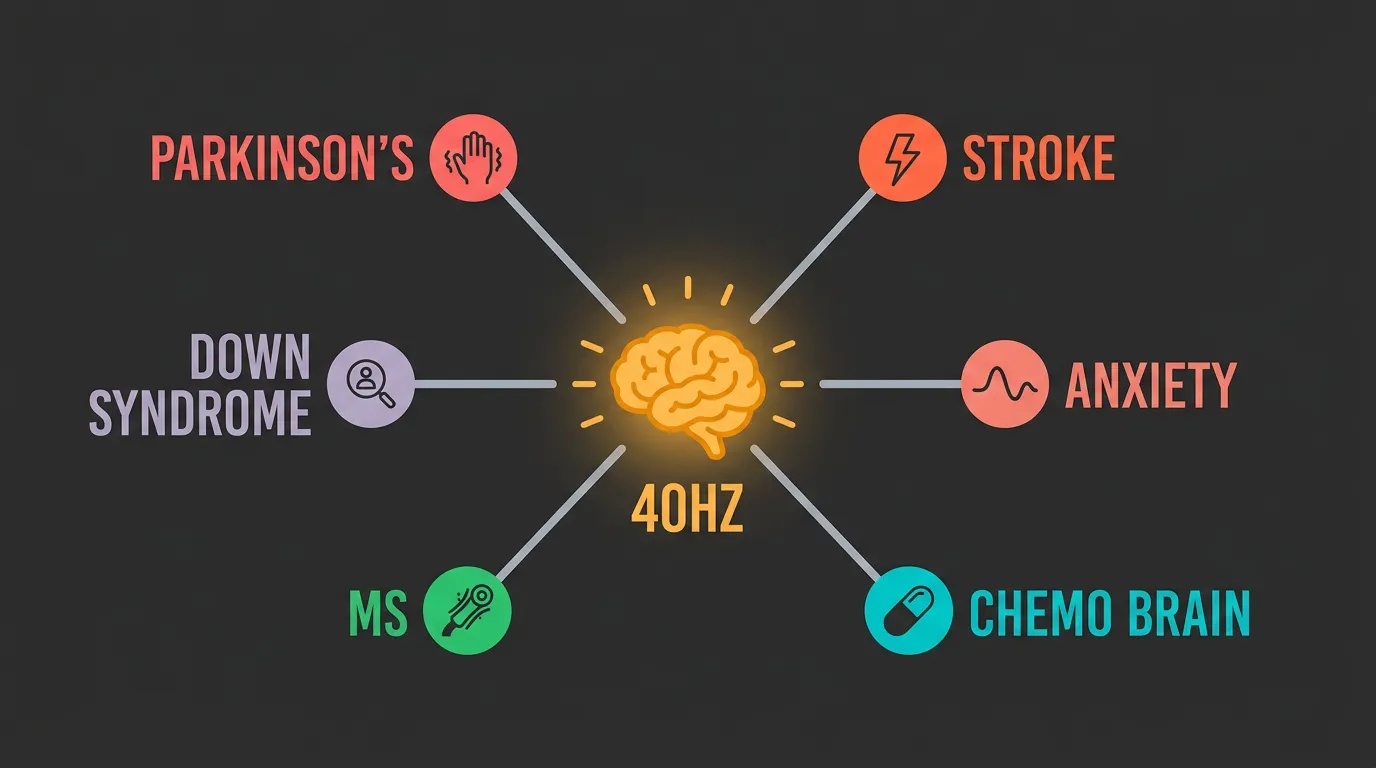
Preliminary evidence also suggests 40Hz stimulation might help with conditions beyond Alzheimer’s:[5]
- Parkinson’s disease
- Stroke recovery
- Anxiety disorders
- Chemotherapy cognitive side effects (chemo brain)
- Multiple sclerosis and other myelin-related conditions
- Down syndrome (currently being studied at MIT)
What You Can Do Right Now
You can’t buy a Spectris device yet. But you can take steps that support the same brain systems this therapy targets:
- Prioritize sleep. Your glymphatic system is most active during deep sleep. That’s the same waste-clearance pathway 40Hz stimulation enhances. Research shows your aging brain actually gets better at emotional regulation, but only if you protect your sleep quality.
- Stay physically active. Exercise boosts cerebral blood flow and supports the vascular health that gamma stimulation depends on.
- Stay socially connected. Loneliness literally shrinks your brain and accelerates cognitive decline. Social engagement is one of the strongest protective factors against dementia.
- Watch for clinical trials. MIT and Cognito Therapeutics are actively recruiting. If you’re 55+ with a family history of Alzheimer’s, you may qualify.
The fact that a simple, non-invasive device can slow brain atrophy and cognitive decline in Alzheimer’s patients is remarkable. We’re still early. But for a disease that affects 55 million people worldwide and costs over $1 trillion annually, even modest progress matters enormously.[10]
Sources
What the MIT Study Actually Found
How 40Hz Light Hacks Your Brain’s Cleaning System
3. How sensory gamma rhythm stimulation clears amyloid in Alzheimer’s mice (MIT News, 2024)
From Mouse Brains to Human Hospitals
5. Evidence that 40Hz gamma stimulation promotes brain health is expanding (MIT News, 2025)
The Race to Market, Cognito’s Phase III Trial
What This Means for the Future of Brain Health
10. 2025 Alzheimer’s disease facts and figures (Alzheimer’s & Dementia, 2025)