
More than half the calories Americans eat come from food that didn’t exist a century ago. Packaged snacks with ingredient lists longer than a short story. Frozen meals engineered in labs to hit your brain’s reward center with surgical precision. Sodas sweetened with compounds your body doesn’t recognize as food.
You already know this stuff isn’t great for your waistline. But here’s what most people miss. Ultra-processed food is quietly changing the structure and chemistry of your brain.
A 2022 meta-analysis of over 385,000 people found that high ultra-processed food intake raised the odds of depression and anxiety by 53%.[1] A 2025 study of 400,000 people across 60 countries confirmed the pattern. The more ultra-processed food you eat, the worse your mental health gets.[2] And the damage goes far deeper than mood.
What Counts as Ultra-Processed, and Why It Matters
The term “ultra-processed food” comes from the NOVA classification system, developed by researchers at the University of Sao Paulo. It sorts all food into four groups based on how much industrial processing it has undergone.
| NOVA Group | Description | Examples |
|---|---|---|
| Group 1 | Unprocessed or minimally processed | Fresh fruit, eggs, plain oats, meat |
| Group 2 | Processed culinary ingredients | Olive oil, butter, sugar, salt |
| Group 3 | Processed foods | Canned vegetables, fresh bread, cheese |
| Group 4 | Ultra-processed foods | Soft drinks, chips, instant noodles, frozen pizza |
The key difference with Group 4 isn’t just processing. It’s the addition of ingredients you’d never use in a home kitchen. Emulsifiers like polysorbate 80. Artificial sweeteners like aspartame. Hydrogenated oils. High-fructose corn syrup. Flavor enhancers like MSG.
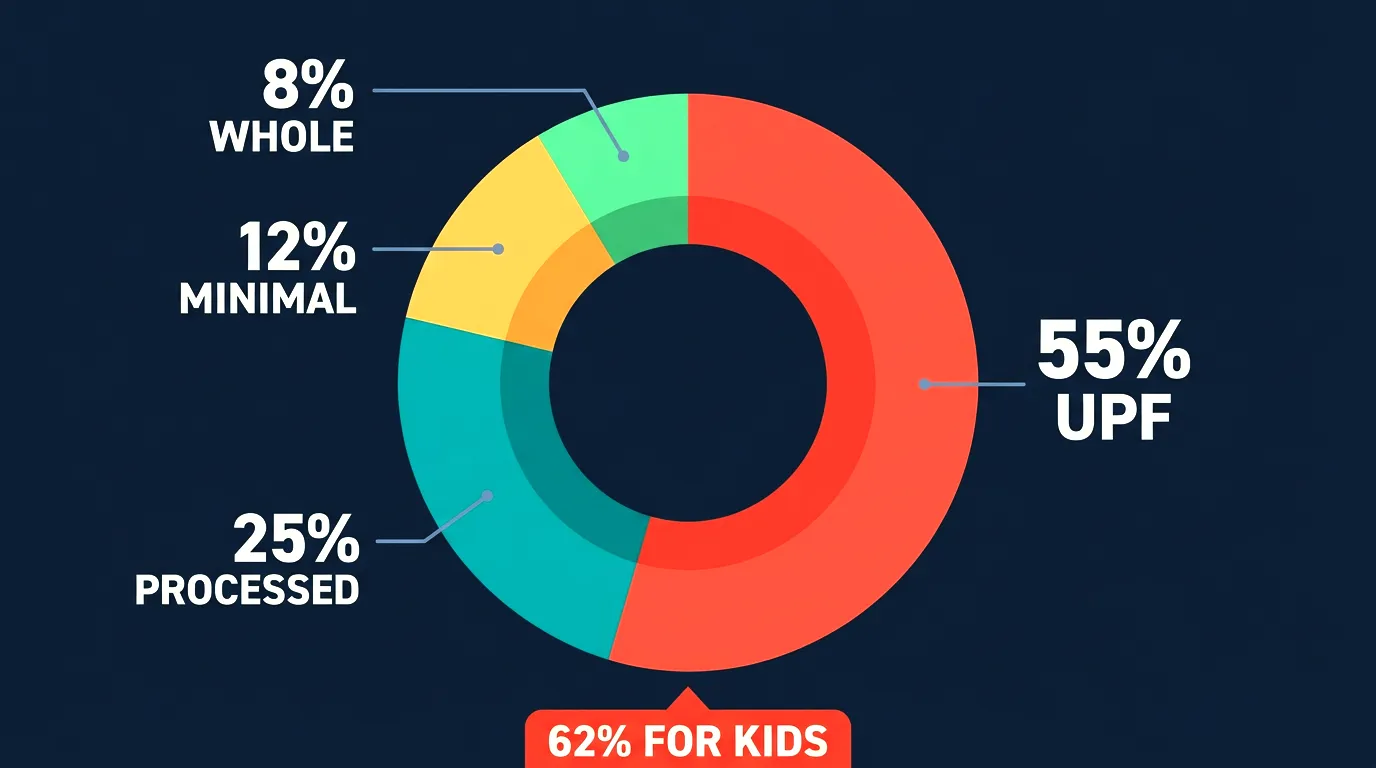
According to 2025 CDC data, ultra-processed foods now account for 55% of total daily calories among Americans. For kids and teens, that number climbs to nearly 62%.[3]
- Soft drinks and energy drinks are the most consumed ultra-processed category
- Packaged breads and baked goods rank second
- Processed meats like hot dogs and deli slices rank third
- Instant noodles, frozen meals, and snack bars fill the rest
“UPFs accounted for approximately 38% of the adult diet in Australia. In the United States, the figure exceeds half of all calories consumed.” — Poon et al., Frontiers in Nutrition, 2026[4]
Here’s what makes this a brain problem. These aren’t just empty calories. They’re biologically active compounds that alter your neurochemistry from the inside out.
Your Gut Is Your Brain’s Chemical Factory, and UPF Is Sabotaging It
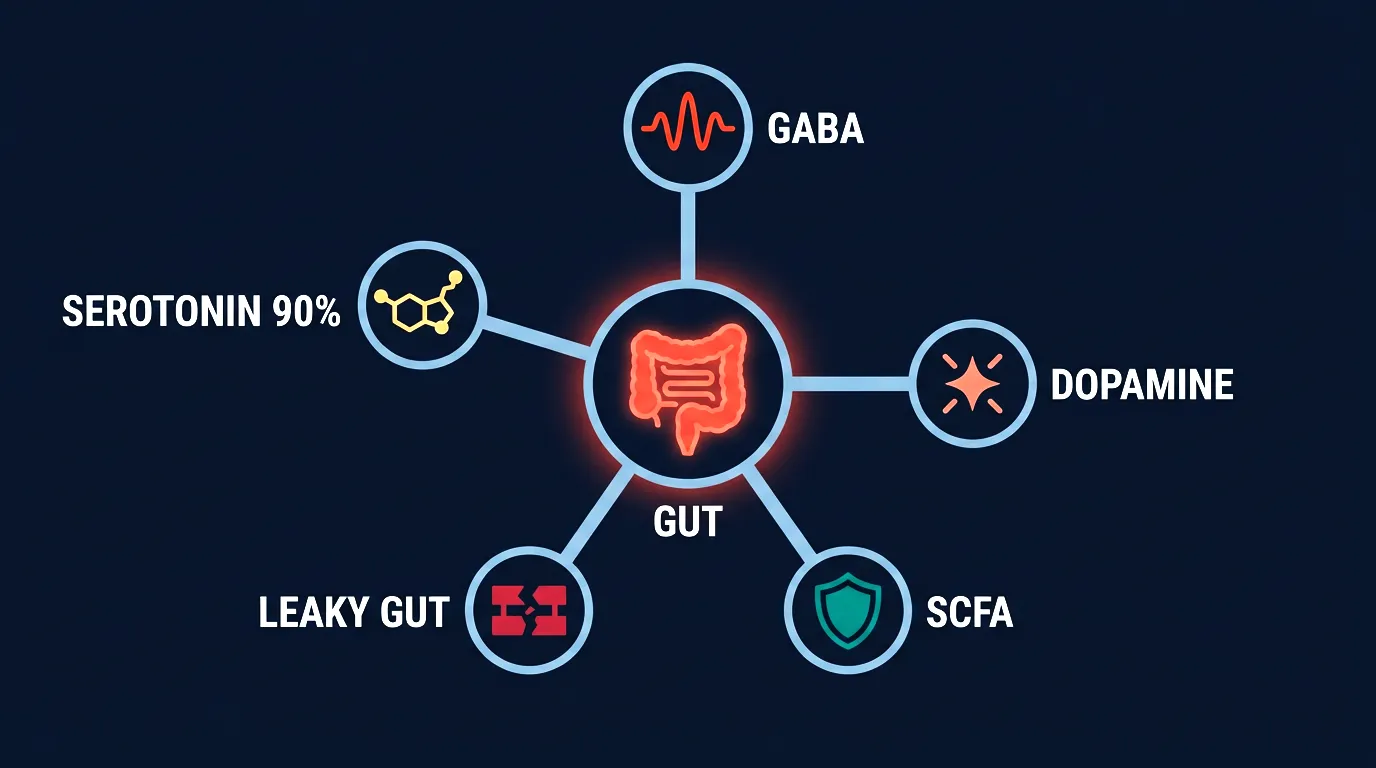
About 90% of your body’s serotonin is made in your gut, not your brain. Your gut bacteria also produce GABA, dopamine, and other neurotransmitters that regulate everything from mood to sleep to focus. When those bacteria are healthy, your brain gets a steady supply of the chemicals it needs.
Ultra-processed food wrecks this system.
A 2025 review in Nutrients by Rondinella et al. found that UPF consumption decreases levels of two of the most important beneficial bacteria in your gut. Akkermansia muciniphila and Faecalibacterium prausnitzii both decline when UPF intake is high.[5] These bacteria produce short-chain fatty acids (SCFAs), which protect the lining of your intestines and keep inflammatory molecules from leaking into your bloodstream.
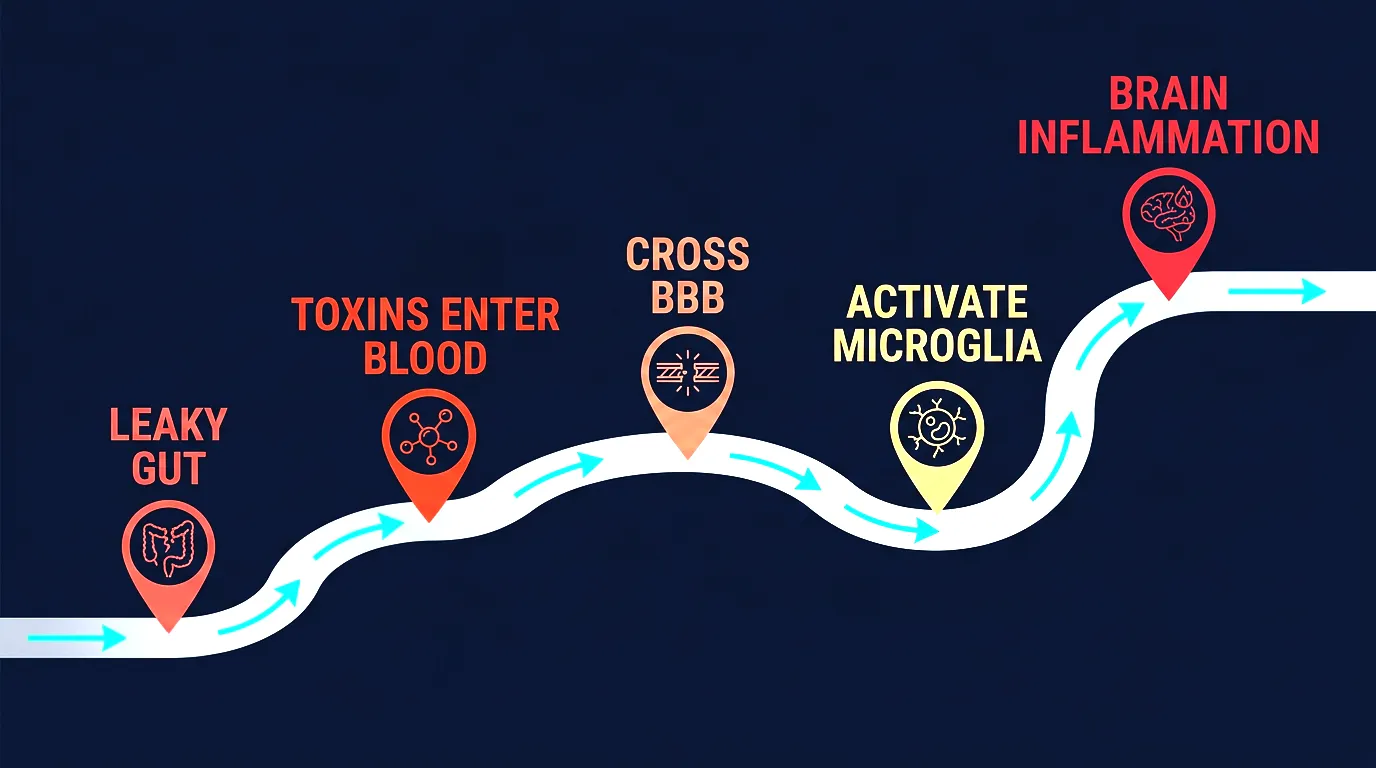
When that gut barrier breaks down, you get what researchers call “leaky gut.” Bacterial toxins called lipopolysaccharides slip through the damaged lining and enter your blood. From there, they trigger a chain of inflammation that reaches your brain.[5]
The Specific Additives Doing the Damage
Not all processing is equal. Certain UPF ingredients are especially destructive to your gut ecosystem.
- Emulsifiers (carboxymethylcellulose, polysorbate 80) thin the protective mucus layer of your intestines[5]
- Artificial sweeteners (aspartame, saccharin) may dysregulate serotonin and dopamine synthesis through the HPA axis[6]
- Titanium dioxide nanoparticles (found in candy coatings and gum) cross the blood-brain barrier and accumulate in neurons[6]
- High-fructose corn syrup promotes pro-inflammatory gut bacteria while starving beneficial ones
The connection between your gut and your brain isn’t abstract. It runs through the vagus nerve, a direct physical highway between your digestive system and your brain. When your gut is inflamed, your brain gets the signal in real time. If you’re curious about how this communication system works in detail, we covered the full gut-brain axis in how your gut secretly controls your mood.
Recommended read: Dopamine Nation by Anna Lembke — Explores how modern pleasures, including engineered food, hijack your brain’s reward system and what to do about it.
The Inflammation Highway From Your Stomach to Your Neurons
Once inflammatory molecules escape your damaged gut lining, they don’t just float around harmlessly. They cross the blood-brain barrier and trigger a cascade of damage inside your skull.
A 2026 scoping review by Poon et al. mapped out the exact pathway. Saturated fatty acids from ultra-processed food activate toll-like receptors on your brain’s immune cells, called microglia. Once activated, microglia release cytokines that create chronic low-grade inflammation inside your brain.[4]
This isn’t the kind of inflammation you can feel. It’s silent. Slow. And cumulative. Here’s what it does over time.
- Shrinks the hippocampus. The brain region responsible for memory and learning. Studies link UPF-driven inflammation to measurable hippocampal volume loss.[6]
- Disrupts fronto-striatal connectivity. This is the neural pathway that connects decision-making (prefrontal cortex) with reward processing (striatum). Weakening this connection makes impulsive eating harder to resist.[6]
- Damages myelin sheaths. Trans fats from UPFs replace healthy polyunsaturated fatty acids in neuronal membranes, reducing membrane fluidity and slowing signal transmission between neurons.[4]
The Lipid Problem No One Talks About
Your brain is roughly 60% fat. The quality of those fats depends entirely on what you eat. Ultra-processed food floods your body with trans fats and industrial seed oils while depleting omega-3 fatty acids.
Poon et al. found that this lipid imbalance doesn’t just affect energy metabolism. It directly changes how your neurons communicate. When neuronal membranes lose their fluidity, neurotransmitter receptors can’t bind properly. Serotonin and dopamine signaling get weaker, even if your gut is still producing those chemicals.[4]
| Brain Effect | Mechanism | UPF Connection |
|---|---|---|
| Depression risk up 53% | Serotonin pathway disruption | Gut dysbiosis + membrane damage |
| Anxiety risk up 48% | GABA depletion + neuroinflammation | Leaky gut + microglial activation |
| Cognitive decline | Hippocampal shrinkage | Chronic neuroinflammation |
| Alzheimer’s risk up 2.7x | Amyloid and tau pathology | Lipid imbalance + barrier damage |
The scariest part is the dose-response relationship. Poon et al. confirmed it. The more ultra-processed food you eat, the worse every one of these outcomes gets. There’s no safe threshold.[4]
Recommended read: Irresistible by Adam Alter — Explains how technology and food companies engineer products your brain literally cannot resist.
The Long Game, Dementia and Cognitive Decline
The damage from ultra-processed food doesn’t stop at mood disorders. It reaches into the most devastating neurological conditions.
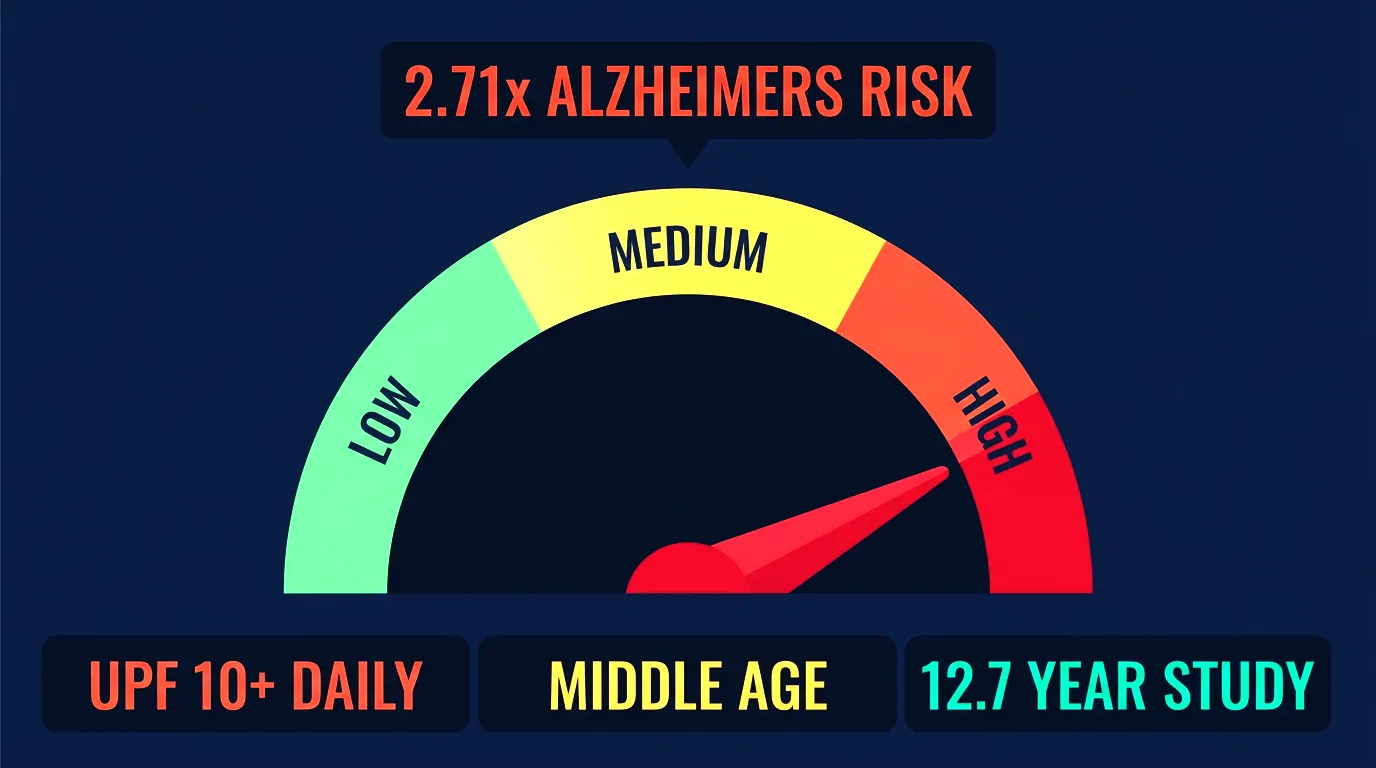
A 2025 Framingham Heart Study followed 1,375 dementia-free adults for an average of 12.7 years. The results were striking. Among people under 68, those who ate 10 or more servings of ultra-processed food per day had 2.71 times the risk of developing Alzheimer’s disease compared to those who ate fewer.[7]
Lead researcher Galit Weinstein from the University of Haifa found that each additional daily serving of UPF raised Alzheimer’s risk by 13% (HR = 1.13, 95% CI: 1.03-1.25).[7]
Why Middle Age Matters Most
The Framingham findings revealed something important. The UPF-dementia link was strongest in younger participants and disappeared in those over 68 at baseline. This matches the broader pattern. What you eat in your 40s and 50s shapes the brain you’ll have in your 70s and 80s.
A separate cohort study of 10,775 people tracked over 8 years found that consuming more than 19.9% of daily calories from UPF was associated with faster decline in both global cognitive performance and executive function.[8]
The mechanisms aren’t mysterious anymore. They’re the same pathways we’ve already covered.
- Gut dysbiosis starves your brain of protective short-chain fatty acids
- Chronic neuroinflammation damages hippocampal neurons over decades
- Lipid imbalance weakens the structural integrity of neuronal membranes
- Blood-brain barrier breakdown lets inflammatory molecules accumulate where they shouldn’t be
A 2025 ETH Zurich review by Mottis, Kandasamey, and Peleg-Raibstein added another dimension. Early-life UPF exposure, especially during pregnancy and adolescence, may create lasting cognitive deficits that don’t show up until much later. The developing brain is even more vulnerable to these mechanisms than the adult brain.[6]
This connects to a broader pattern we’ve seen in how apps hijack your dopamine system. The same reward pathways that social media exploits are the ones ultra-processed food targets. Both use engineered stimuli to override your brain’s natural regulatory systems.
Recommended read: The Balanced Brain by Camilla Nord — A neuroscientist’s guide to understanding how your brain regulates mood, pleasure, and pain.
What You Can Actually Do About It
The research is clear, but the solution isn’t “never eat processed food again.” That’s unrealistic for most people. The goal is harm reduction. Small, consistent swaps that shift the balance back toward foods your brain can actually use.
Start With the Biggest Offenders
Not all ultra-processed foods are equally harmful. Focus on cutting these first.
- Sugary drinks and sodas. Replace with water, sparkling water, or unsweetened tea
- Packaged snack foods (chips, crackers, cookies). Replace with nuts, fruit, or dark chocolate
- Processed meats (hot dogs, deli meat, sausages). Replace with whole cuts of meat or legumes
- Instant noodles and frozen meals. Replace with simple home-cooked alternatives
Feed Your Gut Bacteria What They Need
Your gut microbiome can recover. But it needs the right raw materials.
- Fermented foods (yogurt, kimchi, sauerkraut) replenish beneficial bacteria like Lactobacillus and Bifidobacterium[5]
- High-fiber foods (beans, lentils, whole grains) feed SCFA-producing bacteria
- Omega-3 rich foods (fatty fish, walnuts, flaxseed) restore healthy neuronal membrane composition
- Polyphenol-rich foods (berries, green tea, olive oil) reduce neuroinflammation
The 10% Rule
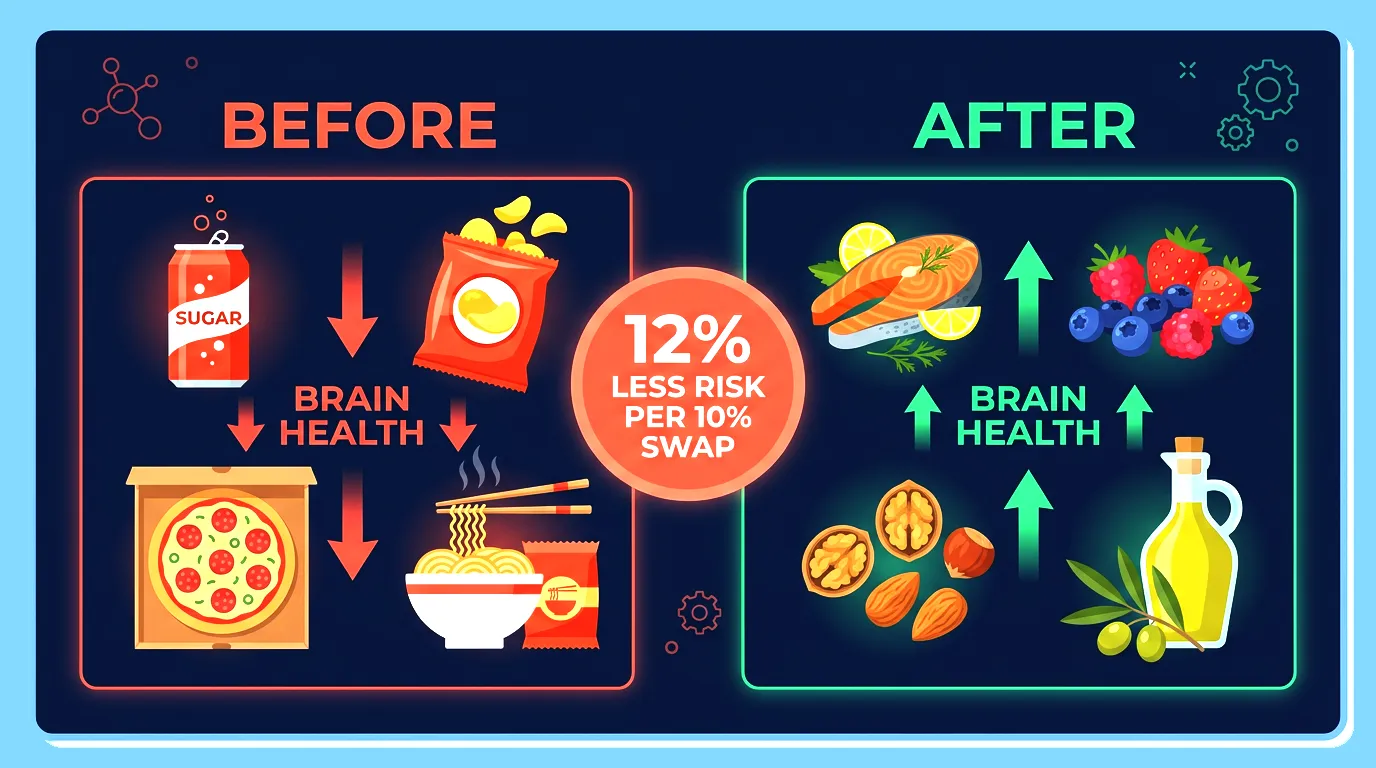
The REGARDS study found that every 10% increase in unprocessed food intake was associated with a 12% lower risk of cognitive impairment.[8] You don’t need a perfect diet. You just need to shift the ratio.
| Current Habit | Simple Swap | Brain Benefit |
|---|---|---|
| Soda with lunch | Sparkling water + lemon | Reduces sugar-driven inflammation |
| Packaged granola bar | Handful of walnuts | Omega-3s for membrane health |
| Frozen pizza | Whole wheat pita + fresh toppings | More fiber for gut bacteria |
| Instant ramen | Rice + steamed vegetables | Removes emulsifiers and MSG |
| Processed deli sandwich | Grilled chicken + avocado | Removes nitrates and preservatives |
The research supports even modest changes. A Mediterranean-style pattern rich in vegetables, legumes, olive oil, and fish protects against both cognitive decline and mood disorders, independent of other dietary quality scores.[8]
The connection between what you eat and how well your brain works isn’t a wellness trend. It’s one of the most robust findings in modern neuroscience. Every meal is a small decision about the brain you’re building for the future. The science says to make those decisions count. If you’re working on building better daily routines, our guide on why your good habits never stick breaks down the psychology of lasting behavior change.
Recommended read: Atomic Habits by James Clear — The best framework for replacing bad habits with better ones, one small change at a time.