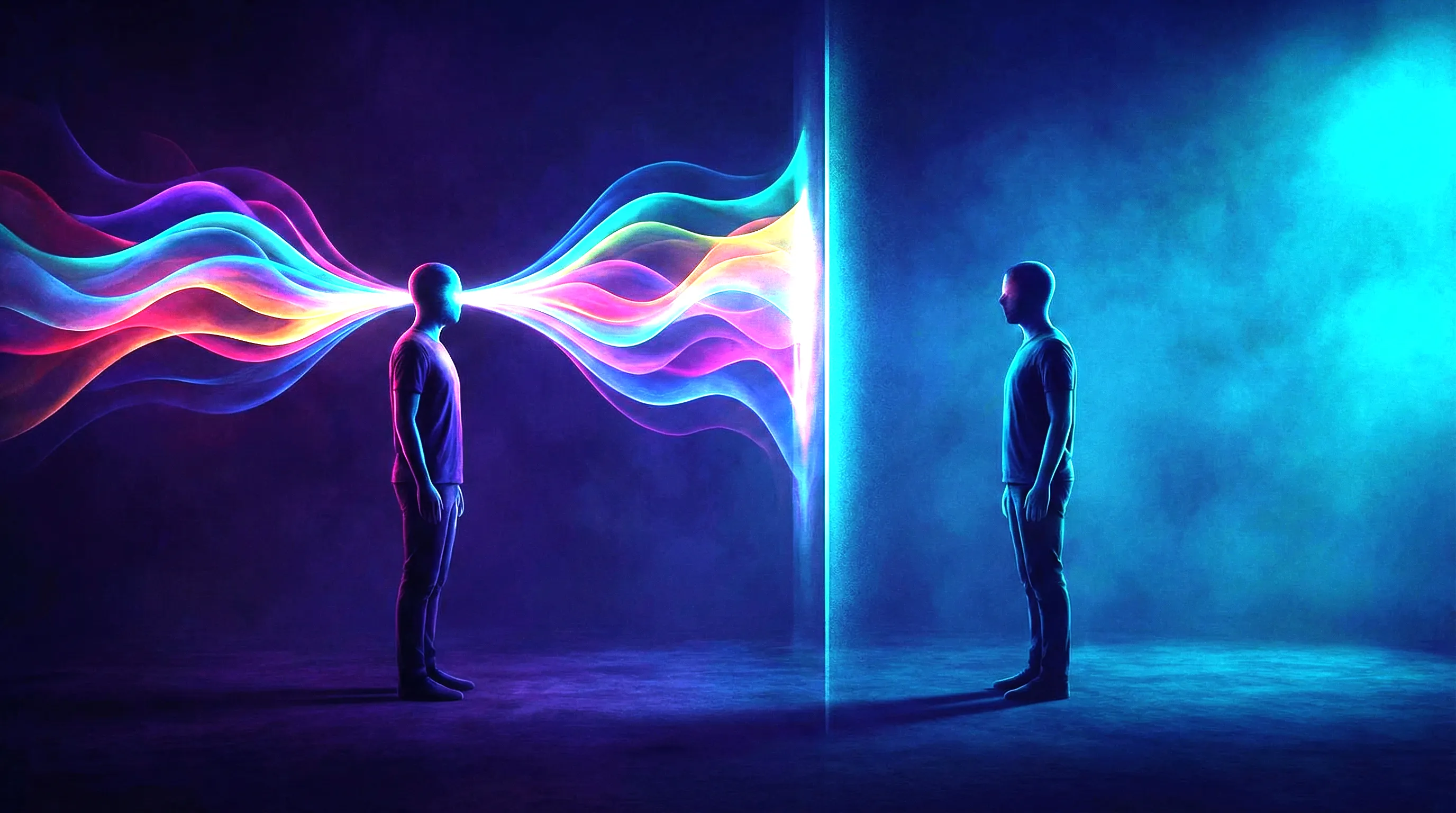
You’ve probably met someone who says “I’m not an emotional person” like it’s a badge of honor. They think being logical means being smart. But here’s what the research actually shows. People with low emotional intelligence earn less money, have worse relationships, and get sick more often.
It’s not about being “emotional.” It’s about understanding what you feel and why.
A NASA psychiatrist named Terence McGuire discovered this in the 1980s. He was screening astronaut candidates for the new space station program.[1] The old tests checked for physical fitness and calm under pressure. But McGuire realized something was missing. Astronauts who couldn’t read their crewmates’ emotions caused serious problems on long missions. Technical skills weren’t enough. Emotional intelligence was the missing piece.
What Emotional Intelligence Really Means
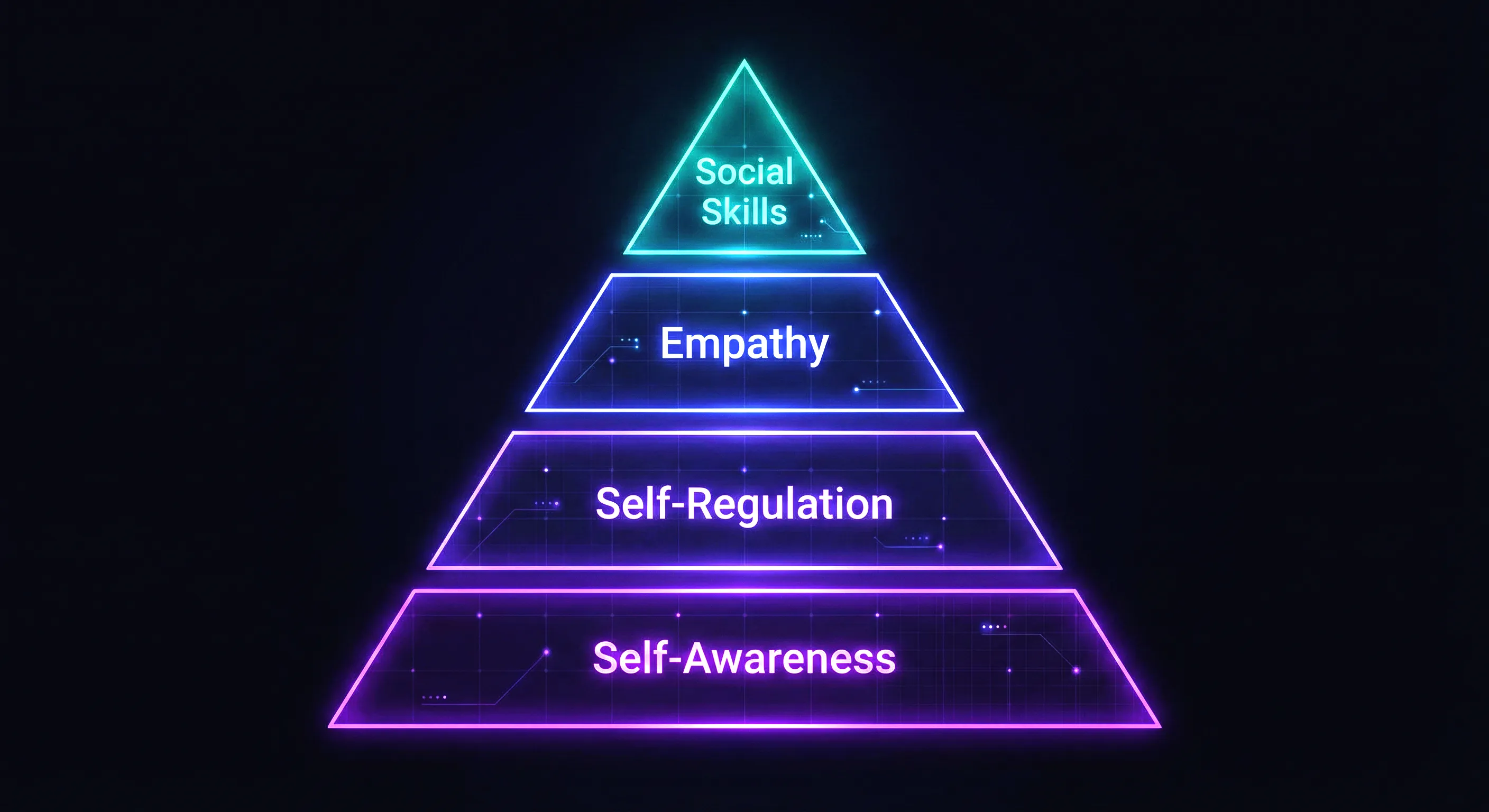
Emotional intelligence isn’t about being “in touch with your feelings.” It’s a specific set of skills that determines how well you navigate the social world. Researchers break it into four core areas.
- Self-awareness: Knowing what you’re feeling and why
- Self-regulation: Managing your emotional reactions instead of being controlled by them
- Empathy: Picking up on what other people are feeling
- Social skills: Using emotional information to communicate, resolve conflict, and build trust
These four skills work together like a chain. Without self-awareness, you can’t regulate. Without empathy, your social skills come off as manipulative instead of genuine.
Nicole Vignola, a neuroscientist and author of Rewire, explains that developing emotional intelligence helps us become more flexible in how we respond to situations. When we learn about our emotions and our stress responses, we’re able to make more sense of why we feel a particular way.
Neuroscientist Aron Barbey puts it in broader terms. “We’re fundamentally social beings and our understanding not only involves basic cognitive abilities, but also applying those abilities to social situations so that we can navigate the social world and understand others.”[2] [3] The good news? EQ can improve over time. Although some people are naturally more emotionally intelligent than others, anyone, at any time in life, can grow their EQ.
| EI Component | High Emotional Intelligence | Low Emotional Intelligence |
|---|---|---|
| Self-awareness | ”I’m frustrated because I feel unheard" | "I don’t know why I’m so angry” |
| Self-regulation | Pauses before responding to criticism | Snaps back with a defensive comment |
| Empathy | Notices when a friend seems off | Misses obvious emotional signals |
| Social skills | Navigates conflict without burning bridges | Avoids hard conversations entirely |
Recommended read: Shift by Ethan Kross. A science-backed guide to understanding why your emotions mislead you and how to manage them before they manage you.
7 Signs You Might Have Low Emotional Intelligence
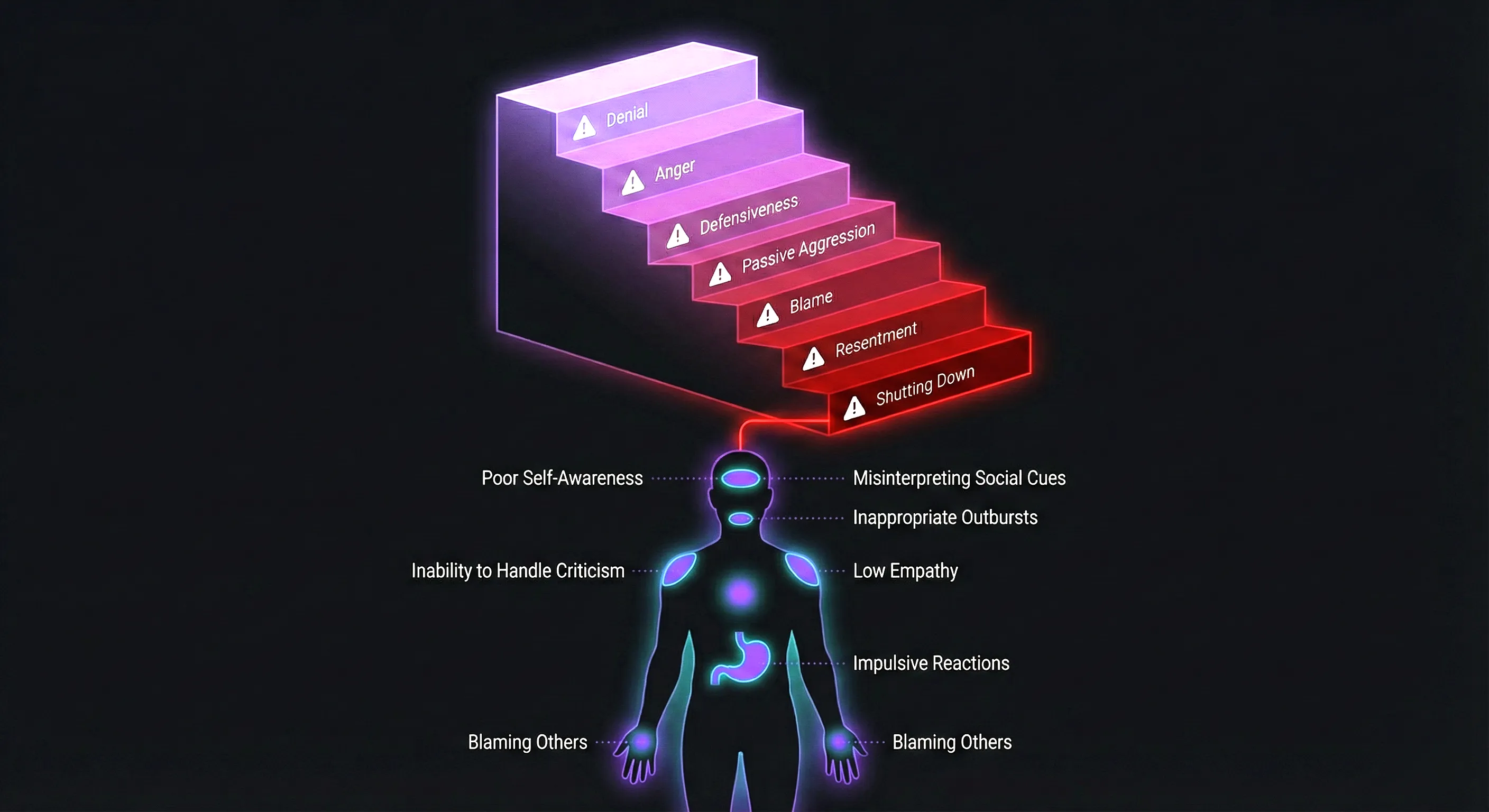
These signs don’t mean you’re broken. They mean there’s a skill gap you can close. Here’s what to watch for.
1. You Can’t Name What You’re Feeling
When someone asks “how are you?” your answer is always “fine” or “stressed.” You struggle to get more specific than that. Research shows that naming your emotions activates your frontal cortex, the brain area responsible for logical thinking.[4] This gives you back control over your emotional state. If you can’t name it, you can’t manage it.
2. You Blow Up Over Small Things
Your hair tie snaps and suddenly you’re in tears. A coworker makes a minor comment and you’re furious for the rest of the day. Vignola describes this as emotional dysregulation. When you’re already running on empty from chronic stress, even tiny triggers set off a cascade of emotions that feel completely out of proportion.
3. You Always Think Other People Are the Problem
Every breakup was their fault. Every argument at work was someone else being unreasonable. A pattern of blaming others is one of the clearest signs of low self-awareness. Without it, you can’t see your own role in conflicts. In some cases, this constant blame-shifting is actually a hallmark of covert narcissism.
4. Criticism Feels Like a Personal Attack
Getting feedback at work triggers a fight-or-flight response instead of curiosity. Dean Burnett, author of Emotional Ignorance, explains this through appraisal theory. Your brain interprets experiences based on past memories and emotions. If criticism once led to punishment or rejection, your brain flags all feedback as a threat. Even when your boss is genuinely trying to help.
5. Your Relationships Keep Hitting the Same Wall
You keep ending up in the same type of conflict with different people. Maybe partners say you’re “emotionally unavailable.” Maybe friends drift away without you understanding why. This often traces back to difficulty recognizing emotional patterns in close relationships.
6. You Can’t Read the Room
You tell a joke and nobody laughs, but you don’t notice. You keep talking when someone clearly needs to leave. Research on emotional recognition shows that some people genuinely struggle to decode facial expressions and vocal tones. This isn’t rudeness. It’s a skill that never got developed.
7. You Avoid Emotions Entirely
You pride yourself on being “logical.” You dismiss emotional conversations as drama. Ethan Kross, who directs the Emotion and Self-Control Laboratory at the University of Michigan, found that people who resist feeling negative emotions actually get worse outcomes. Both positive and negative emotions serve critical functions. Suppressing them doesn’t make them disappear. It makes them come out sideways.
“Understanding that both good and bad vibes are part of a healthy emotional life gives us the capacity to accept and embrace our bad vibes with respect instead of trying to shove them away in panic.” - Ethan Kross
Why Emotional Intelligence Is Declining Globally
Nobody is born with high or low emotional intelligence. It’s built over time through experience, environment, and practice. And right now, the world is getting worse at it.
The Emotional Recession
A 2025 study published in Frontiers in Psychology documented something alarming.[5] Researchers analyzed emotional intelligence scores from 2019 to 2024 using the Six Seconds Emotional Intelligence Assessment, a validated 77-item instrument measuring eight core competencies. The trend was clear. Global EQ scores have been declining since the pandemic began.
The researchers called it an “emotional recession.” The pandemic and its aftermath weakened core EQ competencies across populations. Social isolation, chronic stress, and increased screen time all contributed. The implications for workplace resilience and relationships are significant.
Childhood Sets the Foundation
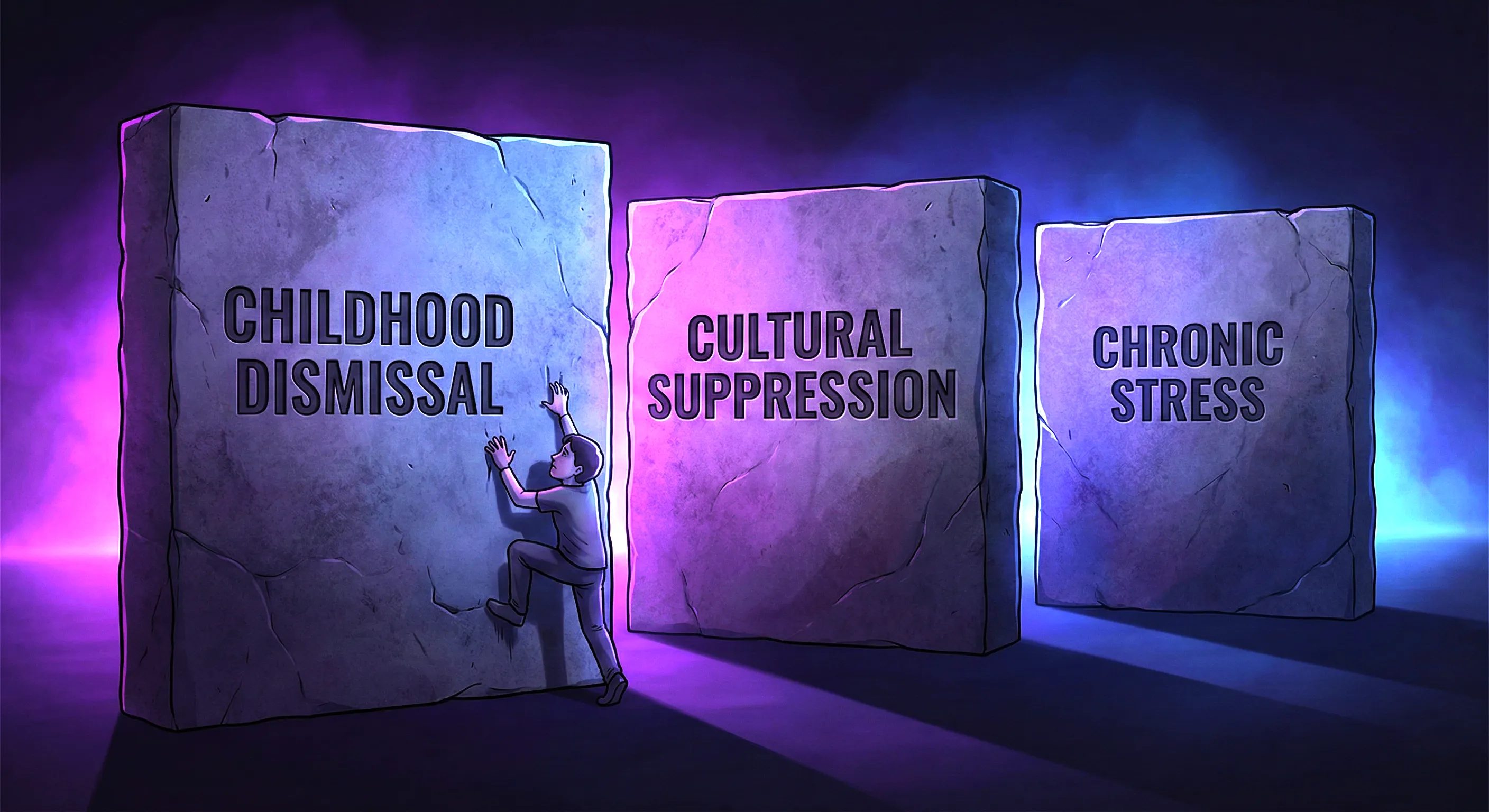
If your parents dismissed your emotions (“stop crying,” “you’re fine,” “don’t be so sensitive”), your brain learned that emotions are dangerous. You never got the chance to practice naming, processing, or expressing them safely. Paul Ekman, one of the world’s leading researchers on facial expressions, points out that even knowing someone is sad doesn’t automatically tell you what to do about it.[6] That skill has to be learned.
Culture Rewards Suppression
Many cultures treat emotional expression as weakness. Kross describes how his grandmother, a Holocaust survivor, lived by one rule about emotions. Don’t ask why. Don’t dwell on feelings. For her generation, emotional suppression was survival. But in everyday modern life, it becomes a barrier to connection and self-understanding.
Chronic Stress Shuts Down the Learning
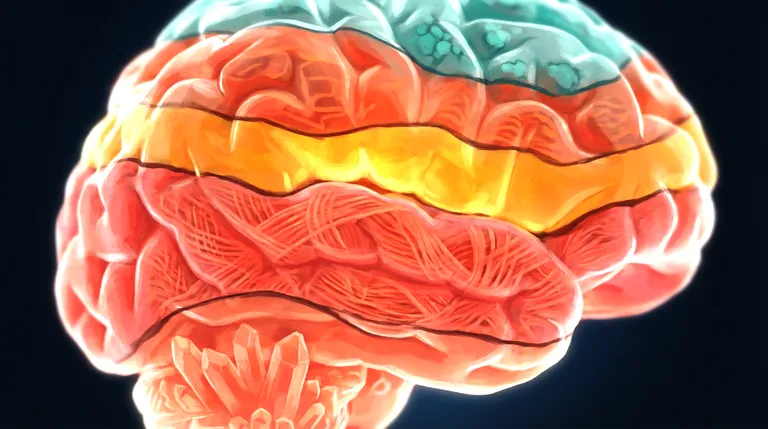
Here’s the biological catch. To develop emotional intelligence, you need access to your prefrontal cortex. That’s the brain region responsible for self-awareness, planning, and emotional regulation. But chronic stress suppresses prefrontal cortex activity. When you’re constantly in survival mode, your brain prioritizes the amygdala (threat detection) over the frontal lobe (emotional processing).
Vignola explains that being emotionally dysregulated keeps you in a constant state of arousal. This heightens threat perception, disrupts sleep and digestion, and mimics burnout. It’s a vicious cycle. Stress blocks emotional growth, and low emotional intelligence creates more stress. Some people try to solve this with rigid self-improvement routines, but those healthy habits can actually backfire on your mental health when they become compulsive.
“Emotions are not your enemies. They are the messengers of your inner world. They provide insights into your desires, fears, and needs.” - Nicole Vignola
How It Shows Up in Every Part of Your Life
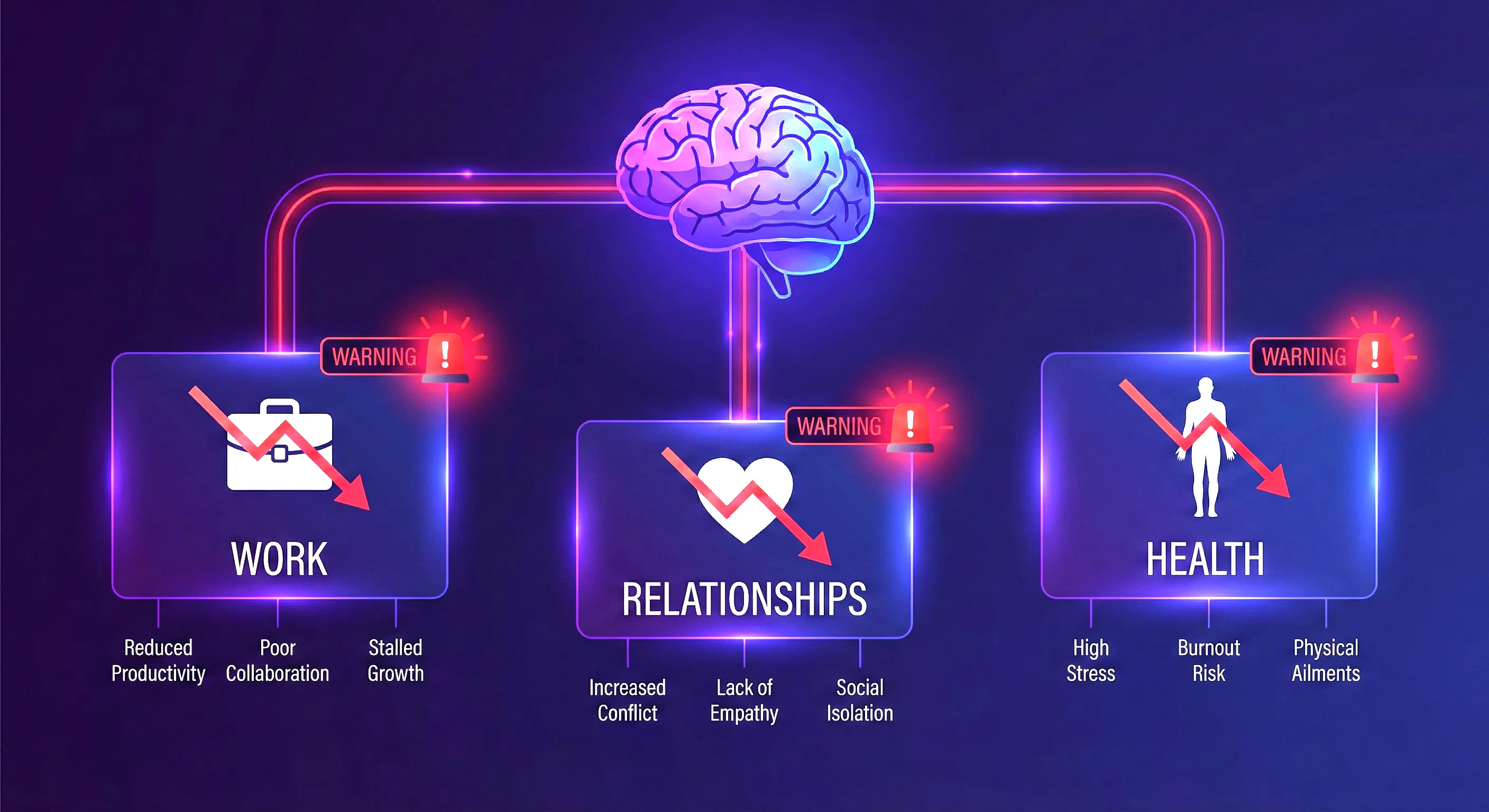
Low emotional intelligence doesn’t just make conversations awkward. It affects your health, your career, and your closest relationships.
At Work
People with high emotional intelligence are rated as “more socially and politically skilled” by colleagues. They earn more. They get promoted faster. Research shows that leaders who regularly demonstrate trust- and empathy-building behaviors experience turnover rates 40% lower than their peers, along with higher productivity and satisfaction scores.[5] Organizations that invest in emotional intelligence are better able to maintain engagement and adapt to uncertainty.
On the flip side, people who can’t manage emotions at work often struggle with teamwork, bomb performance reviews, and burn bridges without realizing it.
Charles Duhigg, author of Supercommunicators, tells the story of how TV writers created characters for The Big Bang Theory that audiences hated. The reason? The characters were emotionally confusing. Viewers couldn’t figure out how to feel about them. Duhigg’s point is clear. Emotional clarity matters. If people can’t read your emotional signals, they won’t connect with you.
Recommended read: Supercommunicators by Charles Duhigg. How the best communicators detect unspoken emotions and use them to build genuine connection.
In Relationships
Research from the Cambridge Handbook of Moral Psychology shows that people who can’t experience the full range of emotions have serious difficulty forming lasting bonds. While that research focuses on extreme cases, the principle scales down. The less emotional range you have access to, the harder it is to empathize with a partner.
This is why so many people end up in repeating relationship patterns. If you can’t identify what you need emotionally, you can’t communicate it. And if you can’t read your partner, you’ll keep missing each other. Understanding why certain attachment styles attract each other is a good place to start breaking the cycle.
In Your Body
Kross’s research reveals something most people don’t consider. When you stay emotionally dysregulated for too long, the physiological stress response wears down your body. This contributes to increased susceptibility to colds, heightened risk of cardiovascular disease, and even certain forms of cancer.[7]
Your emotional life doesn’t stay in your head. It extends into your cells.
How to Build Emotional Intelligence Starting Today
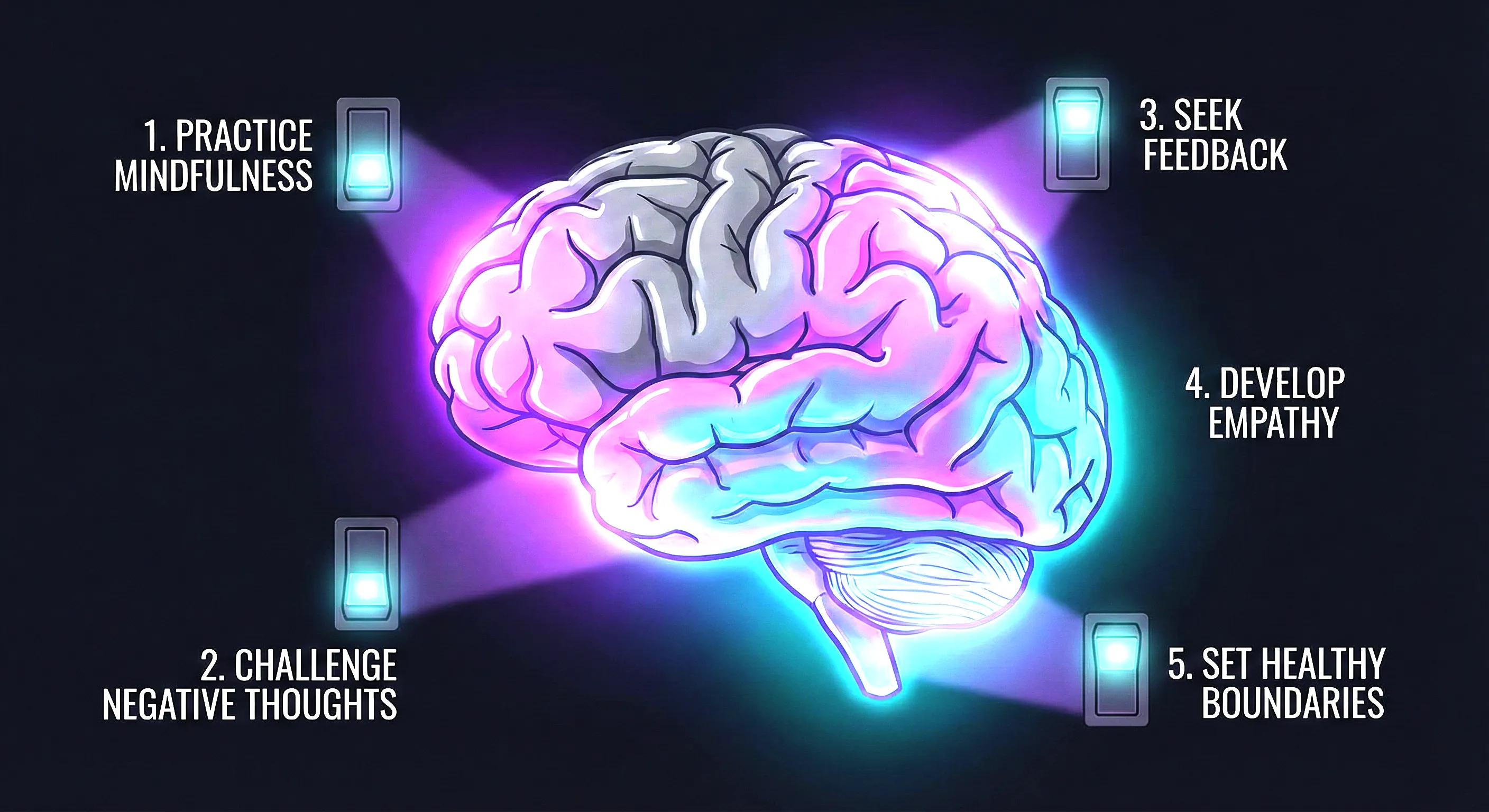
The good news? Emotional intelligence is a skill, not a personality trait. And like any skill, you can develop it with practice. Here’s where to start.
-
Name your emotions with precision. Don’t stop at “stressed” or “fine.” Use Dr. Robert Plutchik’s Wheel of Emotions to find more specific words.[8] Are you anxious? Frustrated? Disappointed? Envious? Research shows that simply naming an emotion activates your frontal cortex and gives you more control over it.[4]
-
Practice the 90-second pause. When a strong emotion hits, wait before responding. This gives your logical brain time to catch up with your limbic brain. You’ll still feel the emotion. But you won’t say something you regret.
-
Watch for body language clusters. Start paying attention to nonverbal cues in yourself and others. Notice when you cross your arms, avoid eye contact, or tense your shoulders. These signals tell you what you’re feeling before your conscious mind catches up. Learning to read nonverbal cues in everyday conversations is one of the fastest ways to boost emotional awareness.
-
Ask “what” instead of “why.” Kross and other researchers have found that asking “why do I feel this way?” often leads to rumination. Instead, ask “what am I feeling right now?” and “what triggered it?” This small shift keeps you in problem-solving mode rather than spiraling.
-
Seek out uncomfortable emotional conversations. Growth happens at the edges of your comfort zone. Practice staying present when someone shares difficult emotions. Don’t try to fix it immediately. Just listen and acknowledge what they’re feeling.
Recommended read: Cues by Vanessa Van Edwards. A practical guide to the nonverbal, vocal, and visual signals that reveal what people really feel, even when they won’t say it.
You weren’t born with a fixed amount of emotional intelligence. Your brain can rewire itself at any age. The first step is just paying attention to what you’ve been ignoring.
Sources
Introduction
What Emotional Intelligence Really Means
3. Researchers Map Emotional Intelligence in the Brain (University of Illinois News Bureau, 2013)
7 Signs You Might Have Low Emotional Intelligence
Why Emotional Intelligence Is Declining Globally
6. Paul Ekman’s Research on Universal Facial Expressions of Emotions (Paul Ekman Group)
How It Shows Up in Every Part of Your Life
7. Social Rejection Shares Somatosensory Representations with Physical Pain (PNAS, 2011)
How to Build Emotional Intelligence Starting Today
8. Plutchik’s Wheel of Emotions: Understanding Emotional Classification (Six Seconds)