Imagine falling asleep tonight and waking up tomorrow with your worst memory a little less painful. Not erased. Not forgotten. Just softer. Like the volume knob on that memory got turned down while you slept.
It sounds like something out of Eternal Sunshine of the Spotless Mind. But it’s not science fiction anymore. Two groundbreaking studies published in 2024 proved that scientists can now selectively weaken bad memories and strengthen good ones. And they do it while you’re fast asleep.
The technique is called targeted memory reactivation. It uses nothing more than carefully timed sounds played through a speaker during deep sleep. No drugs. No surgery. No electrodes in your brain. Just sound waves hitting your ears at exactly the right moment, while your brain does the rest.
The Breakthrough That Changes Everything
In July 2024, a team led by Xiaoqing Hu at the University of Hong Kong, with Ken Paller at Northwestern University, published a study in PNAS that made neuroscience headlines around the world.[1] They’d figured out how to weaken painful memories during sleep by replacing them with positive ones.
Here’s what they did. Participants first learned 48 associations between nonsense words and disturbing images. Think car crashes, violence, medical emergencies. Each word was paired with one specific upsetting picture.
After sleeping on those memories for a night, participants came back and learned new associations. The same words were now paired with happy images. Puppies, sunsets, smiling faces. This created a tug-of-war in your brain. One word, two competing memories. One negative, one positive.
Then the real magic happened. While participants slept the following night, researchers played audio cues linked to some of those words during slow-wave sleep. The deepest, most restorative phase of sleep. And they specifically triggered the positive associations.
The results were stunning:
- Negative memories linked to the played cues became significantly weaker
- Positive memory intrusions increased after the sleep intervention
- Participants rated cued items as more positive than non-cued items
- Theta brain rhythms during sleep predicted which positive memories would stick
“Sensory input can change how memories are stored. When the sounds specifically connect to recent learning, they can change brain networks.” — Ken Paller, Northwestern University
Just one month later, a second team at Amsterdam UMC published an even more dramatic finding.[2]
How Your Brain Edits Memories in Your Sleep
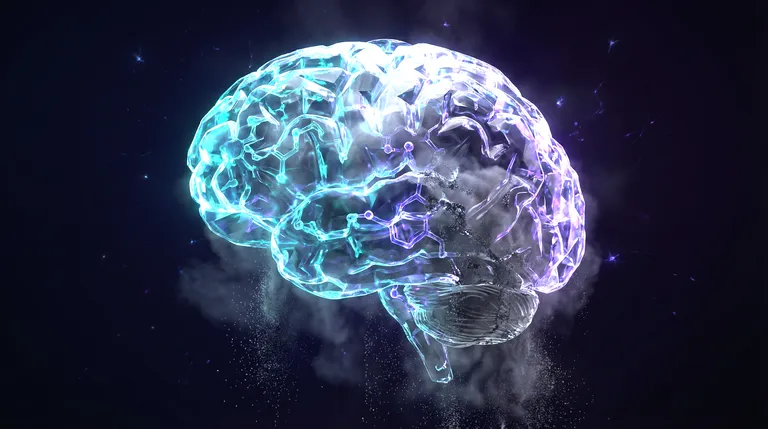
To understand why this works, you need to know what your brain does every single night while you’re unconscious. It’s not resting. It’s editing.
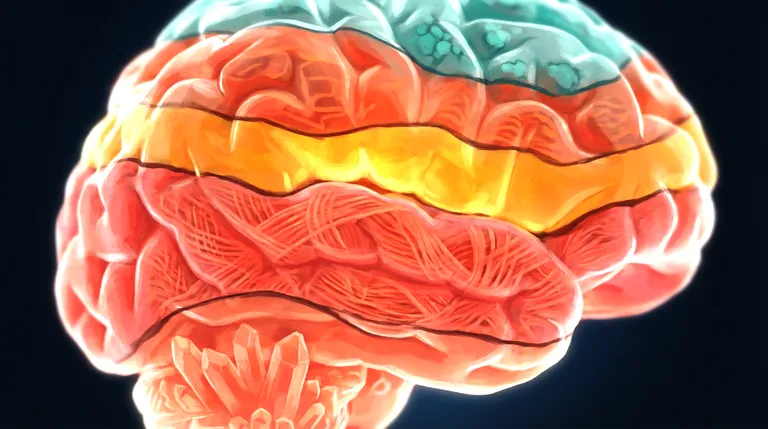
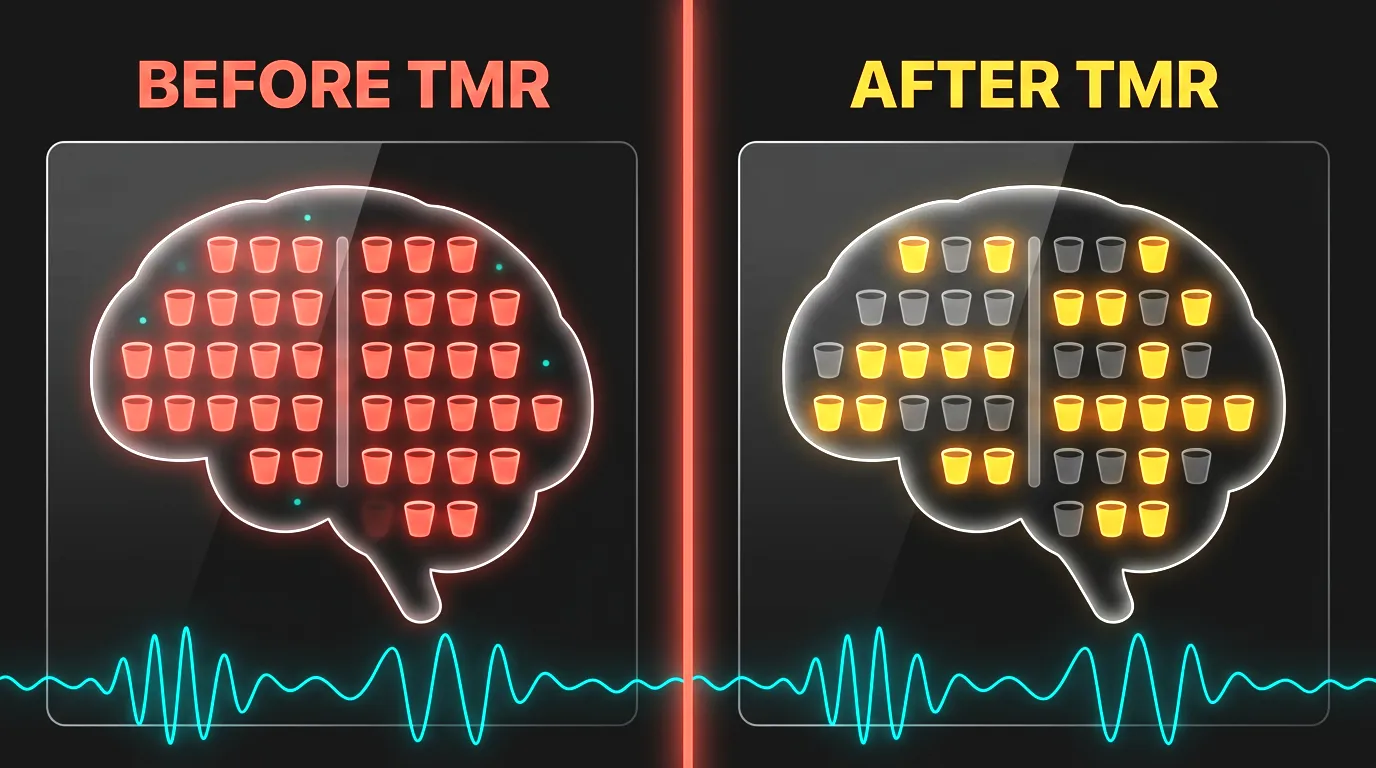
During slow-wave sleep, your brain replays the day’s experiences. Think of it like a film editor reviewing footage. Your hippocampus, the brain’s memory hub, sends signals to your cortex, where long-term memories get stored. This process is called memory consolidation.
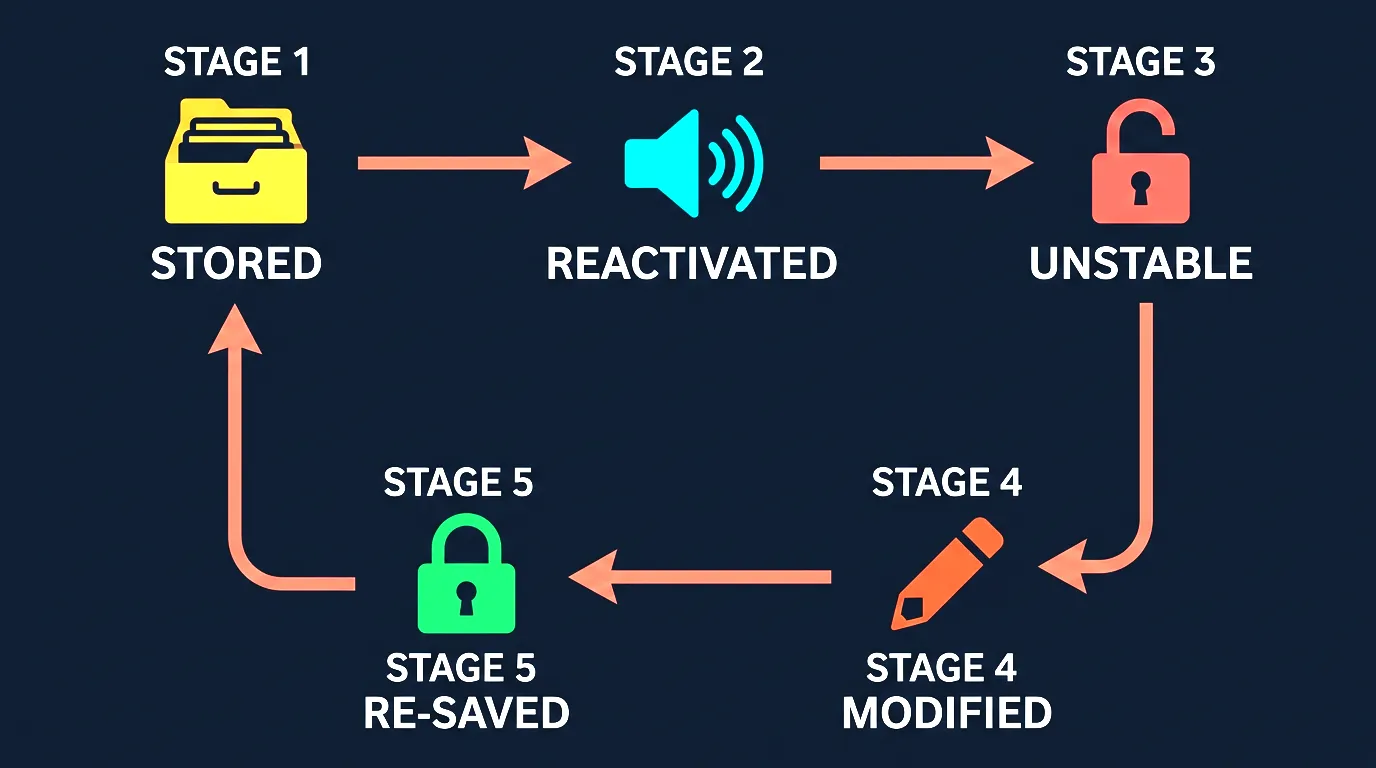
But here’s the key detail. When memories get replayed during sleep, they become temporarily unstable. They’re pulled out of storage, replayed, and then re-saved. This is called reconsolidation. And during that brief window of instability, memories can be changed.
Targeted memory reactivation exploits this window. By playing a sound that your brain associates with a specific memory, researchers force that memory to reactivate during deep sleep. Once it’s unstable, they can influence how it gets re-saved.
| Sleep Phase | Brain Activity | Memory Role |
|---|---|---|
| Slow-wave sleep | Slow oscillations at 0.5 to 1 Hz | Drives memory replay and transfer to cortex |
| Sleep spindles | Thalamocortical bursts at 9 to 15 Hz | Primes cortex for new memory storage |
| Sharp-wave ripples | Hippocampal bursts at 80 to 200 Hz | Carries specific memory content during replay |
| REM sleep | Rapid eye movement, vivid dreams | Emotional memory processing and integration |
The timing matters enormously. Researchers use closed-loop stimulation to deliver sounds at the exact moment of a slow oscillation’s “up-phase.” That’s when your cortex is most receptive to incoming information. Hit the right millisecond window, and the sound triggers a cascade of spindles and ripples that reactivate the target memory.
“It’s like your brain is practicing and rehearsing these memories.” — Penny Lewis, Cardiff University
A 2024 study in Imaging Neuroscience found something even more remarkable. Memory reactivation during sleep is 3 to 20 times faster than waking memory recall.[3] Your sleeping brain processes memories at superhuman speed.
Recommended read: Why We Remember by Charan Ranganath — A neuroscientist explains how memory shapes every decision you make, and why forgetting is just as important as remembering.
If you’ve ever wondered why you can’t trust your own memory, this is part of the answer. Memories aren’t permanent recordings. They’re living files that get rewritten every time you access them.
The PTSD Game-Changer
The second study is where this gets life-changing.
In August 2024, Anna van der Heijden and Lucia Talamini at Amsterdam UMC published a study in Current Biology that applied targeted memory reactivation to actual PTSD patients.[2] Not healthy college students in a lab. Real people with real trauma.
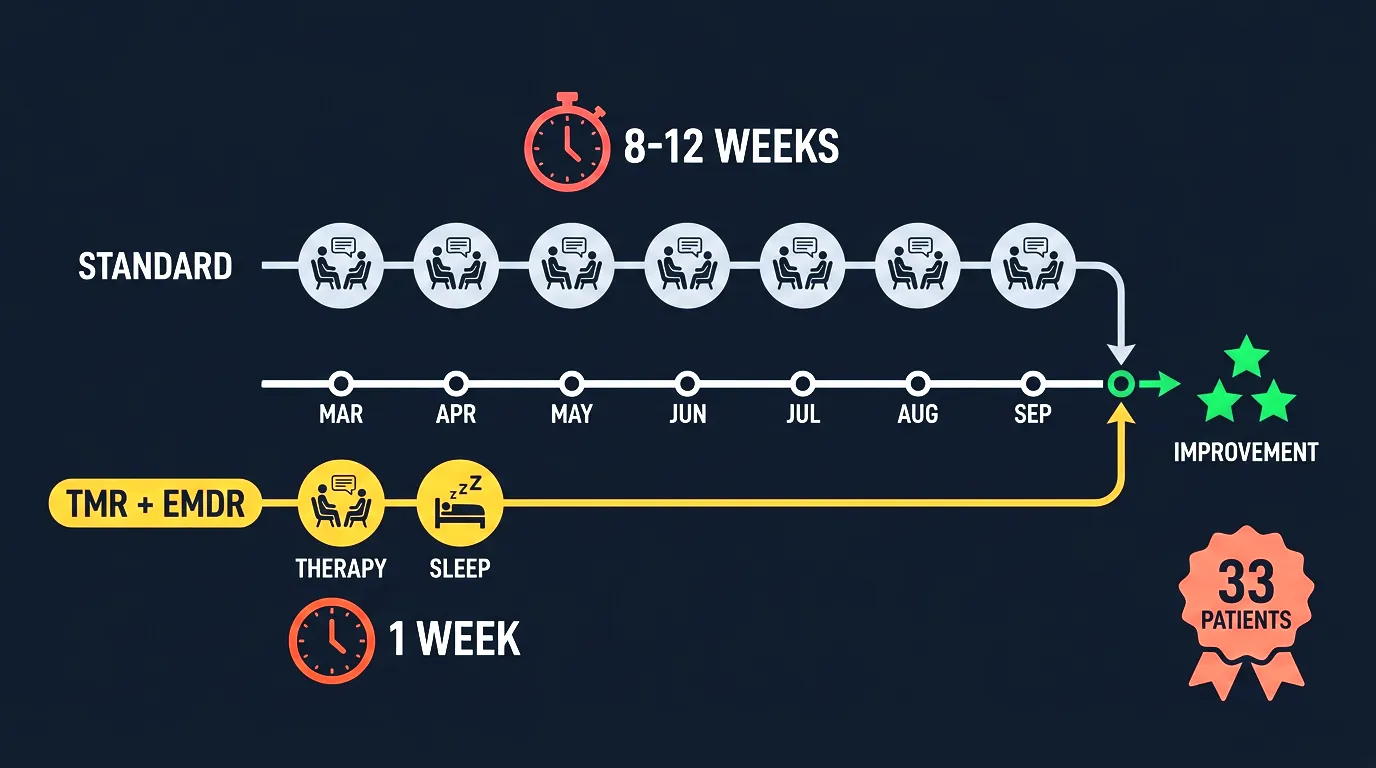
Here’s how it worked. Thirty-three PTSD patients received a single session of EMDR therapy, a widely used trauma treatment where patients recall traumatic memories while following rhythmic eye movements or clicks. The clicking sounds used during EMDR became the audio cues.
After the therapy session, patients went to sleep in the lab. Half of them received TMR during slow-wave sleep. The EMDR clicks were replayed through speakers, timed precisely to the up-phase of their slow oscillations using a technique called modeling-based closed-loop neurostimulation. The other half got sham stimulation. They slept in the same conditions, but no meaningful cues were played.
The differences were dramatic:
- TMR patients showed increased slow oscillation and spindle activity in response to the cues
- These brain changes correlated directly with PTSD symptom reduction
- TMR patients had a larger reduction in avoidance behavior during trauma recall
- The treatment did not disturb sleep or trigger nightmares
- One week of TMR plus EMDR matched what typically takes 8 to 12 weeks of standard therapy
“These data provide first proof of principle that TMR may be a safe and viable future treatment augmentation strategy for PTSD.” — van der Heijden et al., Current Biology
This is a huge deal. Traditional PTSD treatment requires months of sessions. Many patients drop out before they improve. Some can’t afford ongoing therapy. Others live in areas with no trauma specialists. A technique that could condense months of treatment into a single week could change everything.
And the beauty of it is how simple the mechanism is. Your brain already replays traumatic memories during sleep. That’s actually part of the problem. PTSD patients often have disrupted slow-wave sleep, which means their brains can’t properly process and file away trauma. TMR doesn’t add anything foreign. It just nudges your brain’s natural process in the right direction.
Recommended read: How to Change a Memory by Steve Ramirez — A neuroscientist at Boston University shares his quest to rewrite the past by editing memories at the cellular level.
If you’re interested in how trauma physically changes the brain, check out how childhood trauma rewires your brain.
The Ethics of Editing Your Past
Here’s where things get uncomfortable. If we can weaken memories during sleep, where do we draw the line?
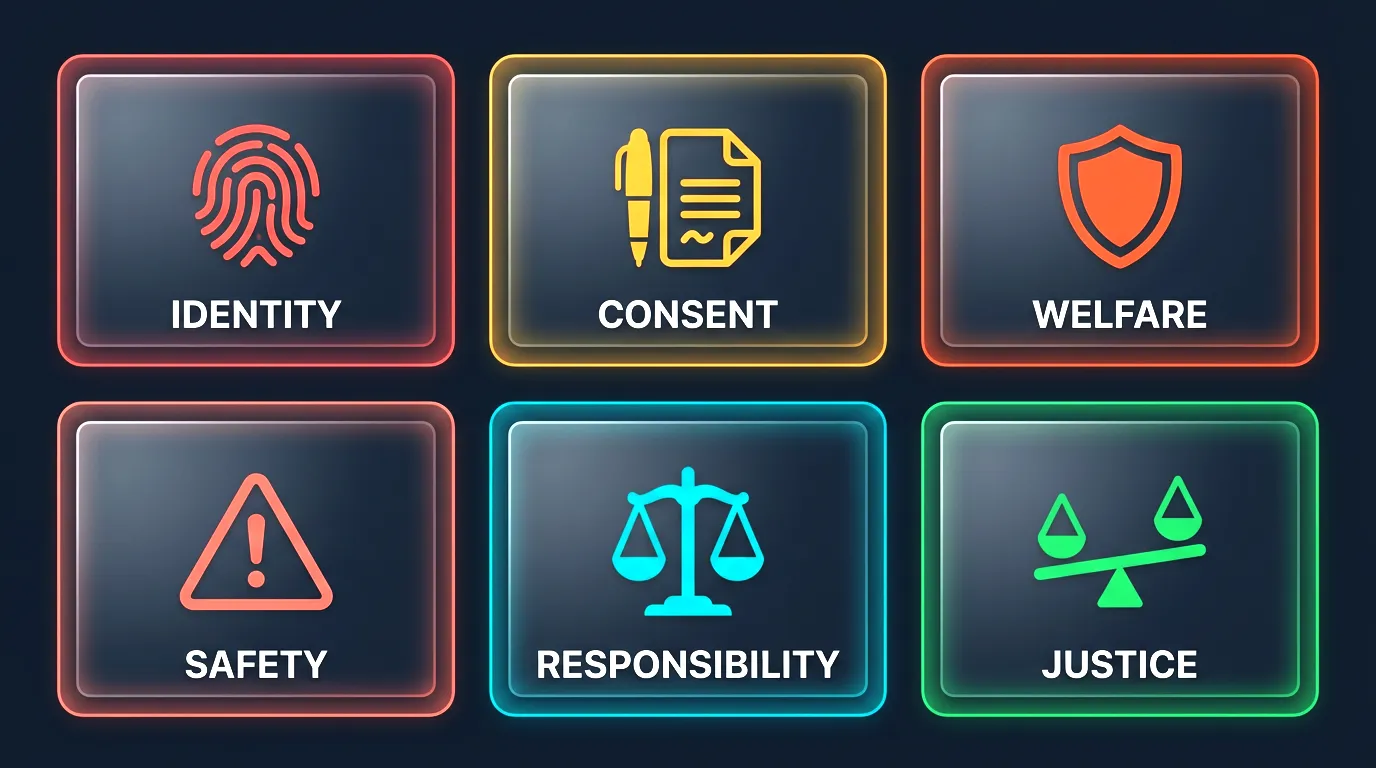
A 2025 review in Trends in Cognitive Sciences laid out the ethical landscape of sleep-based memory editing.[4] The authors identified six core concerns:
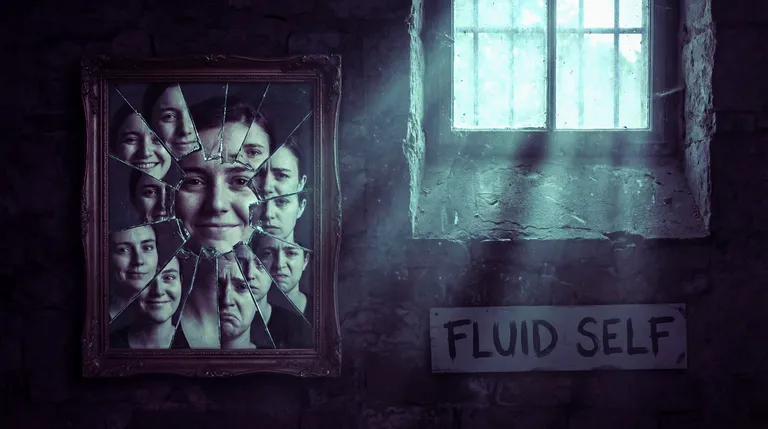
- Identity and authenticity. Your memories make you who you are. If you weaken a painful memory, are you still the same person? Does softening your past erase lessons you needed to learn?
- Consent. You’re unconscious when the editing happens. Can you truly consent to changes you won’t consciously experience?
- Welfare. Some painful memories serve a protective function. Fear of fire keeps you from burning yourself. Should we tamper with those?
- Safety. We don’t fully understand the long-term effects. What if weakening one memory strengthens another you didn’t intend to change?
- Responsibility. If someone’s traumatic memory is weakened and they forgive their abuser, is that justice? Who’s responsible for the emotional consequences?
- Social justice. Will this technology be available to everyone, or only those who can afford it?
A 2024 paper in the Journal of Bioethical Inquiry called memory modification one of the most consequential ethical challenges in neuroscience.[5] And they’re not wrong.
But the counter-argument is equally powerful. PTSD ruins lives. It destroys relationships, careers, and health. If a non-invasive technique can reduce suffering, the ethical case for not using it becomes hard to defend.
The researchers behind both studies emphasize an important distinction. TMR doesn’t erase memories. It changes their emotional intensity. You still remember what happened. You just don’t feel the same crushing weight when you think about it. That’s exactly what good therapy does. TMR just does it faster.
| Concern | Argument For TMR | Argument Against TMR |
|---|---|---|
| Identity | Therapy already changes memories. TMR just speeds it up | Unconscious changes may alter identity without awareness |
| Consent | Patients voluntarily choose to undergo treatment | True informed consent is impossible when changes happen during sleep |
| Safety | No adverse effects reported in any clinical trial | Long-term consequences remain unknown |
| Access | Could dramatically reduce therapy costs and wait times | Risk of becoming a luxury treatment for the wealthy |
| Misuse | Strong regulatory frameworks can prevent abuse | Military and corporate applications raise red flags |
Recommended read: Memory Lane by Ciara Greene and Gillian Murphy — Two psychologists explore why our imperfect, malleable memories are actually a feature, not a bug.
What This Means for You
The future of memory editing is closer than you think.
Wearable devices like the Dreem headband already use bone-conduction transducers to deliver sounds during specific sleep phases. A 2024 study in Translational Psychiatry successfully used home-based wearable EEG devices to apply TMR over 2 to 5 nights in participants’ own bedrooms.[6] It worked. The memories became less vivid and less emotionally distressing.
That means this isn’t stuck in a lab anymore. Within the next few years, you might be able to buy a device that monitors your sleep stages in real time and plays targeted sounds during your deepest sleep. Combine that with a therapy session earlier in the day, and you could be reprocessing trauma from the comfort of your own bed.
Here’s what’s coming:
- Clinical trials are scaling up across Europe and the US
- Closed-loop wearable devices are being developed for home use
- Nightmare disorder treatment using TMR has already shown promise in pilot studies
- Anxiety and phobia applications are being explored beyond PTSD
- Memory enhancement for learning and skill development is an active research area
But even without futuristic technology, the core lesson from this research applies to you right now. Sleep isn’t passive. It’s the most powerful memory-editing tool your brain has. Every night, your brain is replaying, sorting, and reshaping your memories.
That means sleep quality directly affects how you process emotional experiences. Poor sleep disrupts slow-wave activity, which disrupts memory consolidation, which means painful memories stay raw and unprocessed. Good sleep gives your brain the time it needs to do what TMR does artificially. Process, integrate, and heal.
Here’s what you can do today:
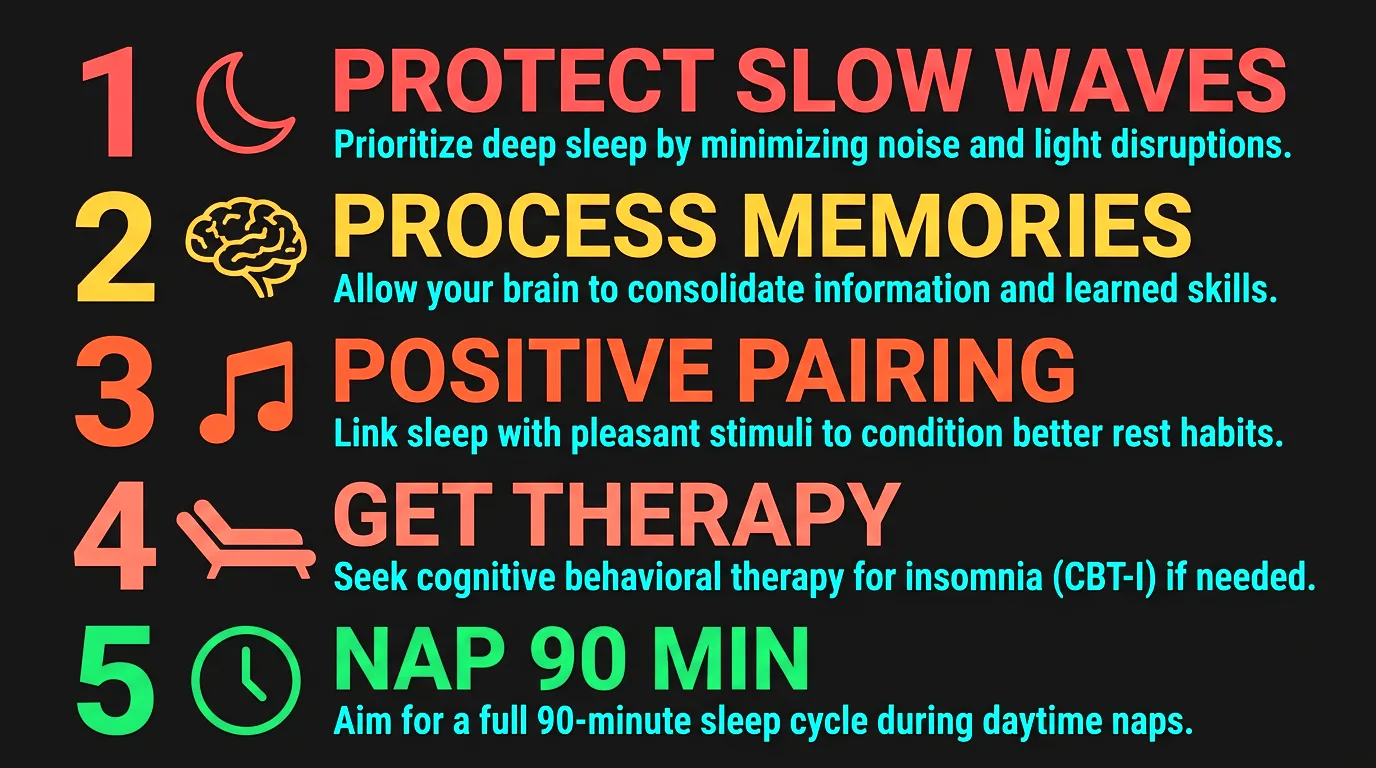
- Protect your slow-wave sleep. Avoid alcohol and screens before bed. Both suppress the deep sleep phases where memory consolidation happens.
- Don’t fight intrusive memories. Your brain is trying to process them. Let it.
- Pair new positive associations with old painful triggers. This is what the PNAS study proved works. If a song reminds you of a breakup, listen to it while doing something you love.
- Get therapy if you need it. TMR augments therapy. It doesn’t replace it. The PTSD study used TMR after EMDR, not instead of it.
- Take naps seriously. Even 90-minute naps include slow-wave sleep and can support memory processing.
Recommended read: Rewire by Nicole Vignola — A neuroscientist’s practical guide to using brain plasticity to break old patterns and build new ones.
The science is clear. Your memories aren’t set in stone. They’re more like clay that gets reshaped every time you sleep. And for the first time in history, we’re learning how to guide that reshaping. Not with scalpels or chemicals, but with sound and timing.
The question isn’t whether we can edit memories anymore. It’s who gets to decide which ones we change. And the answer to that should always be you.
Sources
The Breakthrough That Changes Everything
How Your Brain Edits Memories in Your Sleep
The Ethics of Editing Your Past
What This Means for You
Additional References
9. Using targeted memory reactivation as a tool for memory consolidation during sleep (SLEEP, 2024)
10. A practical approach to the ethical use of memory modulating technologies (BMC Medical Ethics, 2020)
11. Targeted memory reactivation to augment treatment in PTSD (Amsterdam UMC, 2024)