You didn’t choose your favorite brand. Your favorite brand chose you.
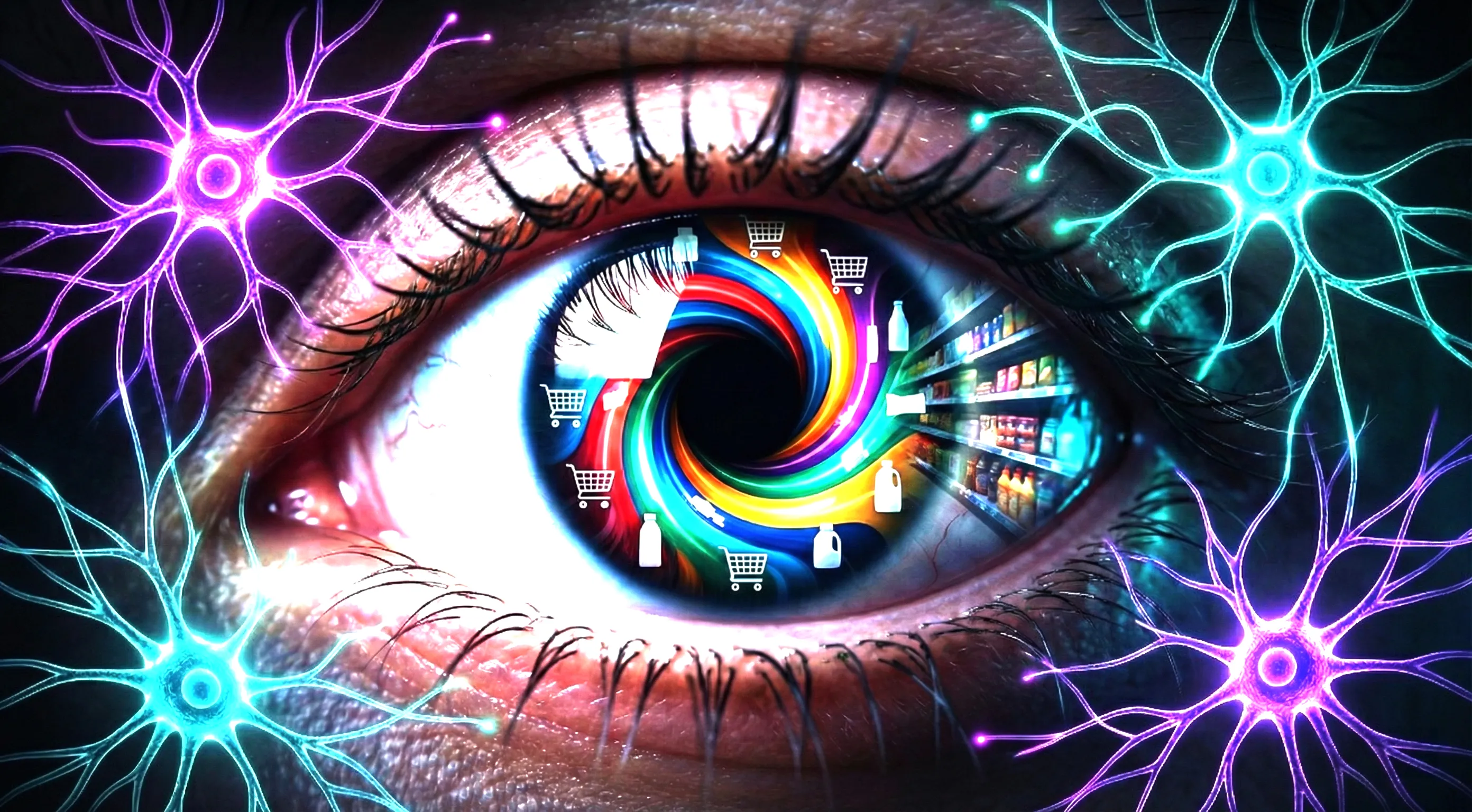
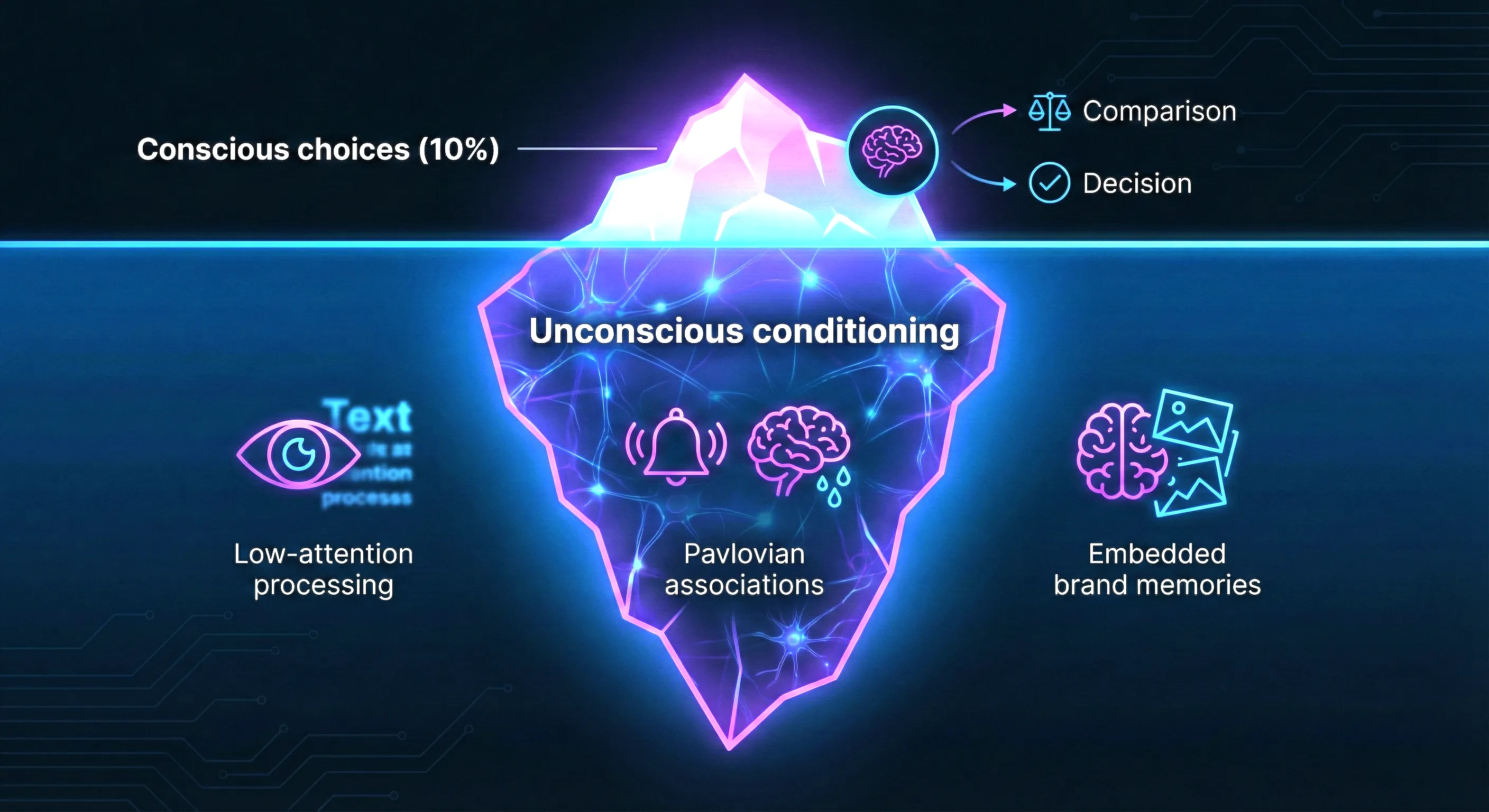
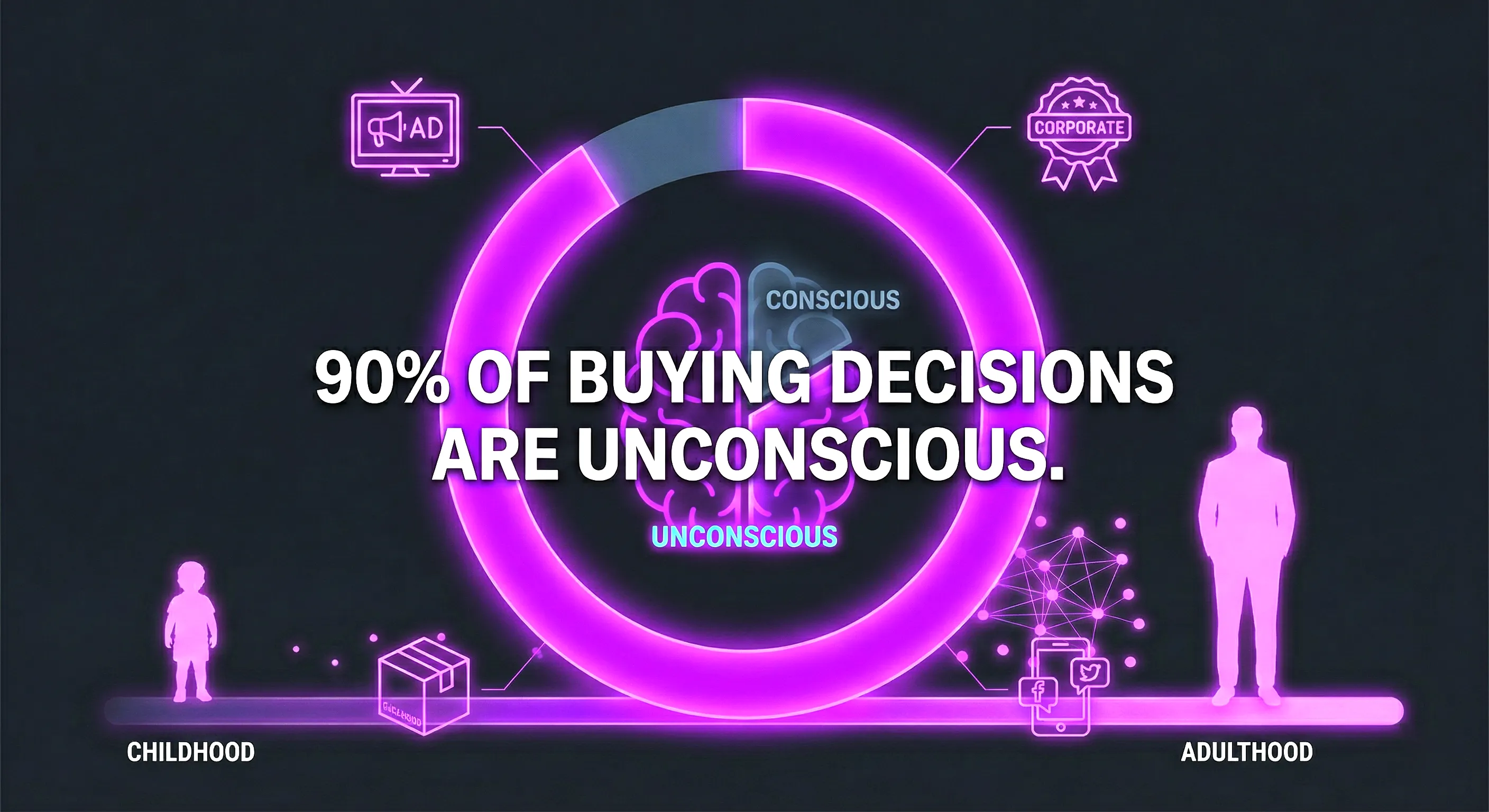
That sounds dramatic. But neuroscience research proves it’s closer to the truth than most people want to admit. An estimated 95% of consumer decision-making happens unconsciously, in less than two seconds. You think you’re comparing features. You think you’re making rational choices. But your brain already decided what you’d pick before you started “thinking” about it.
And the brands you trust most? They’ve been training your neural pathways for years.
Your Brain Has a Secret Brand Map
Every brand you’ve ever encountered lives somewhere in your brain. Not as a logo or a jingle, but as a sprawling network of memories, feelings, and associations.
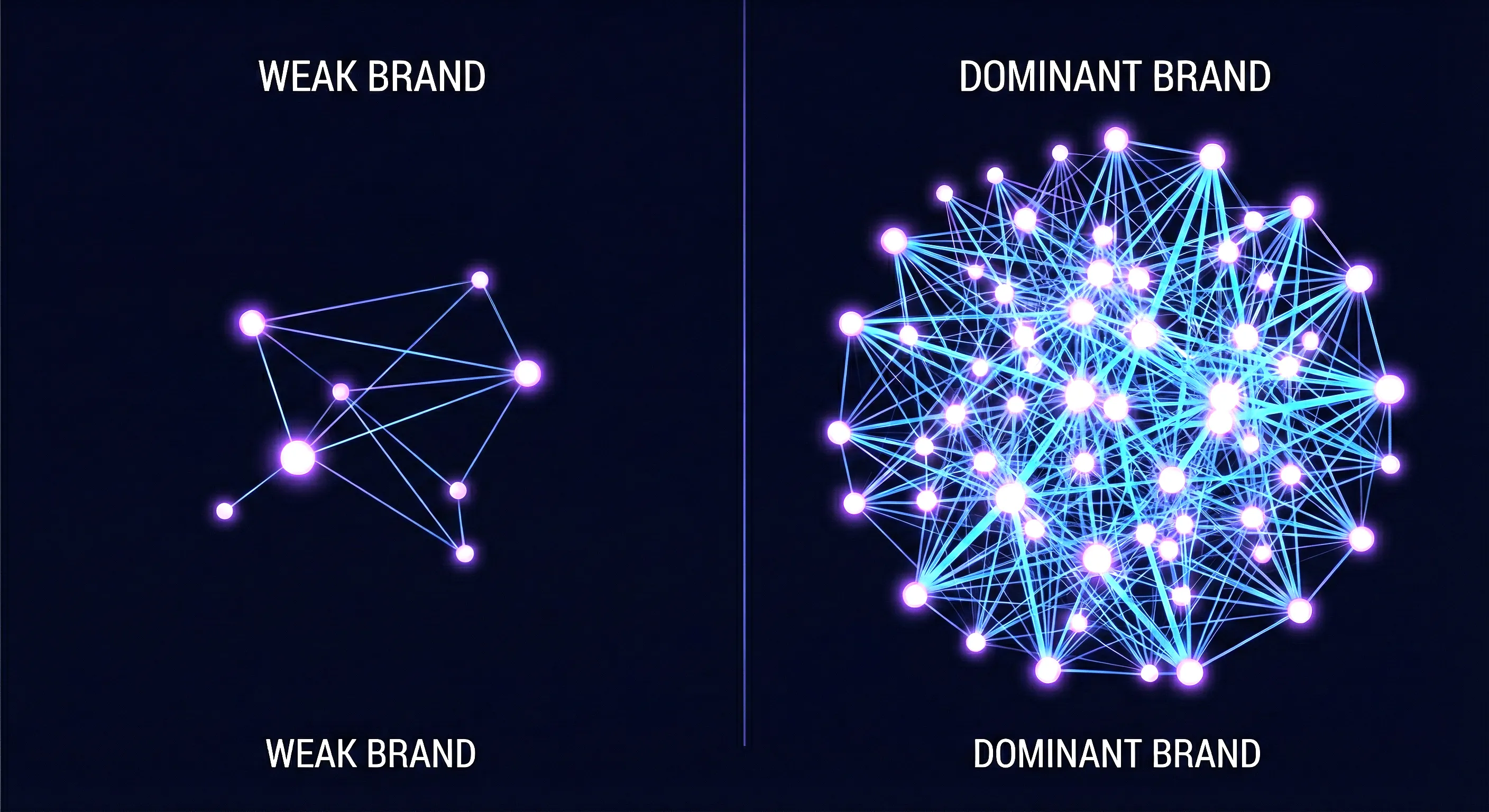
Neuroscientist Leslie Zane calls this the Brand Connectome. It’s the physical web of neural pathways your brain builds around every brand, person, or idea you encounter. And it works like a game of Monopoly. Whoever owns the most real estate in your brain wins.
Here’s how it works:
- Every time you see, smell, taste, or hear something connected to a brand, your brain adds a new node to that brand’s network
- These connections include people, places, childhood memories, and emotions that have nothing to do with the product itself
- Over time, the brand with the biggest connectome becomes your automatic “go-to” choice
- You stop comparing. You stop thinking. You just reach
If your mom used a certain brand of tomato sauce, that brand is physically wired to memories of her cooking. The sauce isn’t better. Your brain just thinks it is because it’s tangled up with love and comfort.
A 2025 systematic review published in Frontiers in Neuroergonomics confirmed this pattern across dozens of neuroimaging studies. fMRI research consistently shows that brand recognition activates brain regions associated with emotion and memory, influencing product preferences before conscious evaluation even begins. The review called for integrating multiple neuroimaging techniques, including fMRI, EEG, and eye-tracking, to capture the full picture of how brands hijack your decision-making process.[1]
“A brand is everything that it is connected to. It’s not just the product or logo, it’s all the connections the brain has created about the brand.” - Leslie Zane
Nike doesn’t sell shoes. They sell perseverance, grit, and success. With over 650 sponsorship deals across 140 leagues, the Nike swoosh touches so many parts of your life that choosing another athletic brand would feel like betraying a part of yourself. That’s not marketing. That’s neuroscience.
Recommended read: The Power of Instinct by Leslie Zane. Explains how brands build physical neural networks in your brain and why understanding your Brand Connectome is the key to taking back control of your choices.
How Brands Override Your Own Senses
Here’s a study that should make you uncomfortable.
In the 1970s, Pepsi ran blind taste tests called the Pepsi Challenge. People consistently preferred Pepsi over Coke. Pepsi hammered this result in ads for years.
Then neuroscientist Read Montague at Baylor College of Medicine repeated the experiment inside an fMRI machine. In blind tastings, people’s brains confirmed what their mouths said. Pepsi triggered five times more activity in the brain’s reward center than Coke.
But when subjects could see which brand they were drinking, everything flipped. Nearly all said they preferred Coke. And their brain scans changed too. An area linked to self-identification lit up dramatically for Coke, regardless of which cola was actually in the cup. The brand didn’t just change their opinion. It changed their physical brain response.[2]
Your Brain Pays More for “Better” Labels
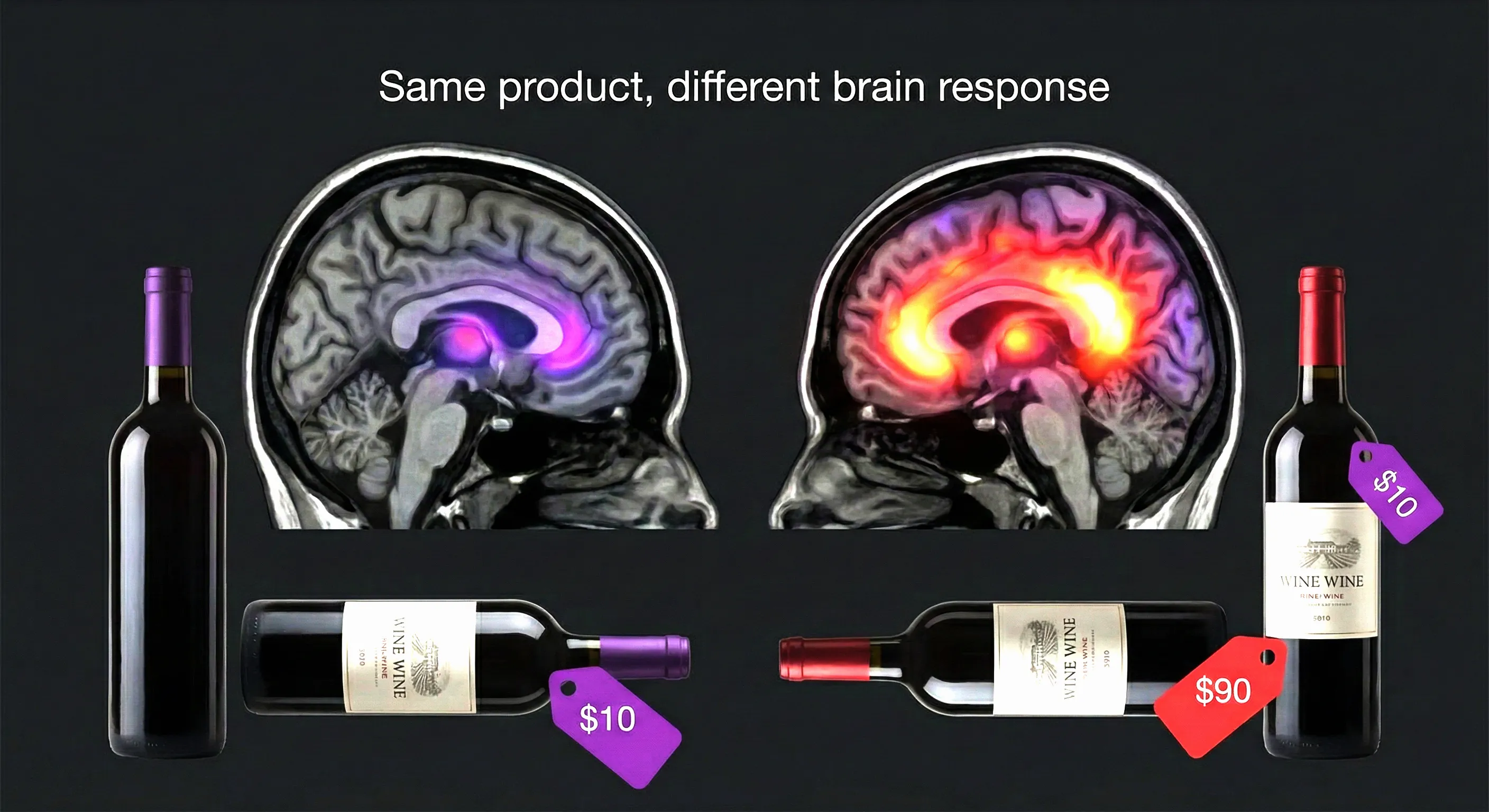
Researchers at Stanford and Caltech ran a similar experiment with wine. They gave people the same wine but labeled it with different prices. The expensive “version” triggered more activity in the brain’s pleasure center. People literally experienced more enjoyment from a product they believed cost more. The wine was identical.[3]
This connects to something called charm pricing. Research shows that pricing products just below round numbers, like $19.99 instead of $20, can increase sales by up to 24%. Your brain processes the first digit and files it under “teens” rather than “twenties.” The penny difference triggers a disproportionate response.
| What Was Tested | Blind Result | Branded Result |
|---|---|---|
| Pepsi vs. Coke taste | Pepsi wins (5x more reward activation) | Coke wins (self-identification override) |
| Same wine, different prices | No difference | ”Expensive” wine triggers more pleasure |
| Same yogurt, different packaging | No difference | Packaging changes perceived taste |
| Products at $19.99 vs. $20 | Functionally identical | $19.99 increases purchases by up to 24% |
Your senses aren’t lying to you. Your brand training is overriding them. As Roger Dooley explains in Brainfluence, even something as basic as yogurt flavor gets outperformed by packaging in brain scans. The container you see changes what you think you taste. It’s the same expectation machinery that makes placebos work even when you know they’re fake.
These same biases show up when cognitive biases quietly sabotage everyday decisions. Brands just figured out how to weaponize them.
Recommended read: Brainfluence by Roger Dooley. A practical breakdown of 100 neuromarketing techniques that shows exactly how marketers target your brain’s decision-making shortcuts.
The Invisible Training Happening Below Your Awareness
Remember Pavlov’s dogs? Ring a bell, give food. Repeat. Eventually the bell alone made the dogs salivate.
Brands do the same thing to your brain. And they don’t need your conscious awareness to pull it off.
Pavlovian Brand Conditioning
A study at Caltech found that a simple symbol could become so tightly linked to a taste experience that merely showing the symbol lit up the brain’s reward center. The more subjects liked the original taste, the stronger the learned response became.
Martin Lindstrom discovered something even more disturbing. Tobacco warning labels on cigarette packs were supposed to scare smokers. But fMRI scans revealed the opposite. After repeated exposure, the warning labels became a cue to smoke. The brain had wired them to the pleasurable act of satisfying a nicotine craving. The labels meant to stop smoking were actually triggering it.
The “I Like It, But I Don’t Know Why” Effect
Researchers Melanie Dempsey and Andrew Mitchell ran an experiment that should concern anyone who thinks they’re immune to advertising. They exposed people to hundreds of images. Some paired a fake brand name with positive images. Others paired a different fake brand with negative ones.
Afterward:
- Subjects couldn’t recall which brands were positive or negative
- But they still preferred the positively paired brand
- Even when given factual evidence that the preferred product was worse, they still chose it
- Even highly motivated subjects couldn’t override their conditioning
The researchers concluded that consumer choices are “driven by forces that are generally outside of rational control.” You don’t need to remember an ad for it to rewire your preferences.[4]
Digital Nudges Take It Further
A 2025 experiment on digital nudges in e-commerce tested how cues like “top-ranked,” “40% off,” and countdown timers affect willingness to pay. The findings were striking. Urgency cues produced the largest boosts in how much people would pay. But they also increased decision difficulty for some users. The pressure works, but it comes at a cost. Your brain feels stressed even as it reaches for the credit card.
Social proof cues worked differently. They reduced perceived risk by replacing uncertainty with a sense of consensus. Seeing that “others like me” bought a product overcame hesitation, especially for skeptical customers or high-effort purchases. It’s one of the hidden rules of persuasion that operates beneath conscious awareness.
| Digital Nudge | Effect on Willingness to Pay | Psychological Mechanism |
|---|---|---|
| Urgency timers | Largest boost | Creates scarcity pressure, triggers loss aversion |
| ”Top-ranked” labels | Moderate boost | Social proof reduces perceived risk |
| Discount framing | Significant boost | Anchoring shifts reference point |
| ”Others bought this” | Moderate boost | Consensus replaces uncertainty |
“Choice decisions of consumers are not only determined by evaluations of rational information but are also driven by forces that are generally outside of rational control.” - Dempsey & Mitchell
Recommended read: Buyology by Martin Lindstrom. The definitive account of the largest neuromarketing study ever conducted, revealing how brands hijack your subconscious mind.
The $1.71 Billion Industry Reading Your Mind
Neuromarketing isn’t a fringe science anymore. The global neuromarketing market hit $1.71 billion in 2025 and is projected to reach $2.62 billion by 2030.[6] This is a mainstream industry with a growth rate of nearly 9% per year. And it’s getting more sophisticated every day.
The Toolkit Has Expanded
Modern neuromarketing goes far beyond showing people ads in an fMRI machine. Today’s arsenal includes:
- EEG headsets that measure electrical brain activity in real time while shoppers browse stores or websites
- Eye-tracking systems that reveal exactly where your attention lands, for how long, and in what sequence
- Facial coding software that reads micro-expressions to detect emotions you don’t even know you’re feeling
- Galvanic skin response sensors that measure arousal through tiny changes in sweat gland activity
- fNIRS (functional near-infrared spectroscopy) that maps blood flow in your brain without the bulk of an fMRI
- Implicit association testing that measures unconscious brand associations faster than you can think
The German fMRI study that Roger Dooley describes in Brainfluence sums up the pattern. When researchers showed subjects familiar brand images, strong brands lit up brain areas linked to positive emotions, rewards, and self-identification. Weak brands activated areas tied to memory and negative emotions. Your brain doesn’t evaluate brands. It feels them.
Personalization Has Gone Neural
Here’s where things get concerning. Companies now combine neuromarketing data with behavioral targeting to create hyper-personalized persuasion. Research shows that 71% of consumers expect personalized interactions from brands. And brands are delivering, using your psychological profile to choose exactly which tricks to use on you.
A new model called confessional commerce is emerging. Brands create value through what they call “candid disclosure.” You willingly share personal information, and products respond to it. It sounds innocent. But it means every preference you reveal becomes ammunition for more precise targeting. Stores already manipulate your shopping brain with physical layouts. Now the digital experience is customized to your individual psychology.
Daimler-Chrysler used fMRI to discover that the Mini Cooper registers in your brain the same way a human face does. The car triggers the same neural pathways as seeing a baby. That’s why people describe it as “cute.” The marketers didn’t create that feeling. Your brain did. But only because every design choice was calibrated to trigger it.
Recommended read: Mindmasters by Sandra Matz. How big data is used to predict and change your behavior through psychological profiling at massive scale.
How to Catch Your Brain Before Brands Do
You can’t delete your Brand Connectome. Those neural pathways are physically wired into your brain. But you can slow down the autopilot system that brands exploit.
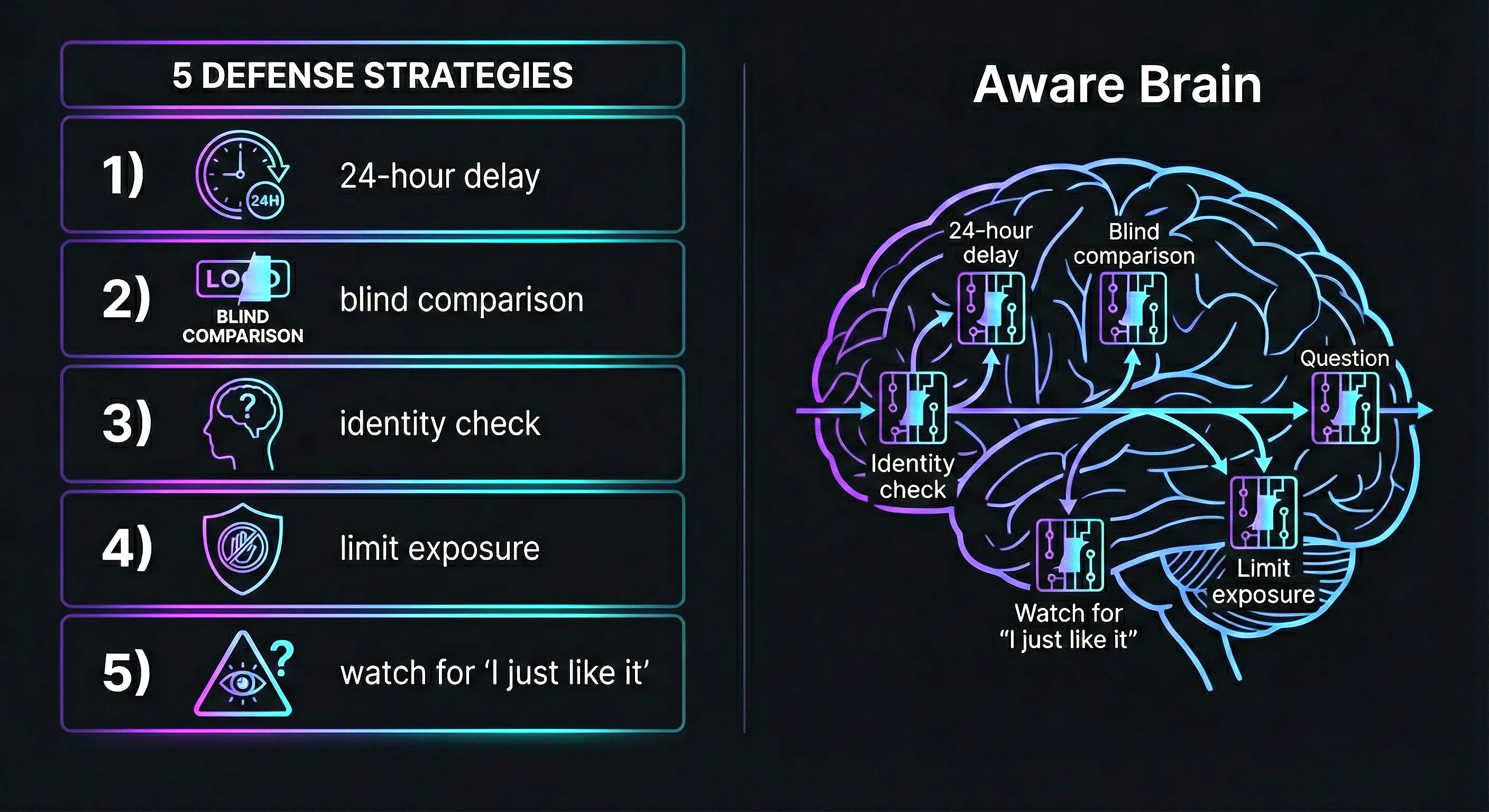
Here are five research-backed strategies:
-
Add a 24-hour delay to non-essential purchases. The brain’s “want-self” dominates decisions for immediate consumption. Harvard researchers Todd Rogers and Katherine Milkman found that delaying consumption shifts your brain toward the “should-self,” which makes more rational choices. This is the same battle between impulse and logic that makes gambling so hard for your brain to resist.
-
Cover the brand when comparing products. Read Montague’s Pepsi Challenge proved that brand identity overrides sensory experience. If you’re genuinely comparing two products, hide the logos. Let your senses do their job without brand interference.
-
Ask: do I want this, or the feeling the brand promised? Lindstrom’s research shows that brands activate self-identification circuits in your brain. When you feel drawn to a purchase, pause and separate the product from the identity it’s selling you.
-
Limit your exposure windows. Low-attention processing means every scroll, every billboard, and every sponsored post is building neural pathways. Use ad blockers. Mute commercial breaks. The less raw material your brain gets, the weaker the conditioning.
-
Watch for the “I just like it” feeling. Dempsey and Mitchell proved that the strongest brand conditioning produces an unexplainable preference. If you can’t articulate why you prefer one brand over another, that’s a red flag. Your conditioning is showing.
Research shows that 76% of consumers feel overwhelmed by too many choices, with 85% abandoning shopping carts due to indecision. Brands know this. They use choice architecture, defaults, and curated options to guide you toward confident decisions. The solution isn’t more analysis. It’s awareness that the entire environment was designed to push you in a specific direction.
Knowing this doesn’t make you immune. But it gives you something most consumers don’t have. Awareness that the game is rigged. And awareness is the first crack in the autopilot.
Recommended read: Predictably Irrational by Dan Ariely. Why we make irrational decisions and how hidden forces shape every purchase you make.
Sources
Your Brain Has a Secret Brand Map
How Brands Override Your Own Senses
2. Neural Correlates of Behavioral Preference for Culturally Familiar Drinks (Neuron, 2004)
3. Marketing Actions Can Modulate Neural Representations of Experienced Pleasantness (PNAS, 2008)
The Invisible Training Happening Below Your Awareness
The $1.71 Billion Industry Reading Your Mind
6. Neuromarketing Technology Market Size and Forecast 2025 to 2030 (Mordor Intelligence, 2025)